United States
Use of SCMs in the US is considered as blended cement by the USGA₈. Blended cement refers to a finished blended cement product made at a cement plant or its terminals. In 2020 blended cement accounted for only 3.2% of total cement production. This low level of SCM use is largely because US cement plants generally follow the ASTM C-150 Standard (American Society for Testing and Materials) which defines a limit of 5% limestone (which in practice often translates to 3%).
However, the 3.2% doesn’t include the blended cement produced at concrete plants. In fact, the ready-mix industry blends their products to a much more diverse standard, often introducing various additives and even recycled concrete to accommodate the needs of their local markets and specific applications. This, together with experience with masonry cement (1% of annual cement production, with as much as 70% limestone addition), and Type III cement (95% clinker, 5% gypsum but with a product fineness of +5000 Blaine₉) – both suitable for production in VRMs – should give the industry and end users the confidence that different ‘recipes’ can be successful, and that handling a wide range of product characteristics is perfectly possible as expanded cement standards are adopted.
In the future, it is hoped that end users will specify for performance rather than recipe when buying cement. This will give cement and concrete companies greater flexibility with their blends, and will make it easier to reduce the clinker factor. In the meantime, Portland Limestone Cement₁₀ has been championed by the Portland Cement Association as a lower-carbon alternative to OPC, utilising limestone filler to reduce the clinker content and thus the environmental impact of cement by 10%.
The UNEP-sponsored white paper ‘Eco-efficient cements: Potential economically viable solutions for a low-CO₂ cement-based materials industry’ referenced earlier in this article also includes references for limestone addition to Portland Cement in various markets around the world. Figure 2, shows the percentage of limestone substitution in grey cement by country from 2000 through 2015. The wide range of variation from countries with higher substitution levels to those with the lowest, including the United States, demonstrates the potential improvement with further adoption of Portland Limestone Cement.
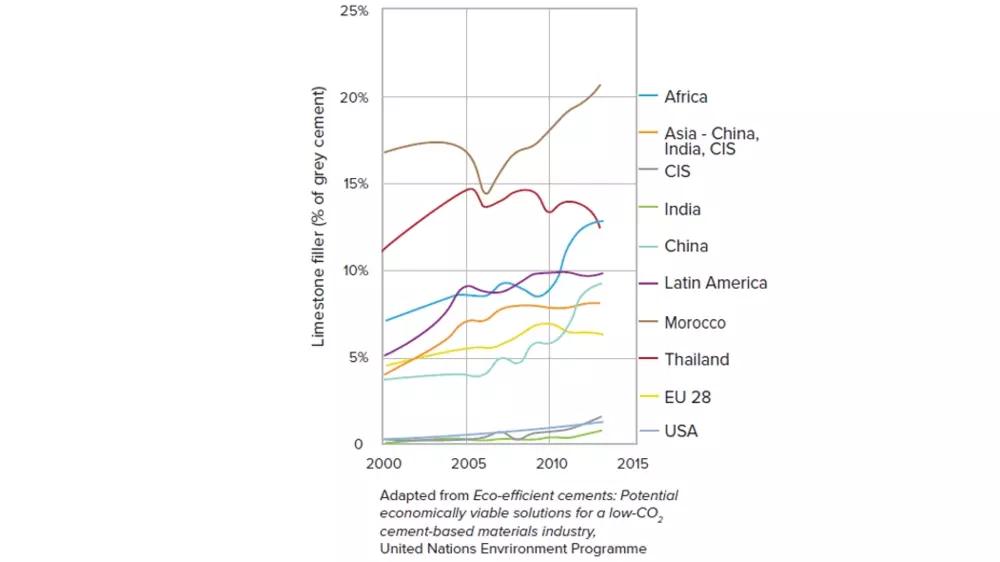
Figure 2: Average Limestone Substitution in Various Regions.
_Raw_and_Cement_Mill.png?w=2048&q=80&auto=format)