Industry 4.0 in action: practical benefits in cement plants - presentation by Anders Noe Dam
In this 30 min presentation Anders Noe Dam, Head of Global Product Management - Automation Technologies, delivers a strategic overview focused on turning Industry 4.0 possibilities into measurable results – all the benefits, none of the hype. Featuring Fuller's ECS™ and QCX® cutting-edge solutions, as well as ECS/ProcessExpert® and subscription-based IoT models, the presentation emphasizes scalable, cost-effective adoption pathways.
This webinar is part of the Cemtech Live Webinar series, recorded 4 February 2025.
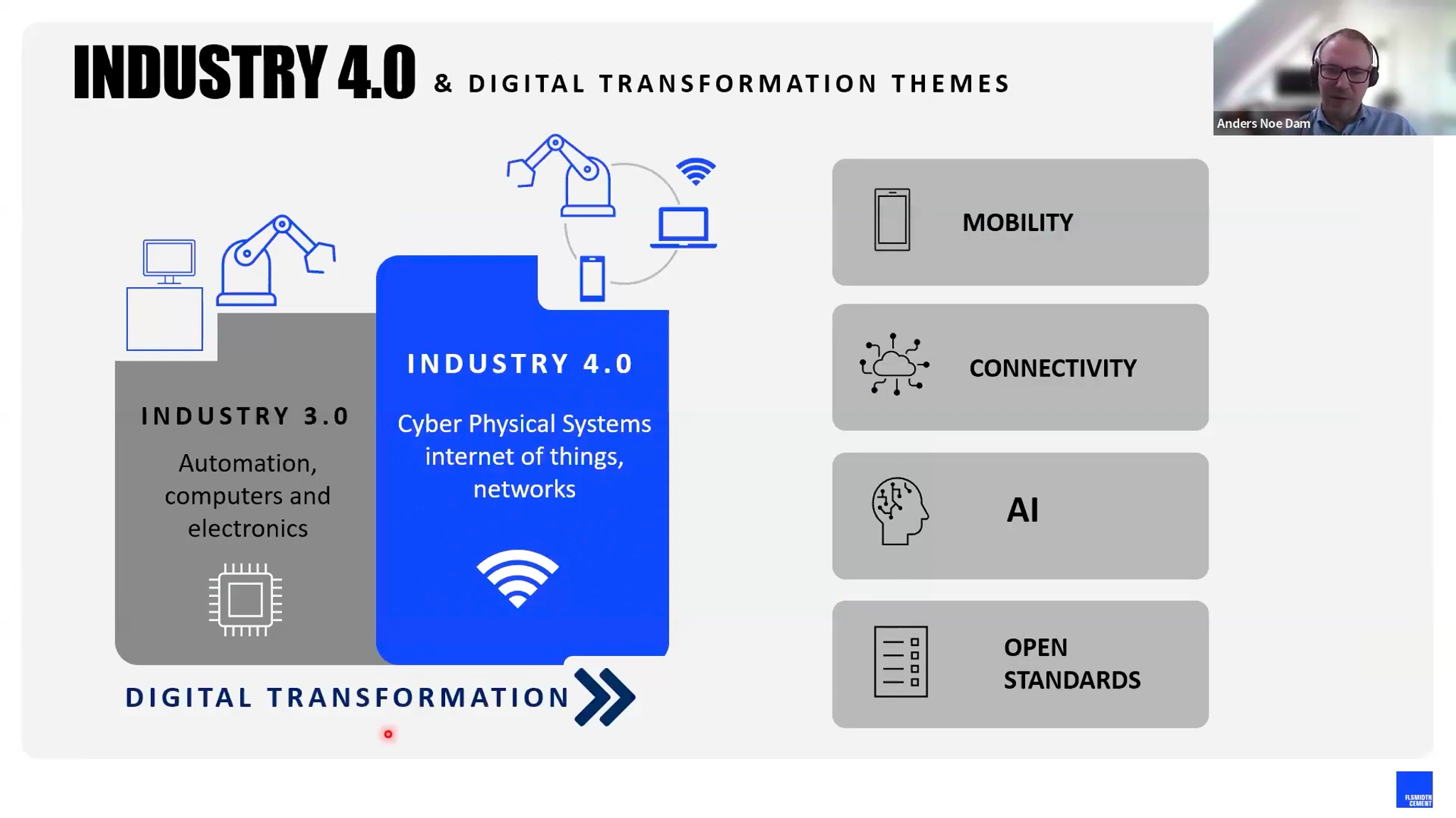
The global cement sector faces significant challenges: managing enormous energy consumption, reducing its substantial CO₂ footprint, and maintaining margins amid increasing process complexity and rising operational costs. While other industries have progressed to advanced digital implementation, cement production largely remains anchored in Industry 3.0 foundations—frameworks not designed for the data volumes, cloud connectivity, and AI-driven optimization that characterize Industry 4.0.
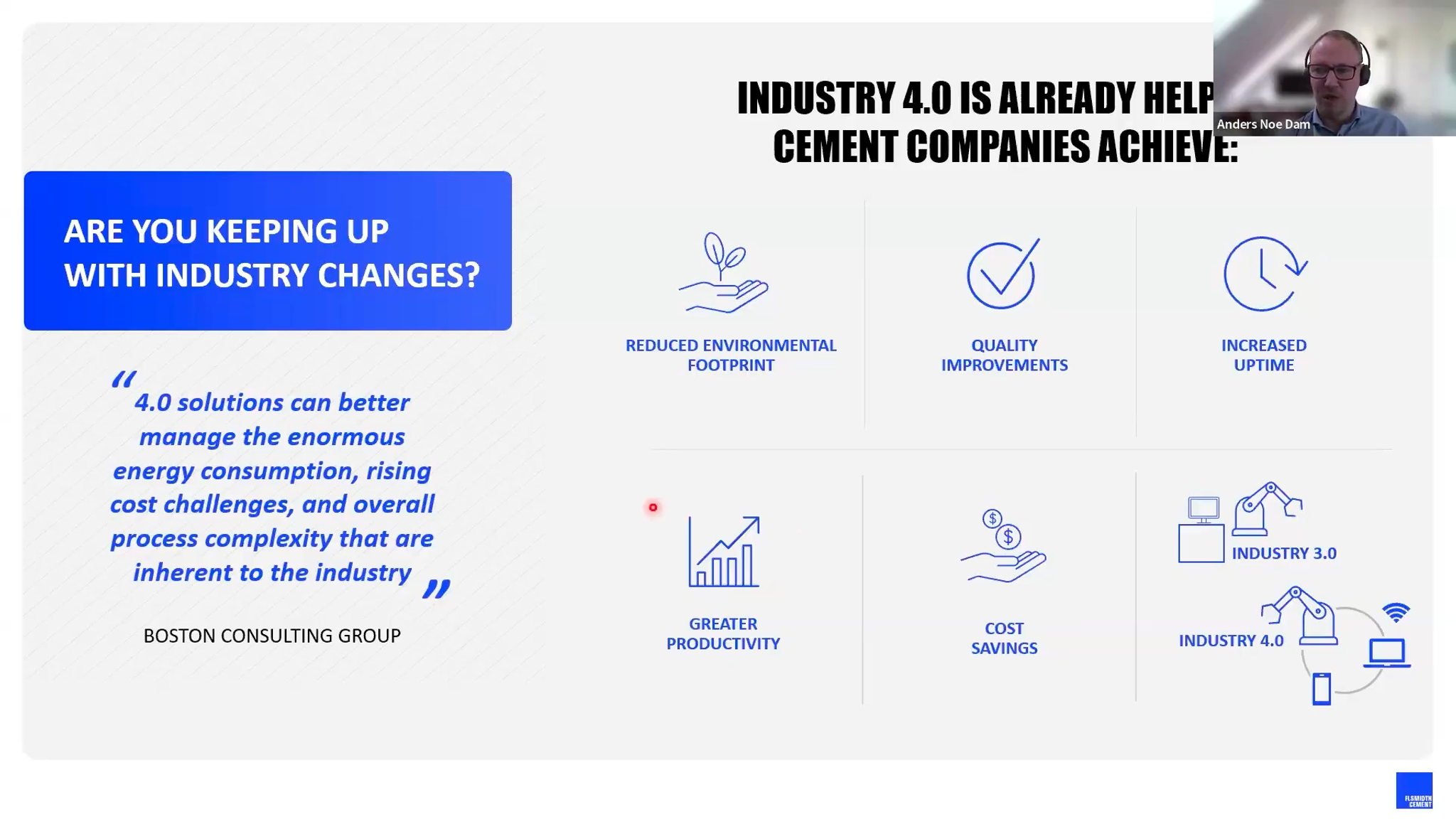
As Boston Consulting Group notes, "4.0 solutions can better manage the enormous energy consumption, rising cost challenges, and overall process complexity that are inherent to the industry." Yet many plants struggle with the transition, creating a widening performance gap between digital innovators and those with partial or siloed automation approaches.
A Data-Driven Blueprint for Next-Level Cement Operations
Anders Noe Dam's presentation shows how quality data forms the critical foundation for Industry 4.0. Sampling and laboratory data—what we call "the digital green enabler"—creates the bridge between conventional automation and advanced optimization for greener cement.
The session reveals how better sampling systems and lab automation enable both AI-driven process control and reduced clinker factors. We'll explore practical approaches to data readiness, open standards, cybersecurity, and subscription-based services that accelerate digital adoption, highlighting real-world examples of improved efficiency, energy use, and environmental performance.
Featuring:
Anders Noe Dam, Head of Global Product Management - Automation Technologies, whose direct field experience offers practical guidance in bringing digital innovation to the cement industry.
Key insights include:
Why data quality forms the foundation of successful Industry 4.0 implementation
How advanced sampling systems and laboratory data management enable quality optimization for greener cement production
How the latest ECS/ProcessExpert v9.1 delivers 4-7% production improvements alongside a similar reduction in energy consumption through self-adaptive control
Why moving from proprietary to open standards accelerates innovation and reduces costs
How subscription-based service models provide faster access to innovations
The critical need for secure plant-to-cloud connectivity with proper cybersecurity measures to enable remote operations and AI-driven optimization
Many cement producers have not fully explored the Industry 3.0 opportunity. Therefore, you may have a chasm to fully embed Industry 4.0 at the speed we would all like. The fuel for data-driven technologies is something we still have to focus on getting right in many cement sites.
Anders Noe Dam, Head of Global Product Management - Automation Technologies
Webinar Insights
Industry 4.0 in action: practical benefits in cement plants
01
Data Quality: The Foundation for Industry 4.0
Most cement plants lack the structured data foundation needed for advanced analytics
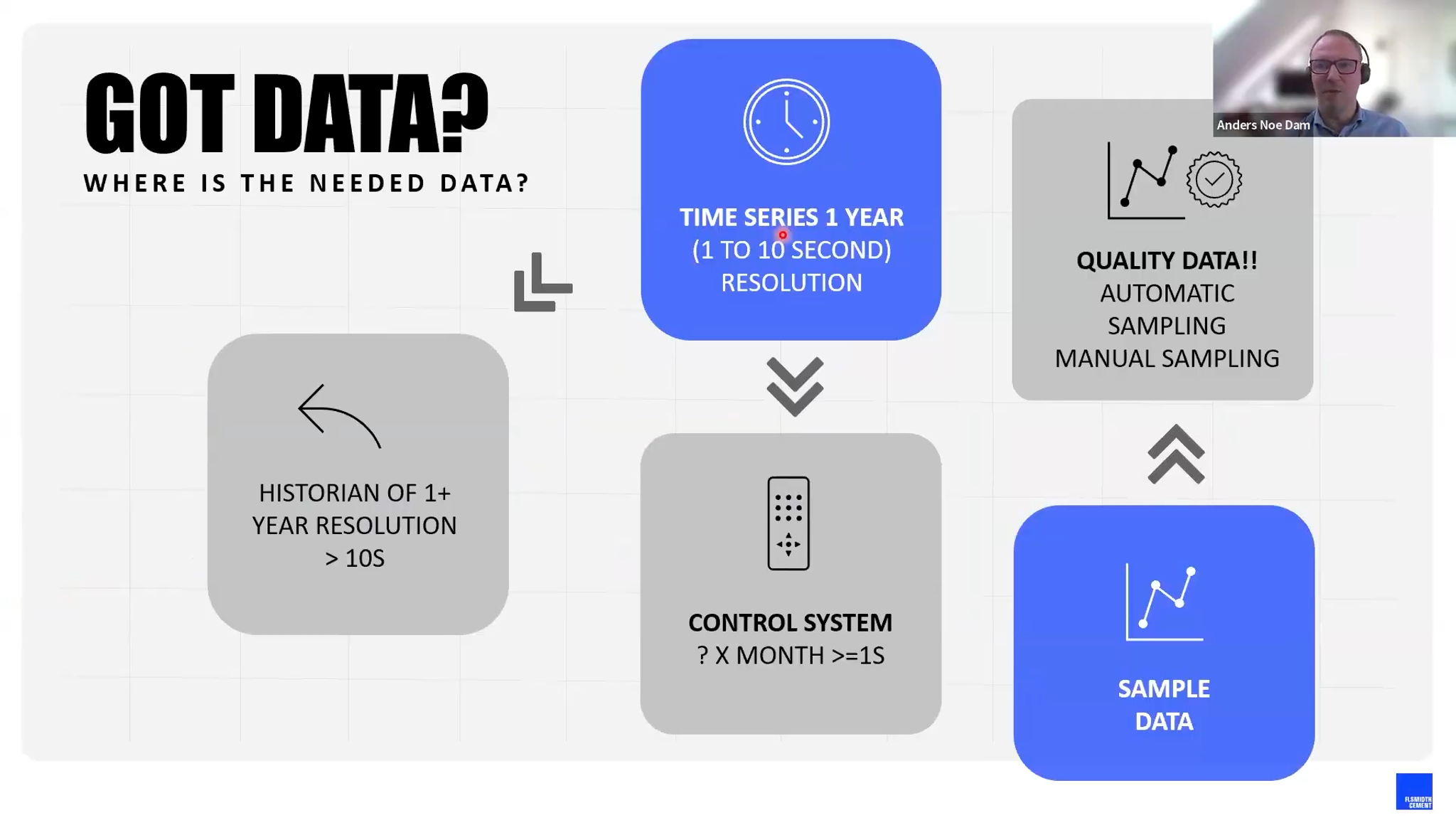
For some applications, having a time series of one year at a 10 second resolution is necessary.
Quality data from both automatic and manual sampling remains fragmented across systems
Control systems often store only months of data while historians lack sufficient resolution
The data quality gap represents a critical chasm that many cement producers must overcome to successfully implement Industry 4.0 technologies at scale, as current fragmented data structures limit effective optimization.
02
Self-Adaptive Control Technology Delivers Measurable Gains
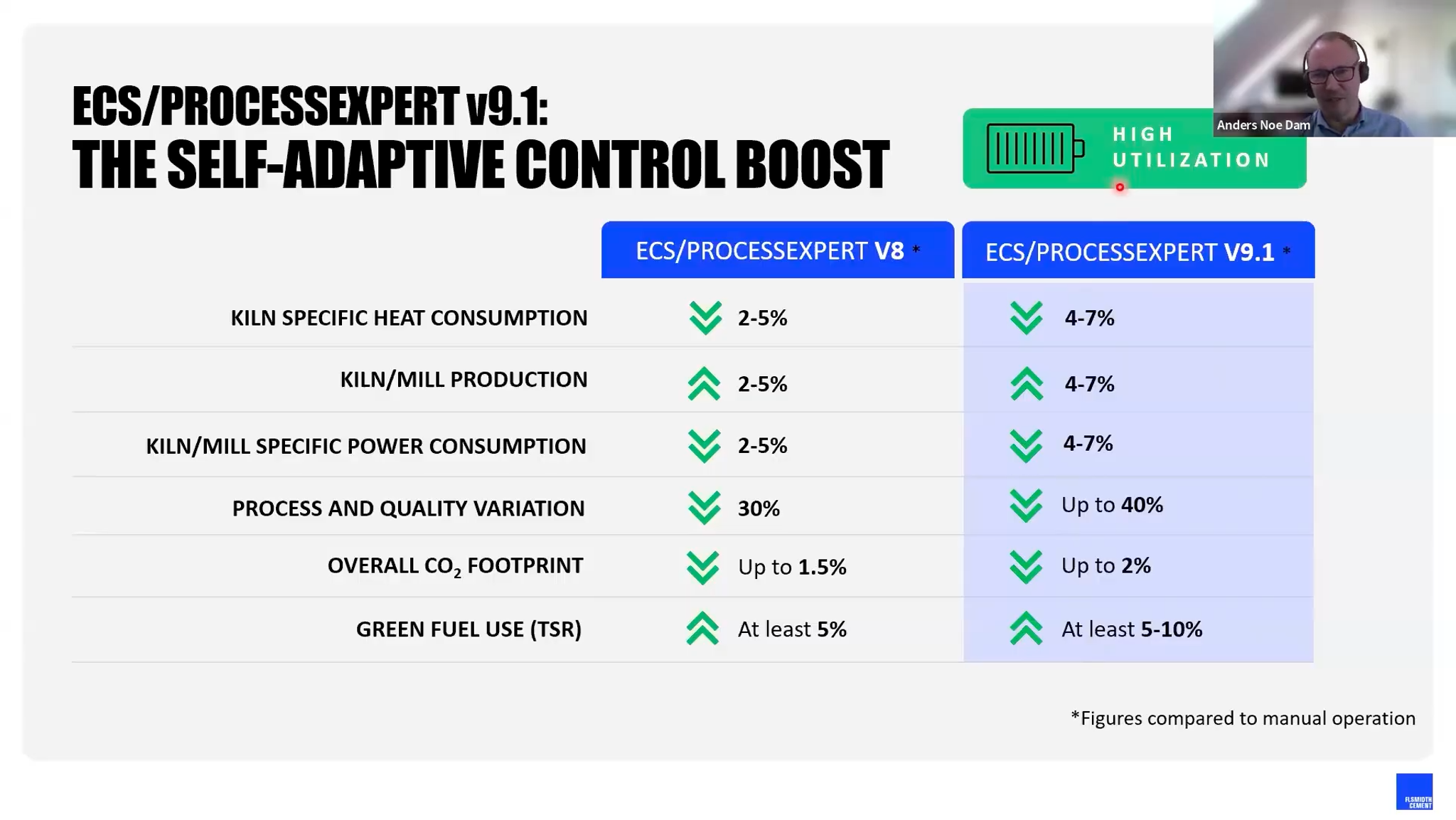
ECS/ProcessExpert v9.1 increases production by 4-7% (compared to 2-5% in previous version) alongside a similar reduction in energy consumption
Reduces process and quality variation by up to 40% (improved from 30% previously)
Enables 5-10% increased use of alternative fuels while reducing CO₂ footprint by up to 2%
Achieves higher user acceptance and system utilization through adaptive process management
Fuller's integration of adaptive control technology delivers quantifiable performance improvements across all key cement production metrics while maintaining consistent implementation.
03
Open Standards Accelerate Industry 4.0 Adoption
IT/OT convergence requires shifting from proprietary systems toward open standards
Open Process Automation standards reduce costs through software-defined flexibility
Vendor-neutral architectures enable faster integration of new technologies
Cement industry lags behind other sectors partly due to closed system limitations
The contrast between Information Technology (open, standards-based, collaborative) and Operational Technology (closed, proprietary, vendor-locked) presents a fundamental challenge that cement producers must address through initiatives like the Open Process Automation Forum to enable seamless data flow.
04
The Digital Green Enabler: Quality Systems for Sustainable Cement
Quality data systems provide the foundation for developing "green cement" algorithms
Enhanced material understanding enables reduced clinker factor and associated emissions
XRD analysis integration delivers deeper insights into supplementary cementitious materials
Structured quality databases connect laboratory and process data for optimized formulations
Quality systems (QCX®) serve as the designated "Digital Green Enabler" by providing the chemical composition data necessary for precise material blending, allowing cement producers to control and optimize alternative materials while maintaining product performance specifications.
05
From Owning Software to Service-Based Models
Software innovation cycles now outpace traditional upgrade models in industrial environments
Subscription services provide continuous updates without high initial capital investment
Plantline service agreements can include proactive performance monitoring and cybersecurity
Service-based models ensure compatibility with latest cybersecurity requirements
The transition from perpetual licensing to subscription-based services represents a strategic shift for cement producers seeking to maintain competitive advantage through continuous access to the latest technological innovations rather than waiting years between major software upgrades.
06
Prescriptive maintenance from data insights
Highest technology maturity among AI applications (process, quality, uptime)
Provides early indication of equipment issues before they impact production
Successfully demonstrated implementation across multiple sites
Establishes framework for expanding predictive maintenance capabilities
Condition-based monitoring represents the most advanced and widely implemented Industry 4.0 technology in cement production, providing a proven entry point for digital transformation with established ROI while building operational confidence in data-driven decision making.
Transform Your Cement Operations with Industry 4.0: From Barriers to Benefits
Discover how Fuller's proven approach helps cement producers overcome implementation challenges and realize tangible operational improvements. Learn how enhanced data quality, self-adaptive controls, and service-based models can deliver 4-7% production increases while reducing environmental impact.
Bridging the Data-to-Value Chasm
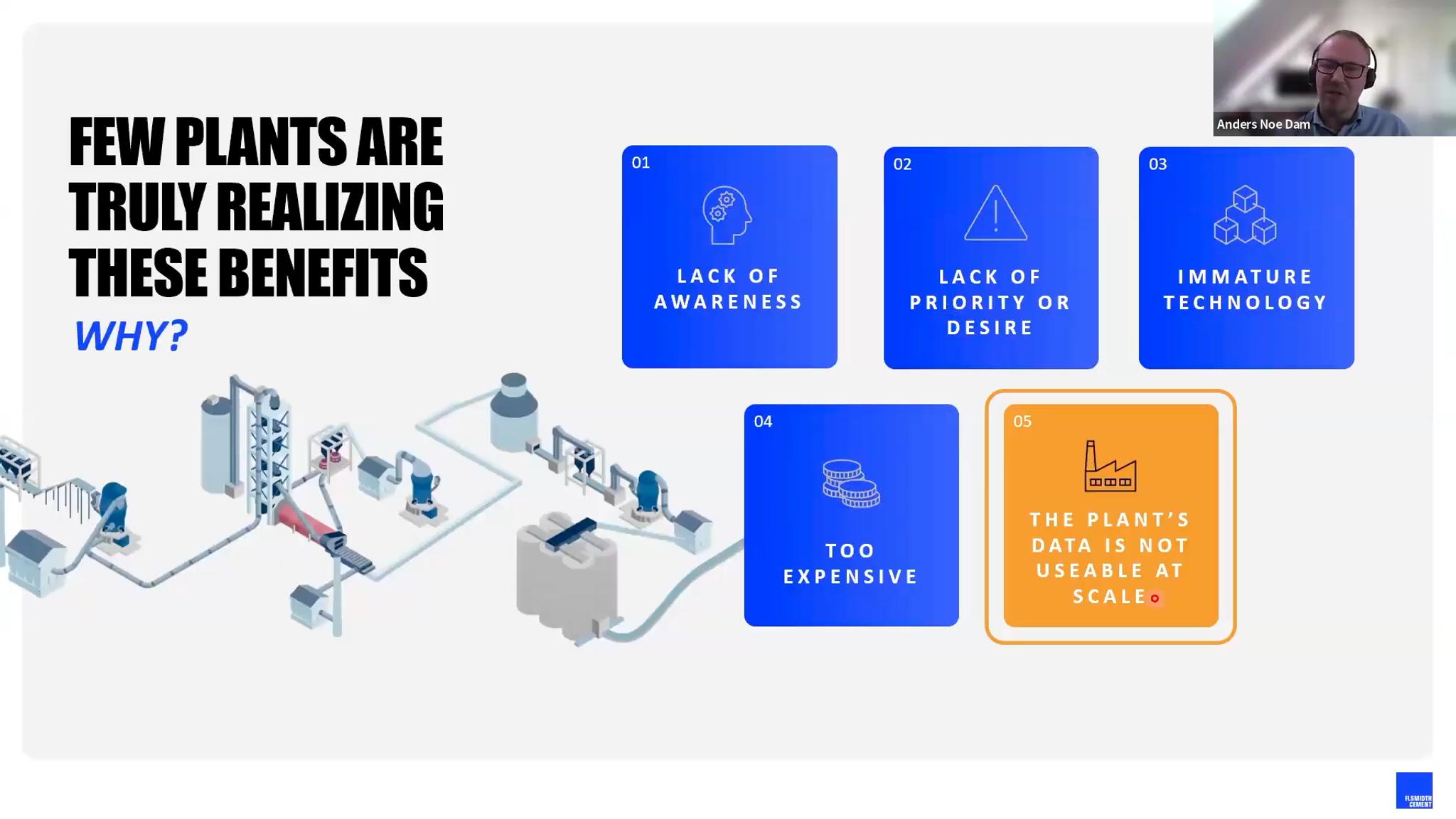
Fragmented, low-resolution datasets remain the single biggest obstacle to Industry 4.0 success. “The plant’s data is not usable at scale” still tops the list of adoption barriers, leaving even the most promising analytics pilots starved of reliable inputs.
Fuller’s automation platform is engineered to remove that bottleneck. Every ECS®ControlCenter installation automatically stores a full year of 1-second time-series data—exactly the depth and granularity advanced models require. Native MQTT connectors then stream those tags straight to the customer’s cloud (and return AI set-points to the DCS) through a hardened, cyber-secure gateway, enabling real-time collaboration between on-site operations and remote data-science teams.
Using open standards like OPC UA and MQTT, data streams securely to the cloud through a cyber-hardened gateway. Returning AI setpoints to the control system is optional, enabling either passive monitoring or real-time optimization.
Fuller supports the adoption of open-standard initiatives such as the Open Process Automation™ Forum standards to promote vendor-neutral OT architectures that speed innovation, cut lifecycle cost and embed security by design.
In 4.0, we're adding a lot of computer power. We add a lot of storage so we can have much more data than we had in the past. And we thereby enable data analytics to a whole new level than we have done for a long time. And if we do it well, we would be able to increase the machinery equipment performance, the uptime, but also how we do process optimization at a new leap to what we have done in the past.
Anders Noe Dam, Head of Global Product Management - Automation Technologies
Frequently Asked Questions: Industry 4.0 in Action
Industry 4.0 in cement manufacturing integrates digital technologies, enhanced connectivity, and AI-driven analytics into traditional production processes. It combines four key elements: mobility (bringing information to people anywhere), connectivity (linking plant systems to cloud computing), AI (algorithms for process optimization and predictive maintenance), and open standards (replacing proprietary systems). When implemented correctly, Industry 4.0 delivers tangible benefits including reduced environmental footprint (up to 2% CO2 reduction), quality improvements, increased uptime, greater productivity (4-7% production increases), and significant cost savings through energy efficiency.
Five critical barriers hinder Industry 4.0 implementation in cement plants. Poor data quality is the most significant - many facilities lack the structured, high-resolution data required for advanced analytics. Additional barriers include lack of awareness about available technologies, insufficient priority given to digital initiatives, perception of immature technology (particularly regarding transferability between sites), and cost concerns. Many plants have not fully maximized their Industry 3.0 capabilities, creating a fundamental gap that must be addressed before moving to more advanced Industry 4.0 solutions.
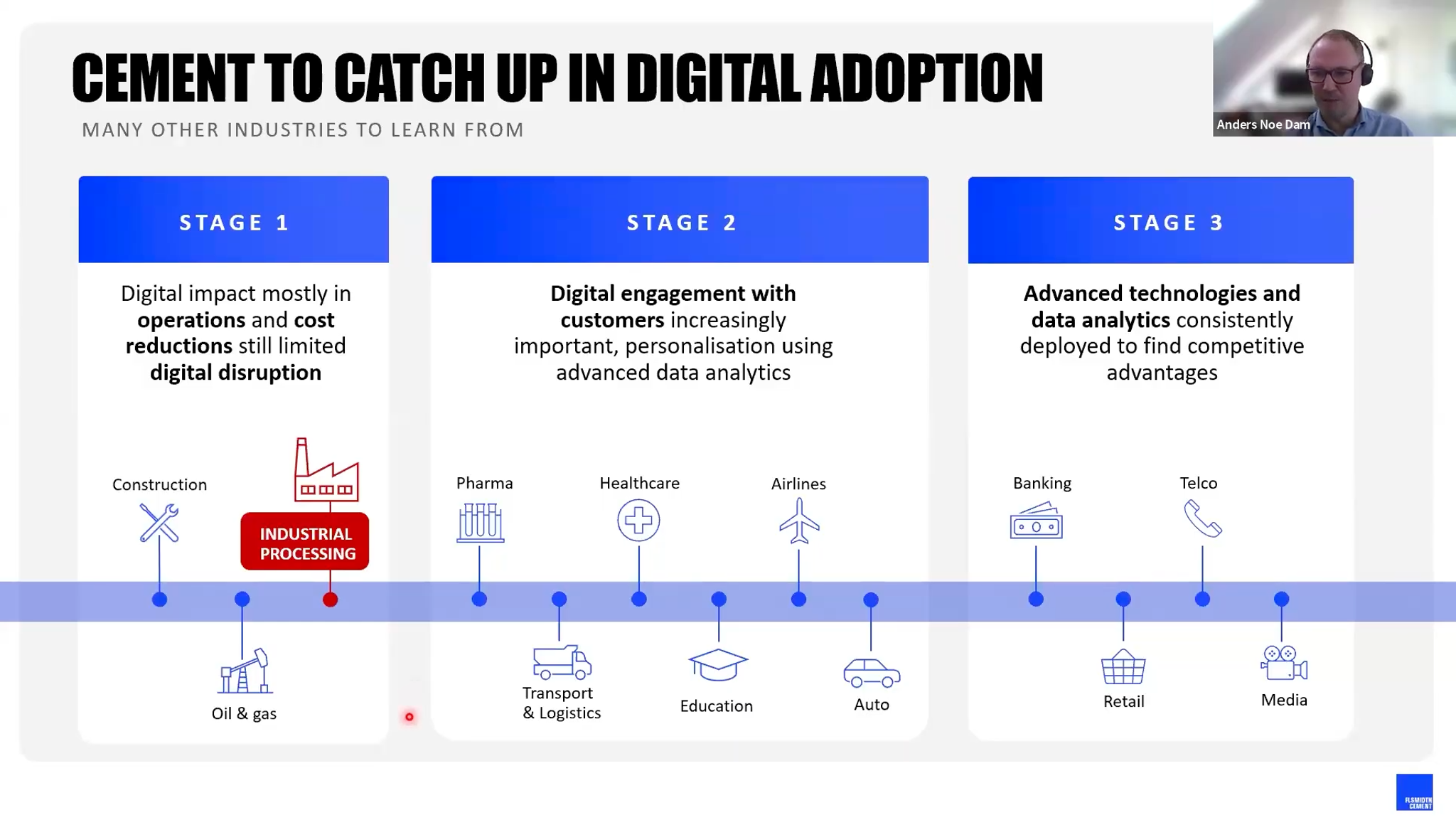
The cement industry remains in Stage 1 of digital adoption, alongside construction and oil & gas. This stage is characterized by "digital impact mostly in operations and cost reductions, still limited digital disruption." More advanced industries like pharmaceuticals, healthcare, and automotive have reached Stage 2 (using digital for customer engagement and advanced analytics), while banking, telecommunications, retail, and media have achieved Stage 3 (consistently deploying advanced technologies for competitive advantage). This comparison highlights significant potential for cement producers to learn from and adopt strategies from more digitally mature sectors.
Effective AI and analytics implementation typically requires at least one year of time-series data at 1-10 second resolution. Many plants store data in historians but often at insufficient resolution (>10 seconds). Quality data is equally important, requiring structured database storage with appropriate metadata for all samples, including both automated and manual lab results. Without this foundation, even well-collected data becomes difficult for AI to interpret, limiting its ability to predict process behavior and optimize operations. ECS/ControlCenter systems from the last decade automatically store one year of data at one-second resolution, providing a solid foundation for analytics.
ECS/ProcessExpert V9.1 delivers substantial performance improvements across all key metrics compared to previous versions. Kiln specific heat consumption and production improvements increase from 2-5% to 4-7%. Process and quality variation reduction improves from 30% to up to 40%. CO2 footprint reduction increases from up to 1.5% to up to 2%, and green fuel use capability expands from 5% to 5-10%. Most importantly, the new self-adaptive controllers achieve higher utilization rates, meaning plants keep the optimization systems running more consistently, which is crucial for realizing these benefits in practice.
The self-adaptive controllers in ProcessExpert V9.1 offer four critical advantages over previous model predictive control (MPC) technology. They adapt dynamically to time-variable process dynamics that are common in cement production. They achieve better long-term process stability. They deliver more consistency in implementation across different plants. And they significantly reduce implementation time. This technology was developed in collaboration with Lin & Associates, leveraging their patented DELTUM adaptive control technology that has proven successful in other industries.
Quality data forms the foundation for all "green cement" initiatives that reduce environmental impact. Comprehensive quality data enables optimization of the clinker factor, which directly reduces CO2 emissions. Without proper control of raw materials' chemical properties, effectively optimizing blending for lower clinker content becomes impossible. Advanced technologies like XRD analysis provide deeper material understanding that supports clinker substitution while maintaining quality standards. This data foundation becomes particularly critical when implementing alternative materials such as calcined clay.
Open standards accelerate innovation and reduce costs in cement automation. While the IT world has embraced open, standards-based approaches, operational technology remains largely proprietary and subject to vendor lock-in. This difference significantly impacts innovation speed—mobile phones have evolved rapidly compared to industrial control systems. Open standards enable lower costs through increased competition, greater flexibility through easier integration, and enhanced cybersecurity through wider scrutiny. FLSmidth Cement actively participates in the Open Process Automation Forum and UniversalAutomation.org to bring these benefits to cement through control systems that implement open IEC 61131 libraries.
Subscription models align better with the rapid pace of innovation in Industry 4.0 technologies. Features are released at a much faster pace than traditional upgrade cycles allow, giving subscribers immediate access to innovations. Maintaining older systems prevents realizing the benefits of newer technologies and creates cybersecurity risks as systems fall behind the latest security updates. Subscription models offer lower initial costs while ensuring continuous access to latest technologies, making it easier for plants to adopt and benefit from innovations. This approach supports continuous improvement rather than periodic major upgrades.
Secure connectivity requires proper cybersecurity measures between the plant and cloud solutions. Most AI providers structure their analytics in the cloud—extracting plant data, processing it, and returning setpoints or predictions. Many cement plants face challenges with both extracting data for cloud processing and returning optimization setpoints to the plant, which requires careful planning and proper architecture. Fuller has integrated MQTT protocol directly into control systems to facilitate cloud connectivity, but comprehensive cyber assessments remain essential to identify vulnerabilities and implement appropriate security measures.
Plantline service agreements include an Essential Core Module that provides comprehensive support for all agreements. This essential package lays the foundation for more advanced offerings: Proactive services (focused maintenance and optimization to minimize downtime), Lifecycle management (ensuring access to latest software features), Cybersecurity (providing managed protection through whitelisting and system hardening), and Remote Technologies (including mobile apps and secure connections). This structure offers a fully flexible package ensuring plants have foundational support, protection, and access to current technology as part of their service agreement.
Cement plants should start with comprehensive assessments to understand their current situation and develop a tailored implementation plan. Three specific audit services are recommended: Cyber Audits to evaluate security risks and vulnerabilities essential for safe connectivity; Sampling & Lab Audits to verify equipment and procedures provide quality data needed for optimization; and Data Audits to assess collection methods, accessibility, and overall data quality. Based on these assessments, plants can develop an implementation strategy that addresses their specific barriers and priorities while ensuring the foundational elements for Industry 4.0 success.
Industry 4.0 implementation does not necessarily require complete system replacement. Many existing systems can remain with adaptations to support new services. The approach focuses on augmenting existing control systems with new capabilities. For instance, ECS/ControlCenter from the last decade already provides one-year of data at one-second resolution, establishing a foundation for analytics. Modern systems now support distributed data access, MQTT protocols for cloud connectivity, and can execute AI scripts directly or connect to cloud endpoints. This hybrid architecture enables a practical, incremental approach to digital transformation.
Fuller's product roadmap extends through 2028 with planned capabilities that progressively enhance cement plant performance. Near-term developments include clay calcination modules, hot air distribution control, and kiln bypass NOx control (2025); kiln startup automation, soft sensors for quality parameters like Free lime and Blaine, and simplified user interfaces (2026); advanced multifuel applications and auto-retraining models (2027); and ultimately cloud-based ProcessExpert, AI "copilot" process evolution, and plant-wide optimization systems (2028). This structured development approach ensures continuous innovation in cement automation technologies.
Industry 4.0 technologies deliver quantifiable benefits across multiple operational areas. Process optimization yields 4-7% production increases and equivalent energy savings. Quality improvement systems enable better cement with reduced clinker factor, contributing to up to 2% CO2 footprint reduction. Condition-based monitoring delivers the highest maturity level among Industry 4.0 applications, increasing equipment uptime and reducing maintenance costs. Plants utilizing comprehensive digital solutions have experienced up to a 20% increase in overall production efficiency, 15% reduction in energy consumption, and 10% decrease in raw material wastage through real-time analytics and predictive maintenance.







.png?w=1080&q=80&auto=format)