In this presentation Kiranmai Sanagavarapu, Program Manager for Clinker Decarbonization at Fuller, addresses the cement industry's dual challenge: meeting 75% of global infrastructure needs by 2050 while eliminating the sector's 7% contribution to CO2 emissions. Drawing from cross-regional experience across India, Europe, and the US, she presents proven alternative fuel substitution technologies that achieve 80-100% fuel replacement while reducing NOx emissions by up to 25%. The presentation features practical green cement solutions including the ILC Low NOx Calciner, HOTDISC® Reactor, and innovative FuelFlex® Pyrolyzer, with real plant data demonstrating 1-3 year ROI and immediate pathways for cement producers to begin their decarbonization journey.
This webinar is part of the Cemtech Live Webinar series, recorded 7 May 2025.
We face a dual challenge globally. About 75% of the infrastructure needed by 2050 remains unbuilt—wind turbines, climate adaptation projects, and urban development—yet cement production already contributes roughly 7% of global CO₂ emissions. This positions our industry not just as part of the problem, but as an essential part of the solution.
Most cement plants continue operating with limited alternative fuel adoption due to technical constraints, fuel quality concerns, and operational stability risks. Traditional efficiency improvements, while valuable, cannot bridge the performance gap required for meaningful decarbonization. The result is an industry caught between regulatory pressure for measurable progress and legitimate concerns about unproven retrofit solutions.
Proven Technologies Already Deliver High Fuel Substitution
The good news? Solutions exist that work in real commercial operations today. Drawing from installations across India, Europe, and the USA, three approaches convert even coarse, low-grade wastes into reliable kiln energy while addressing the specific constraints that keep most plants from meaningful fuel substitution.
Calciner technologies handle fuel consistency challenges where plants struggle with irregular waste materials. Reactor solutions work for facilities needing maximum flexibility with whatever fuel sources they can secure locally. Compact retrofit options fit plants where space limits major modifications.
Success depends on matching solutions to each plant's unique situation—what we call their "circles of influence." Internal capabilities, regional fuel markets, and regulatory frameworks all determine which approach works best. There is no silver bullet in decarbonization. It's about combining the right technologies for your specific context and starting the transition today.
Featuring:
Kiranmai Sanagavarapu, Program Manager for Clinker Decarbonization at Fuller, whose experience across multiple continents delivers cross-regional insights into how operational and regulatory factors influence cement decarbonization strategies.
Key insights include:
Why each plant's "circles of influence"—internal culture, local fuel markets, and global policy trends—determine which decarbonization lever works best for their situation
How proven calciner and reactor technologies achieve 80-100% fossil fuel replacement while turning landfill waste into viable energy streams for cement production
Real plant data showing NOx cuts from 474 to 358 mg/Nm³ with complete elimination of ammonia usage and coal reduced to 1.6 tons per hour
How integrated automation from fuel dosing through gas analysis maintains clinker quality and production rates during high alternative fuel operation
Why starting now with available technologies, learning from results, and building incrementally outperforms wait-and-see strategies
Discover how every cement plant, regardless of size or location, can take meaningful decarbonization steps today through proven alternative fuel technologies. Watch the full presentation now.
We are facing a dual challenge globally. On one hand, about 75 percentage of the infrastructure we'll need by 2050 is yet to be built. And on the other, cement, which underpins all of that infrastructure, contributes about 7 percentage of the global CO2 emissions. This makes our industry not just part of the problem, but also an essential part of the solution.
Kiranmai Sanagavarapu - Program Manager for Clinker Decarbonization
Understanding Your Circles of Influence Drives Decarbonization Success
Plant-level factors like operational culture and technical constraints vary dramatically between facilities
Local fuel availability, processing infrastructure, and permitting requirements determine implementation speed
Global energy prices and policy consistency influence long-term investment decisions
Focus on the circle you can control first rather than waiting for universal solutions
Each plant faces a unique combination of influence circles, making contextual approaches more effective than universal solutions. Choose your circle of influence and start working from there.
02
ILC Low NOx Calciner Delivers Maximum Fuel Flexibility with Minimal Investment
Achieves 80-100% alternative fuel substitution including 2D materials up to 100x100mm and tire chips up to 50mm
High-oxygen bottom zone provides 20-60 seconds combustion time for complete burnout of large particles
Long gas residence times and low velocities allow particles to recirculate for thorough combustion
The ILC calciner represents the first and easiest choice for alternative fuel combustion. Fuel preparation affects combustion behavior dramatically—smaller, more uniform particles burn faster and more completely.
03
HOTDISC® Reactor Transforms Landfill Material into Viable Energy Streams
Processes alternative fuels up to 1.2 meters in size, from municipal sludge to whole truck tires
Handles extremely low-grade materials with heating values as low as 1200 kcal/kg and moisture exceeding 50%
Variable retention times of 3-45 minutes ensure complete burnout while preventing operational disturbances
Three variants (standard, HMT, and S) accommodate different plant layouts without major structural changes
With over 20 years of documented performance achieving 50-90% calciner substitution, this technology turns what used to be landfill material into viable energy streams for cement production. The capability proves particularly valuable where waste processing infrastructure is limited.
04
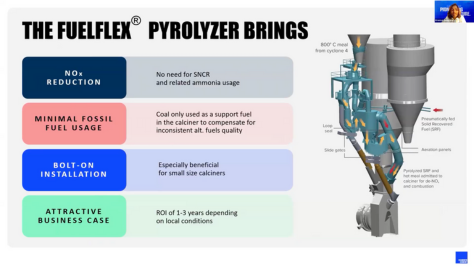
FUELFLEX® Pyrolyzer Cuts NOx Emissions While Delivering Fast Payback
Real plant data shows NOx reduction from 474 to 358 mg/Nm³ at 10% oxygen while eliminating ammonia water usage entirely
Bolt-on design enables installation without costly calciner extensions, particularly beneficial for smaller facilities
Transforms RDF and biomass into highly reactive gas streams through oxygen-free heating
Returns investment within 1-3 years depending on local fuel costs and regulatory requirements
This pyrolysis technology provides an elegant solution for plants facing strict ammonia use regulations. The results demonstrate tangible environmental and operational impact backed by real performance numbers.
05
Integrated Automation Ensures Quality Performance at High Alternative Fuel Rates
Process control systems like ECS/ProcessExpert® maintain kiln stability and product quality during fuel transitions
Advanced dosing systems (Pfister® TRW-S/D, FEEDflex) provide precise fuel flow control for consistent operation
Gas analysis systems (KilnLoq®, GASLoq®) enable continuous emission monitoring and combustion optimization
Comprehensive service agreements support ongoing performance optimization and remote monitoring
Successful high-rate alternative fuel implementation requires robust automation to manage fuel variability without compromising clinker quality or production throughput. Technology integration proves as critical as individual equipment performance.
06
Start Immediately with Available Technologies Rather Than Waiting for Perfect Solutions
No single solution exists—success requires combining appropriate technologies for each plant's specific context
Available solutions can deliver immediate emission reductions while building operational experience
Incremental implementation reduces risk while allowing plants to learn and adapt their approach
Every cement plant can take meaningful steps today regardless of size or location constraints
The green transition in cement represents a continuous journey rather than a one-time event. Starting now with proven technologies enables learning and incremental building rather than waiting for comprehensive future solutions.
Start Your Decarbonization Journey Today: No Silver Bullet? No Problem.
Every cement plant operates within different circles of influence. Stop wondering if alternative fuel substitution works at scale - Fuller's proven technologies deliver results across three continents, helping cement producers navigate the green cement challenge with tailored solutions addressing your plant's unique operational requirements.
Ready to Start Your Decarbonization Journey With Proven Alternative Fuel Technologies?
The path forward is clear: match proven technology to your plant's specific constraints rather than waiting for perfect solutions. Whether you're dealing with fuel consistency issues, diverse waste streams, or space limitations, field-tested alternatives exist today.
Drawing from over 20 years of commercial installations worldwide, the plants succeeding with high fuel substitution share one approach—they started with available technology, learned from operational results, and built incrementally. As we see with customers across diverse locations globally, each installation teaches them more about their local fuel markets and what works within their specific regulatory frameworks.
The green transition in cement isn't a one-time event—it's a continuous journey. Your circles of influence are unique, but the opportunity is immediate. We're consistently turning landfill material into viable energy streams for cement production, and we're doing it every day in multiple installations globally.
The question isn't which technology is "best." It's which combination fits your operational reality and gets you moving toward meaningful emission reductions now.
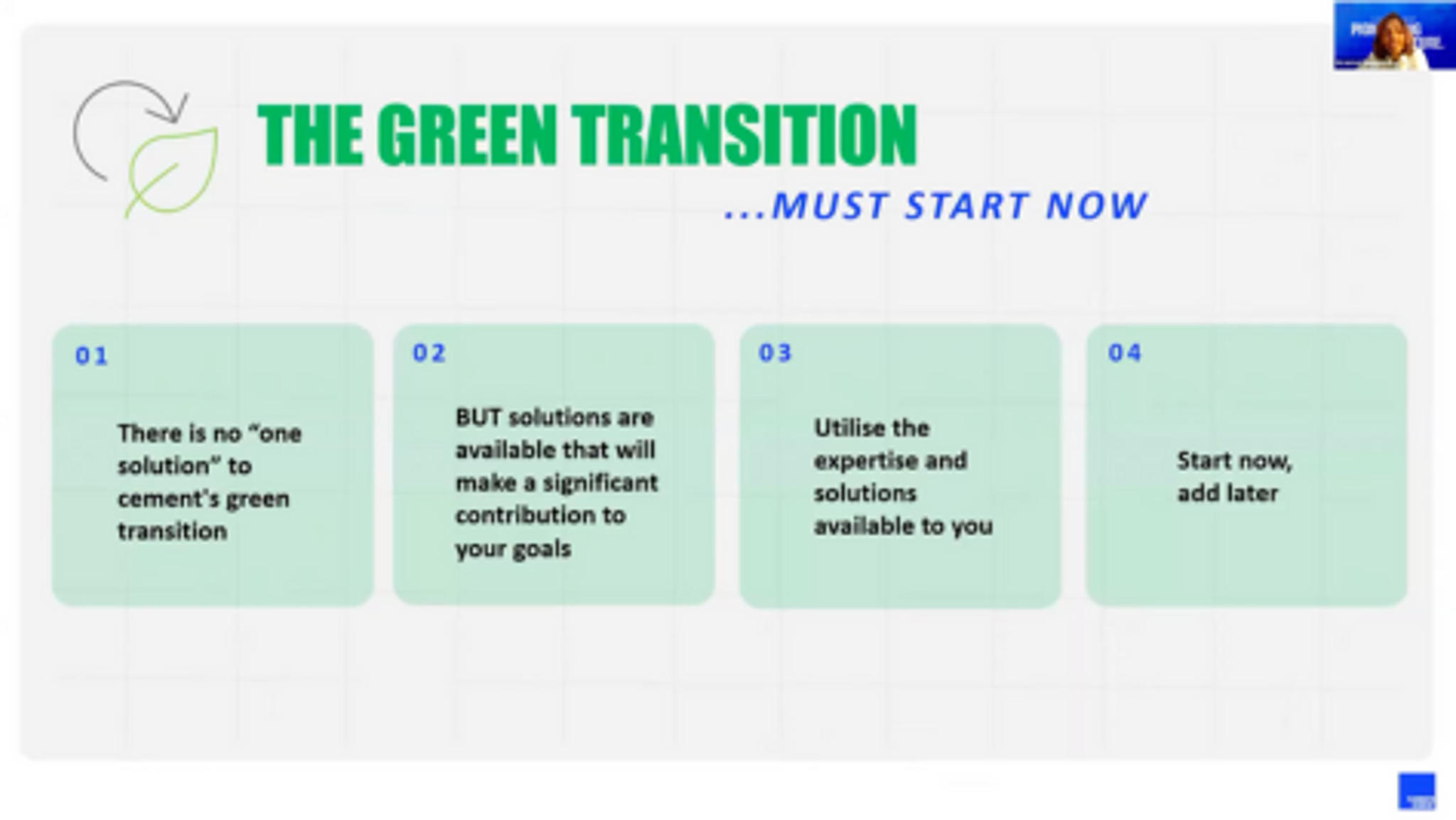
We all know there is no silver bullet in decarbonization. It's all about combining the right technologies for your specific context. Understand your influence circles, use the right mix of solutions to achieve reliable and consistent performance while still substituting alternative fuels in your systems. The green transition in cement is not a one-time event—it's a continuous journey. What matters is to start now, learn quickly, and build incrementally.
Kiranmai Sanagavarapu - Program Manager for Clinker Decarbonization
About 75% of the infrastructure we'll need by 2050 is yet to be built - wind turbines, climate adaptation projects, high-rise offices. On the other hand, cement, which underpins all of that infrastructure, contributes about 7% of global CO₂ emissions. This makes our industry not just part of the problem, but also an essential part of the solution.
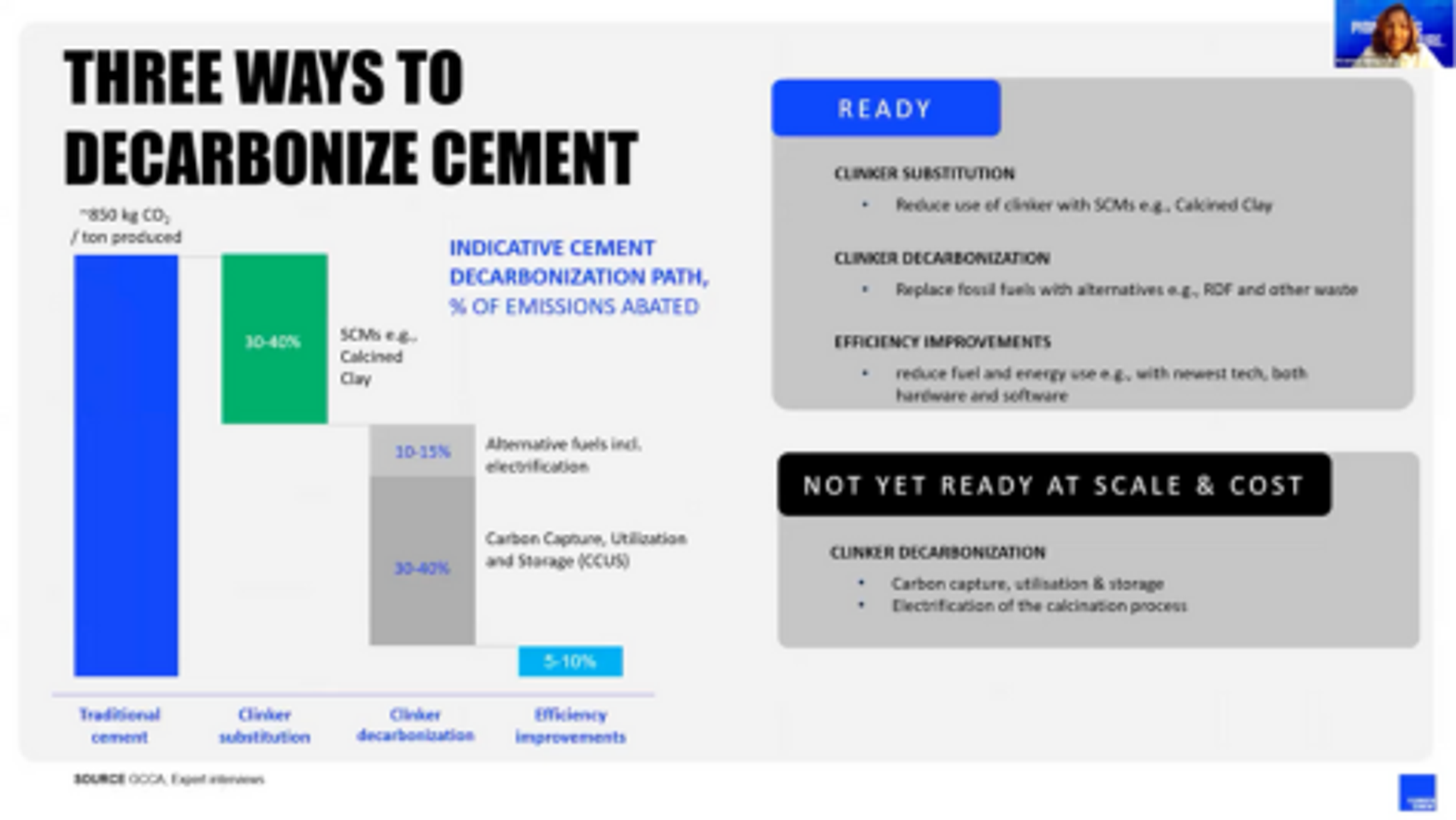
We often get asked, "Are these technologies ready today, and which of them are still maturing?" While some solutions like alternative fuel firing and calcined clay are available today, there are other aspects like carbon capture and electrification which we are trying to crack the code for. The ready solutions include clinker substitution (30-40% emissions reduction), alternative fuels (10-15% reduction), and efficiency improvements (5-10% reduction).
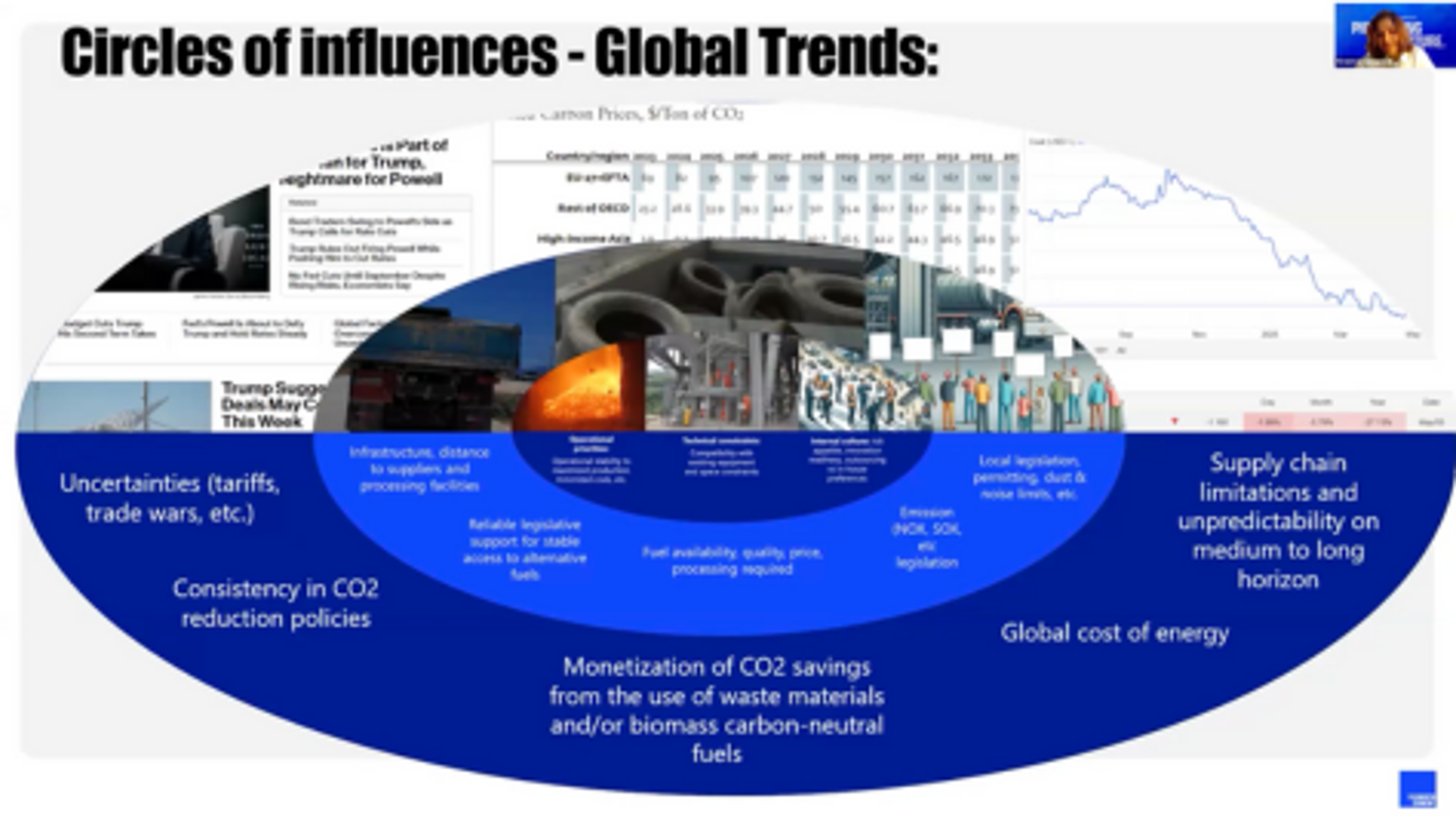
Three concentric circles shape each plant's approach. Plant-level factors include operational priorities, technical constraints, and internal culture around innovation and risk. Local and regional aspects encompass fuel availability, infrastructure for processing alternative fuels, and permitting requirements. Global trends involve energy prices, supply chain unpredictability, and CO₂ policy consistency. Each plant's unique combination of these factors determines the most viable decarbonization pathway.
The ILC Low NOx Calciner achieves 80-100% alternative fuel substitution through three key design features. Large particles stay in the bottom zone with high oxygen levels, ensuring complete burnout. The system provides 20-60 seconds of particle combustion time through long gas residence times and low velocities. It handles materials up to 100x100mm and tire chips up to 50mm with minimal pre-treatment, significantly reducing fuel preparation costs.
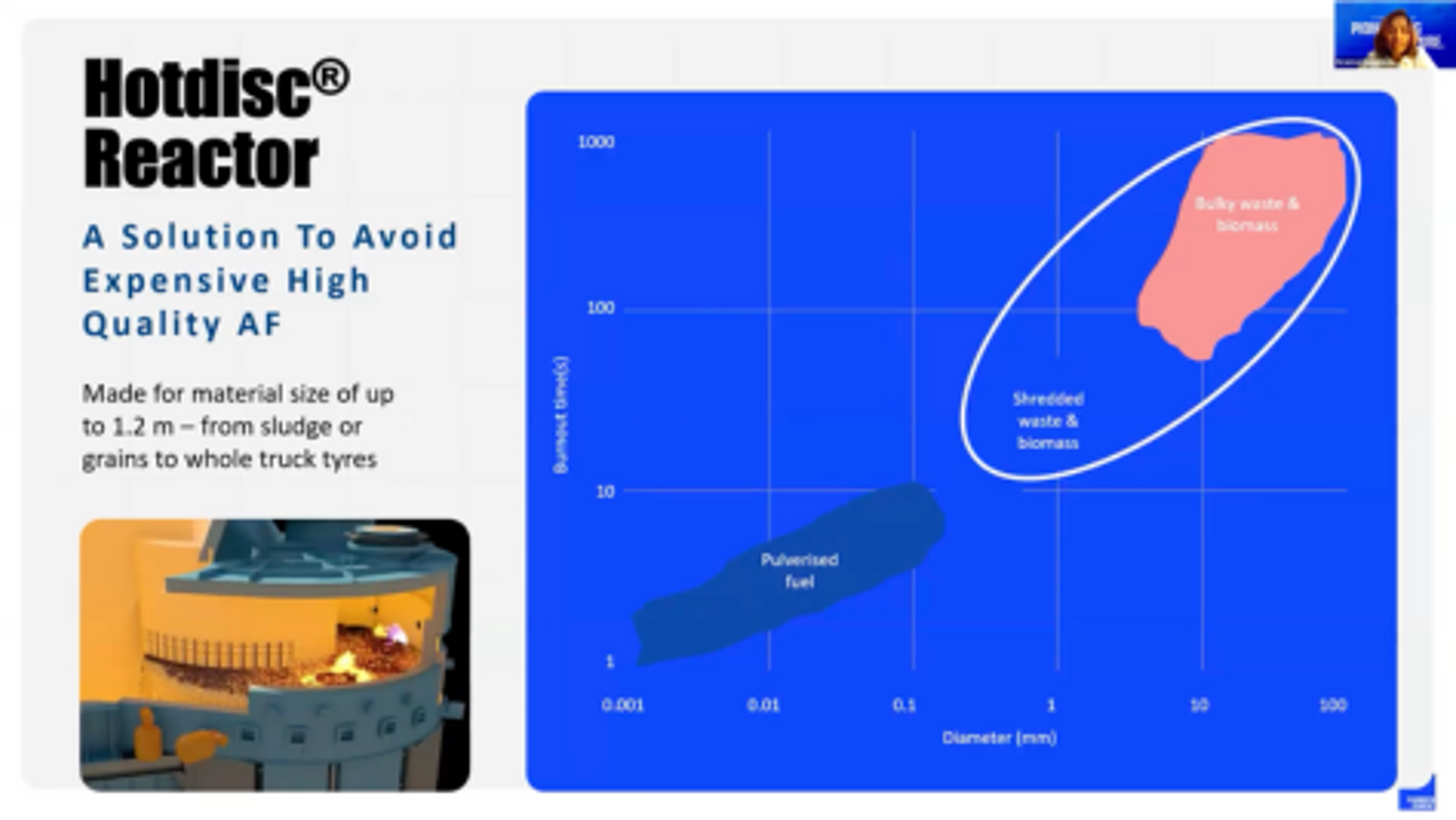
The HOTDISC® Reactor handles materials up to 1.2 meters in size, from sludge and grains to whole truck tires. This capability matters because fuel preparation dramatically affects combustion behavior. While pulverized fuels burn in 1-10 seconds, bulky waste requires up to 1000 seconds. The Hotdisc's design accommodates this extended burnout time, turning what would be landfill waste into viable energy streams with heating values as low as 1200 kcal/kg and moisture content exceeding 50%.
We have global installations, but there is a concentration of installations in the Asian region. That is also because they sometimes tend to have poor quality alternative fuels, typically municipal sewage waste, which they would have to burn. Instead of wasting it, it's nice to burn in equipment like HOTDISC, and they're able to do that on a consistent basis. If I were to go for a HOTDISC, I would do that if I have a range of alternative fuels and a range of quality as well.
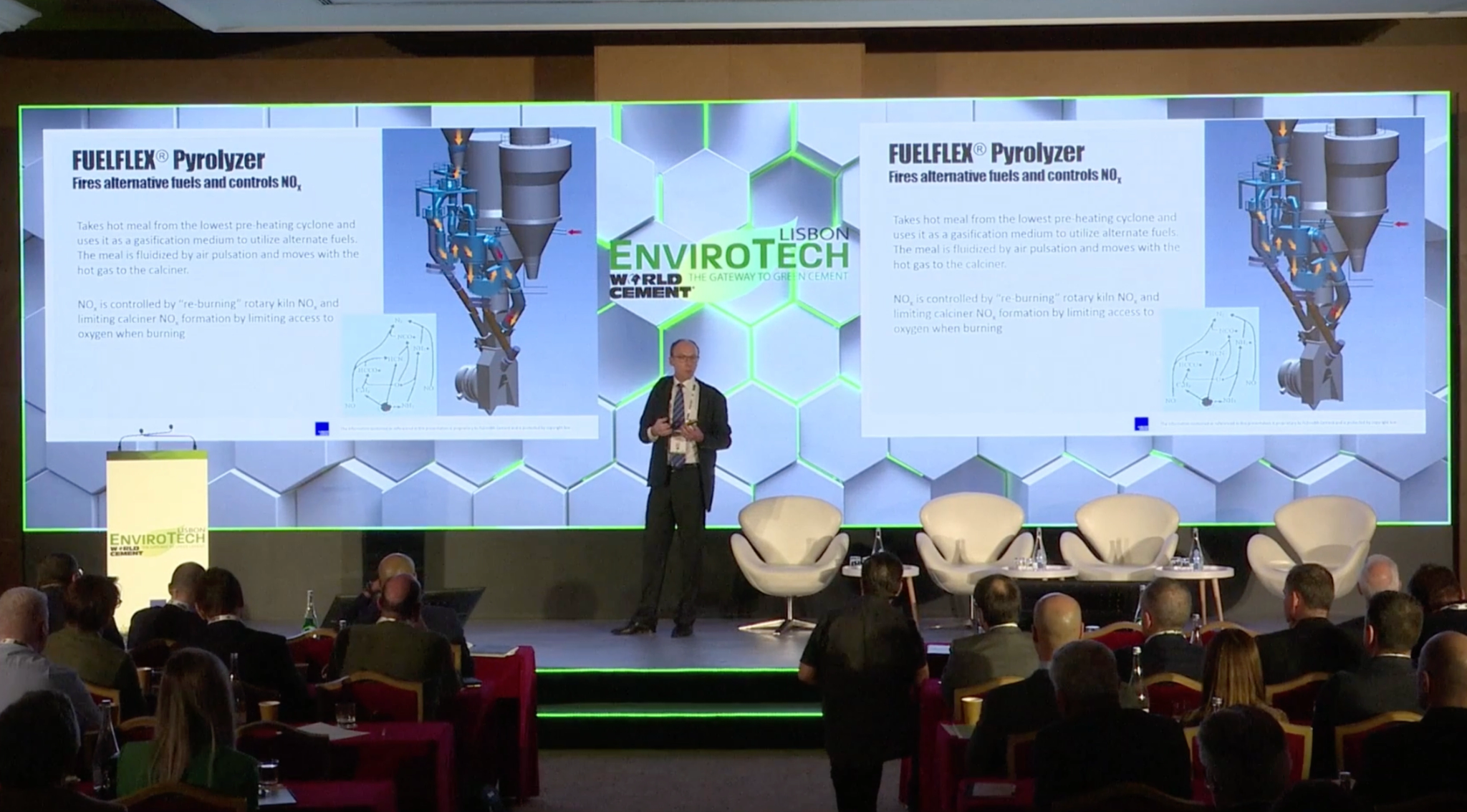
The FUELFLEX® Pyrolyzer heats refuse-derived fuel (RDF) and biomass in an oxygen-free environment, breaking materials down into combustible gases and solids through pyrolysis. This process creates a more reactive, energy-rich gas stream that burns cleaner than direct waste combustion. The technology operates as a bolt-on installation, making it particularly beneficial for small to mid-sized calciners that struggle with alternative fuel consistency.
Plant data demonstrates significant NOx reduction capabilities. When shifting solid recovered fuel from direct calciner firing to FuelFlex processing, stack NOx emissions dropped from 474 to 358 mg per normal meter cube at 10% oxygen. Simultaneously, ammonia water usage fell to zero, eliminating the need for SNCR systems. This represents tangible environmental and operational impact with measurable cost savings.
The FUELFLEX® Pyrolyzer delivers return on investment within 1-3 years, depending on local conditions including fuel costs, emission regulations, and operational requirements. For small to mid-sized calciners that struggle with alternative fuel consistency, this becomes a game changer. The technology becomes particularly attractive for plants in regions with strict ammonia usage regulations, offering an elegant solution that combines high fuel substitution, NOx reduction, and minimal fossil fuel consumption in a single bolt-on package.
Our comprehensive automation portfolio includes process control and optimization through ECS/ControlCenter and ProcessExpert software, sampling preparation and analysis via QCX/BlendExpert and RoboLab systems, and gas analysis through KilnLoq and GASLoq systems. These solutions ensure fuel substitution doesn't compromise quality or throughput while maintaining compliance with environmental regulations and optimizing combustion efficiency.
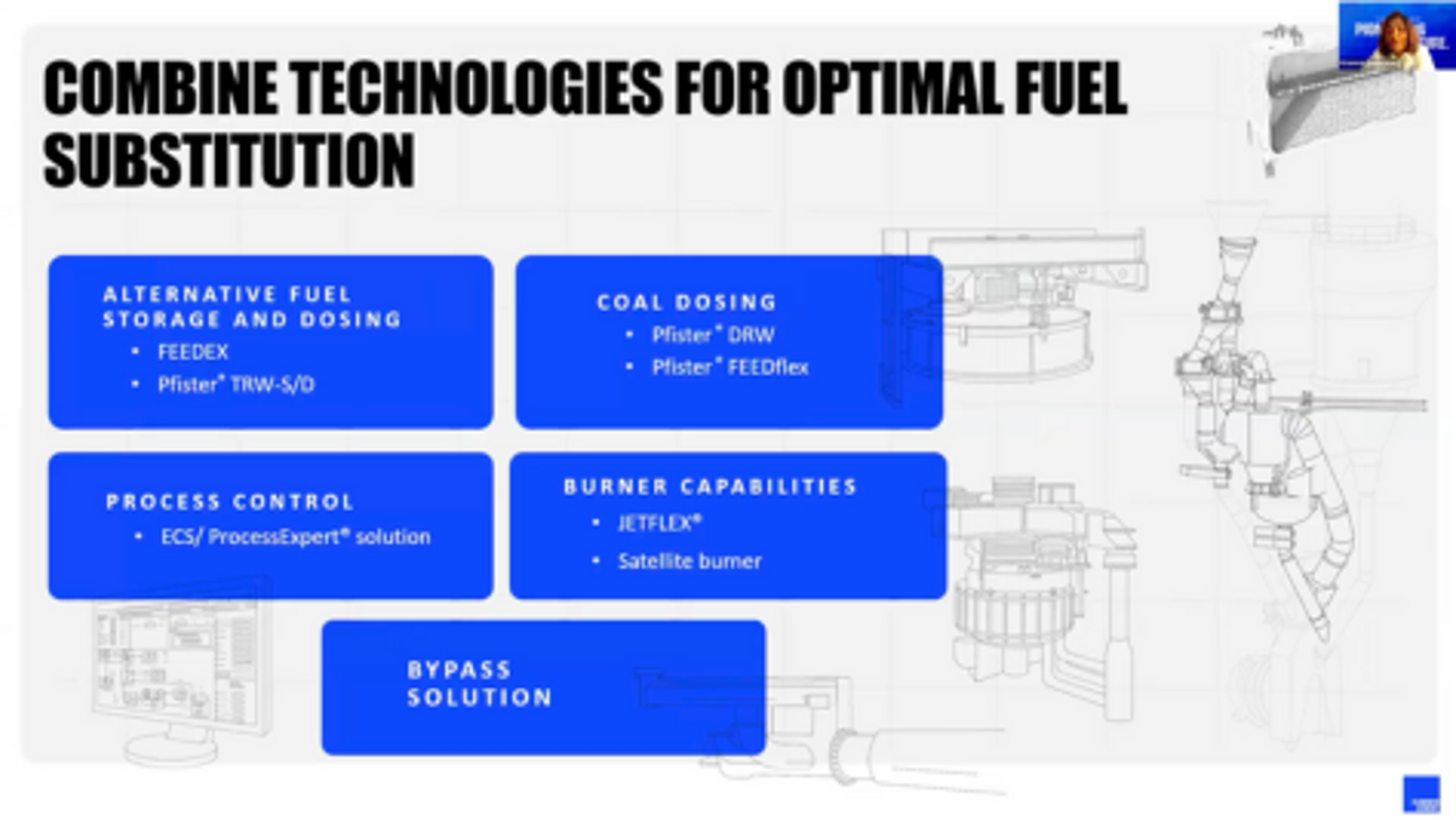
No silver bullet exists in decarbonization. Success requires combining the right technologies for each plant's specific context. Optimal fuel substitution demands integration of alternative fuel storage and dosing systems, precise coal dosing where needed, advanced process control, high-performance burners like JETFLEX®, and bypass solutions for managing elements like chlorine. Each component plays a critical role in the overall system performance.
The green transition is a continuous journey, not a one-time event. Plants should start now, learn quickly, and build incrementally. Every plant, regardless of size or location, can take meaningful steps today by understanding their specific circles of influence and selecting appropriate technology combinations. The key is beginning the transition process immediately while maintaining operational stability and economic viability.
Yes, this trend is accelerating. Customer conversations increasingly include technologies like the HOTDSIC and FUELFLEX as part of initial business cases rather than afterthoughts. This development is inspiring because it indicates plants have figured out what works, established alternative fuel supply chains, and anticipated various operational scenarios. Modern kiln designs increasingly incorporate high alternative fuel utilization from the planning stage.
The choice depends on available fuel types and market maturity. The HOTDSIC works best with diverse, varying-quality alternative fuels including very low-grade materials. The FUELFLEX® Pyrolyzer suits plants with access to engineered fuels—pre-shredded materials from more mature waste processing markets like the US and Europe. The FUELFLEX is particularly valuable as a retrofit solution for space-constrained facilities or smaller calciners struggling with fuel consistency.
The industry continues advancing multiple technology fronts simultaneously. While alternative fuel technologies and calcined clay substitution deliver immediate results, carbon capture and electrification solutions are progressing toward commercial viability. Future success will depend on continued innovation in automation, process control, and integrated system approaches that combine multiple decarbonization levers. The emphasis remains on proven, scalable solutions that deliver measurable environmental and economic benefits.
.png?w=2048&q=80&auto=format)