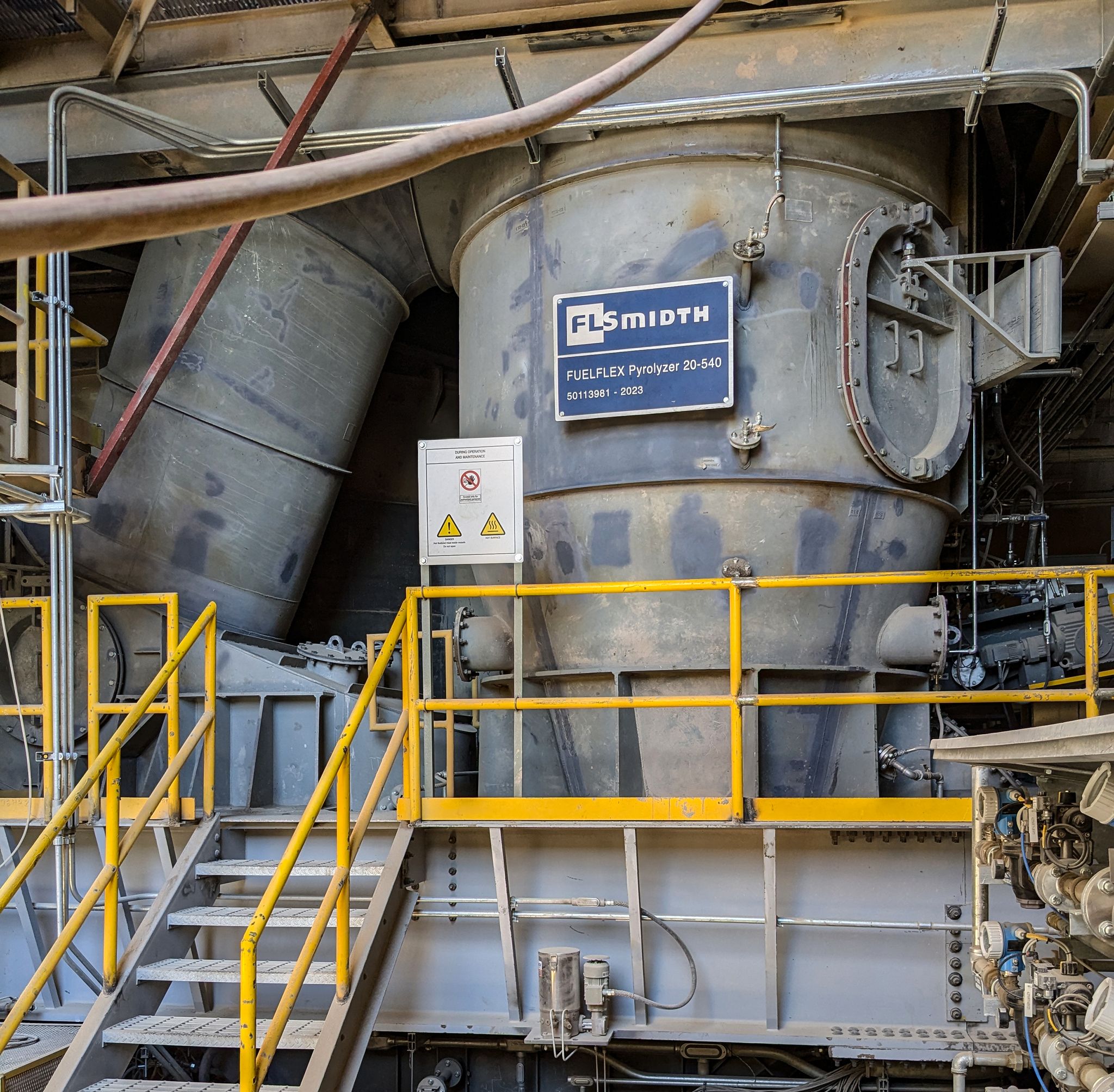
The FUELFLEX Pyrolyzer converts Refuse Derived Fuel (RDF) or biomass to a very effective fuel stream, which enables cement plants to replace fossil fuels and control emissions without a costly calciner extension – and avoiding or limiting costs associated with NOx emission control.
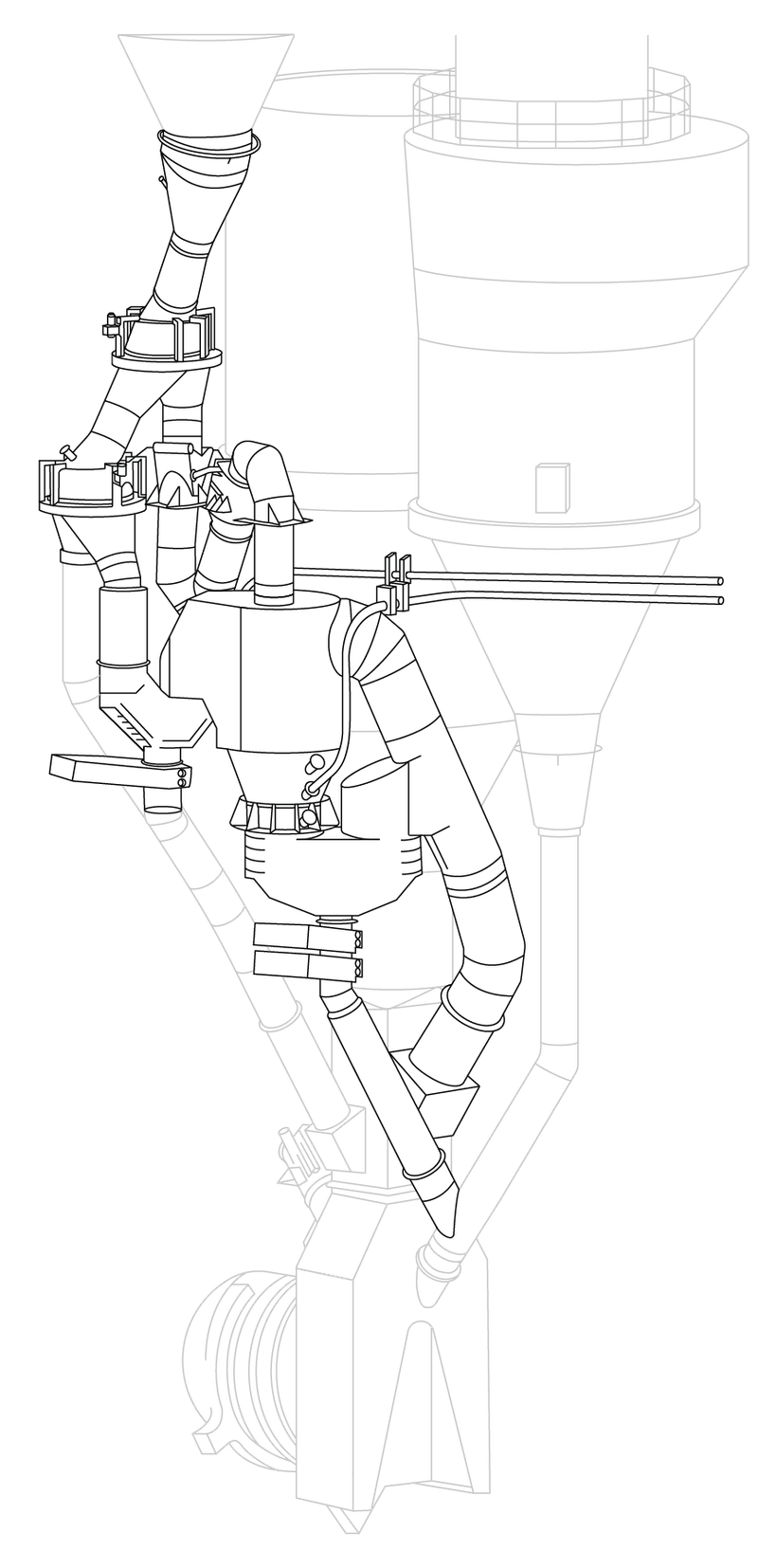
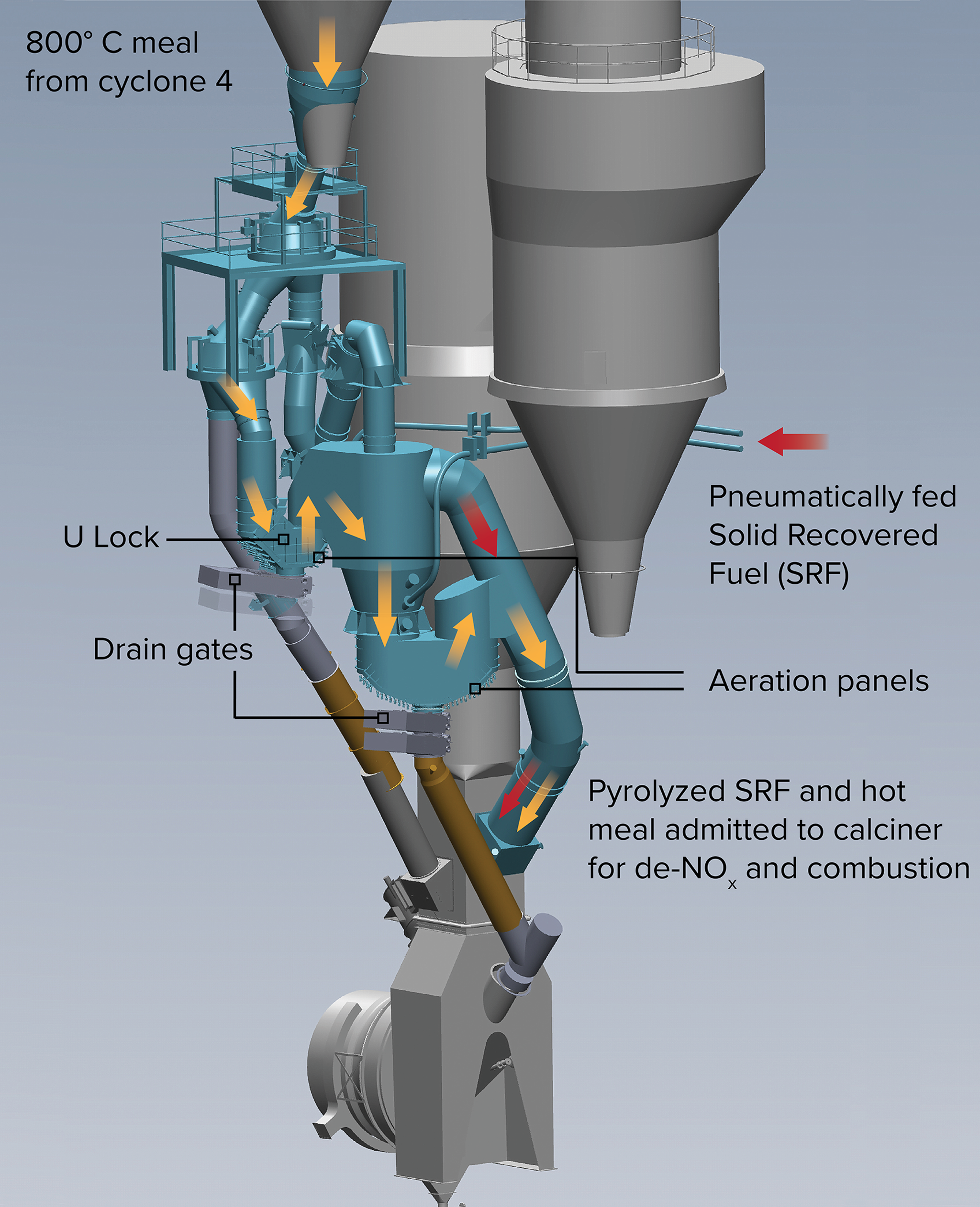
The FUELFLEX Pyrolyzer® utilizes hot meal from lower preheater cyclones to dry and pyrolyze SRF. The U-Lock fluidizes the hot meal, forming a U-shaped gas lock that prevents pyrolysis gases from flowing backwards through the process. Subsequently the hot meal stream flows into the Pyrolyzer vessel, which also has a U-shaped lower aerated section to contain the hot fluidized meal. RDF is pneumatically fed to the pyrolyzer vessel where, through contact with the hot meal, it is dried, heated and pyrolyzed to form reactive gases and char. The gases push upwards into the main pyrolyzer vessels while the char falls down into the fluidized meal bed, before being reunited and fed as a very reactive stream into the calciner.
Aeration panels are used to fluidize the hot meal and slide gates are used to drain out debris and meal from the pyrolyzer to the kiln system in a controlled manner when required.
The reactive stream of pyrolysis products react with rotary kiln NO by so-called “re-burning” reactions, utilizing pyrolysis gases to convert NO into free N2 in the reduction zone prior to mixing with preheated combustion air in the calciner. In addition, the full fuel pyrolysis preceding the calciner contributes to limiting calciner NOx formation by limiting access to oxygen when burning.