28th Aug 2026
Cooler Upgrades That Deliver Exceptional ValueCemtech Live Webinar
Wear happens. Efficiency loss doesn't have to.
In a traditional grate cooler, the grate plates at the connection between moving and fixed grates can be worn out after six months. When conveying and cooling are tied to the same grate line, that wear normally leads to clinker fall-through and declining thermal efficiency - the cooler recovers a little less heat the longer it runs.
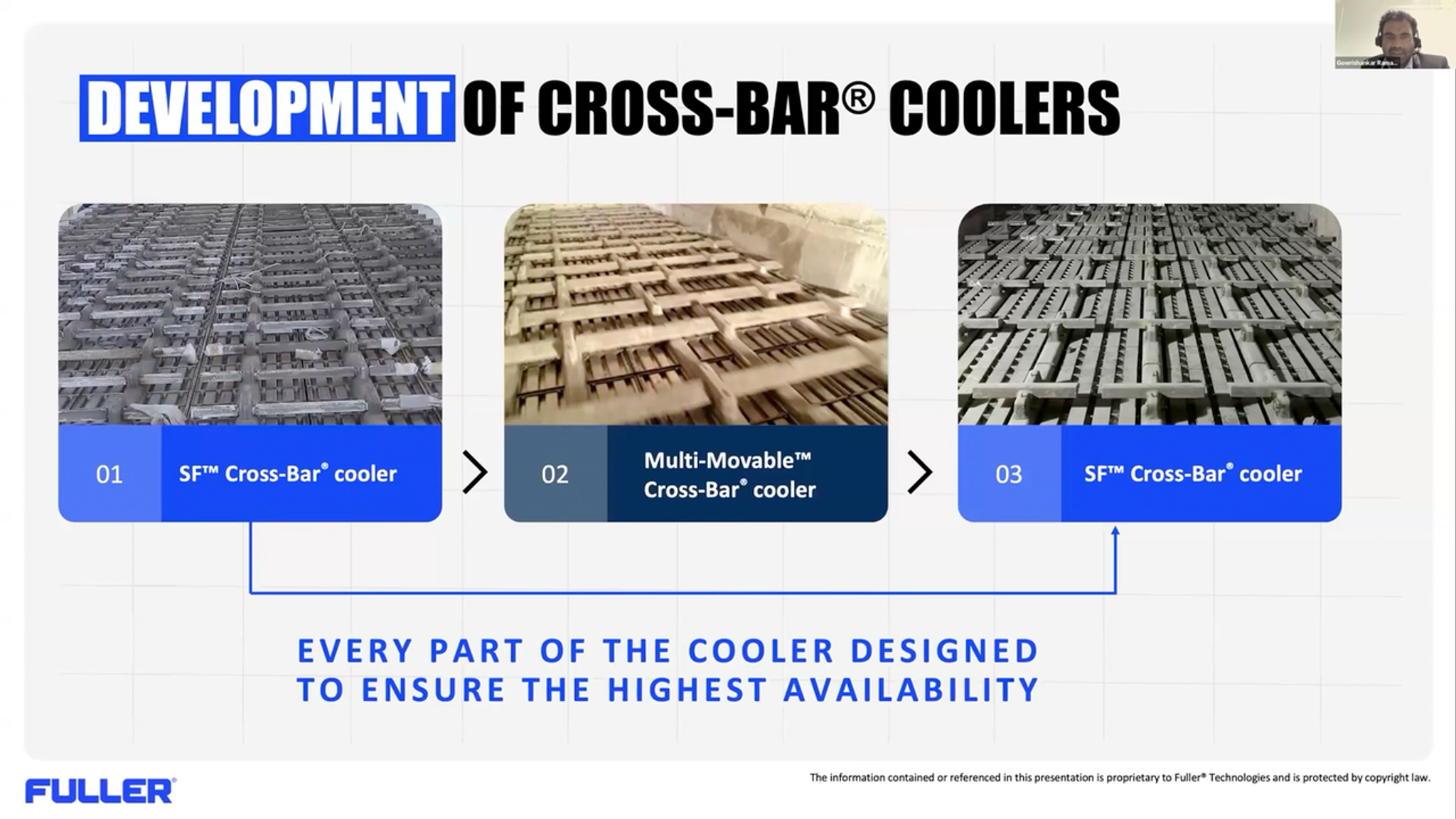
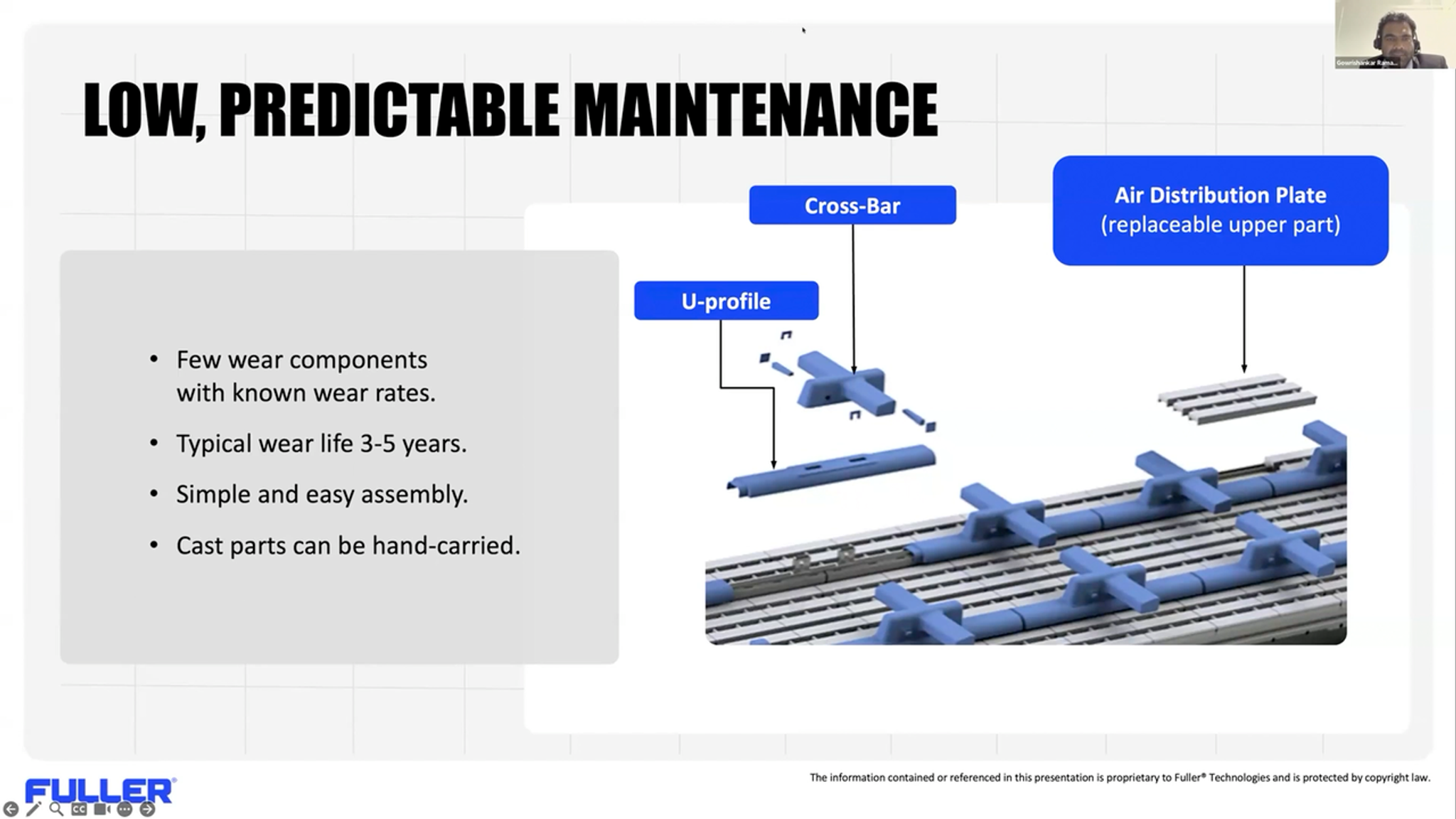
The Cross-Bar® cooler separates these functions. Reciprocating cross-bars convey the clinker above stationary air distribution plates, so wear on the moving parts does not affect cooling efficiency. That principle has underpinned more than 25 years of Cross-Bar cooler development and proven results - from the first SF Cross-Bar cooler in 1997 through the Multi-Movable Cross-Bar to today's Cross-Bar cooler, with every part designed to ensure the highest availability.
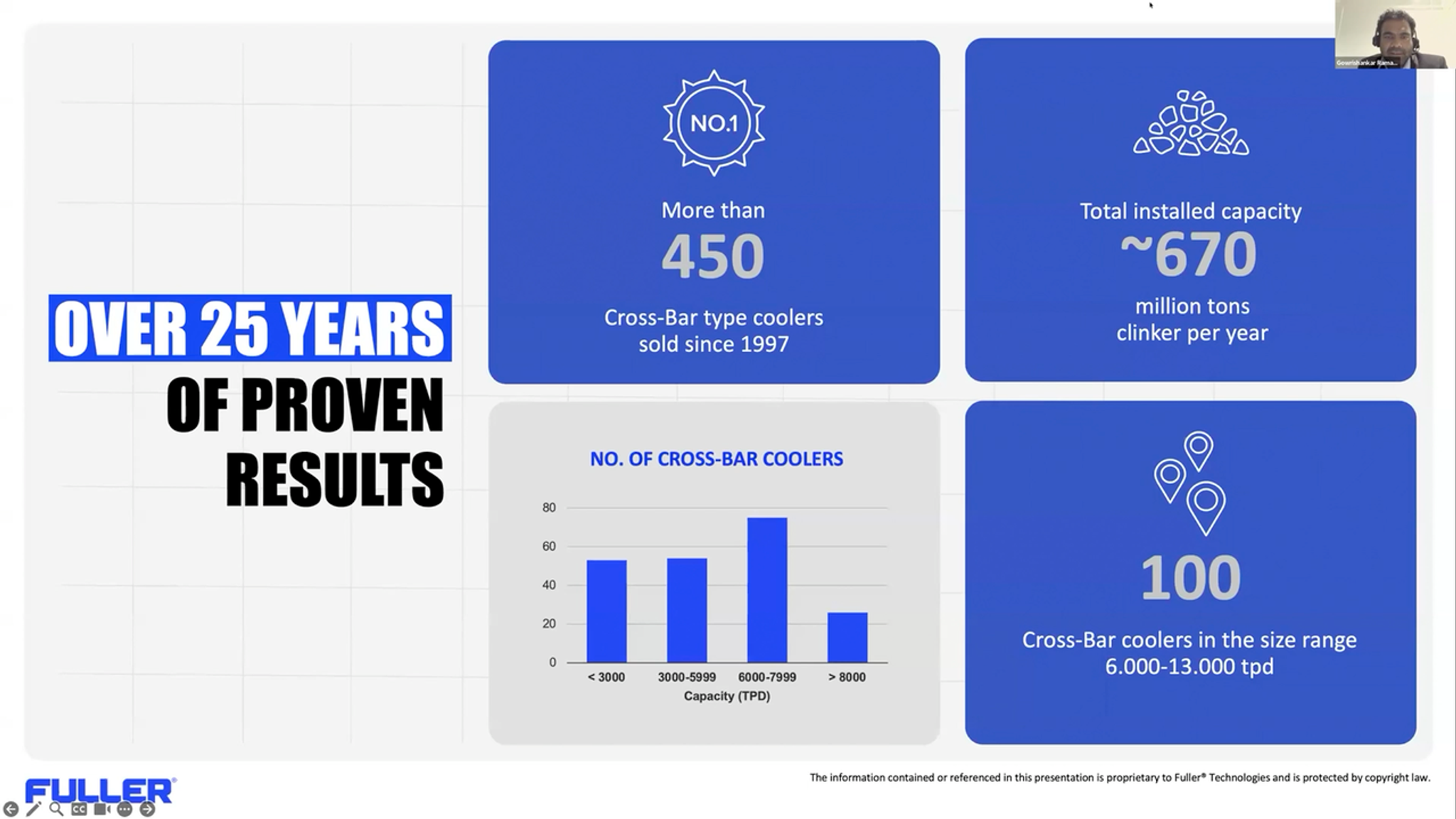
That is why more than 450 Cross-Bar type coolers have been sold since 1997, with a combined installed capacity of around 670 million tons of clinker per year. Controlled airflow, optimised clinker transport, hot-air recirculation and a short list of wear parts with known wear rates are part of the same design - which is what keeps maintenance predictable and performance consistent over time.
Better performance doesn't always need a new cooler
The same focus on performance extends to existing equipment, and our upgrade options scale with the need. Stand-alone components such as the Air Blast Controlled (ABC) inlet and the Heavy-Duty Roll Breaker can be retrofitted to any grate cooler. Existing SF and Multi-Movable (MMC) Cross-Bar coolers can be upgraded in place. Where more is needed, a partial retrofit renews the inlet and recuperation zone, while an inside-box retrofit replaces the grate line and retains the existing casing. Complete replacement is one option, not the only one.
The gains differ by path - reliability and heat recuperation at the inlet, conveying capacity, fan power, cooling capability, wear life. In several cases, the same performance gain can be used in different ways - reducing cooler speed or increasing capacity, for example, or converting lower pressure drop into fan-power savings or additional cooling airflow.
Featured Expert:
Gowrishankar Ramachandran, Senior Product Specialist at Fuller Technologies. He holds a bachelor's degree in mechanical engineering and has more than 20 years of experience in pyro systems, specialising in clinker cooler technology. Throughout his career, he's been instrumental in implementing design improvements to enhance the reliability and efficiency of clinker coolers. With extensive field experience gained from more than 30 cement plants worldwide, he is dedicated to driving continuous improvement in product performance through clinker cooler design, development, troubleshooting, manufacturing, audits and customer seminars.
Key insights include:
- What three generations of Cross-Bar coolers - SF, Multi-Movable and CB - have proven across more than 450 installations and how they differ from traditional coolers.
- How a horizontal cooler lowers the hot working point by one to two metres - and what that takes out of the civil cost of kiln piers and the preheater building.
- How blast air through the grate plates, mechanical flow regulators and adjustable stroke lengths keep snowmen, blow-throughs and red rivers under control.
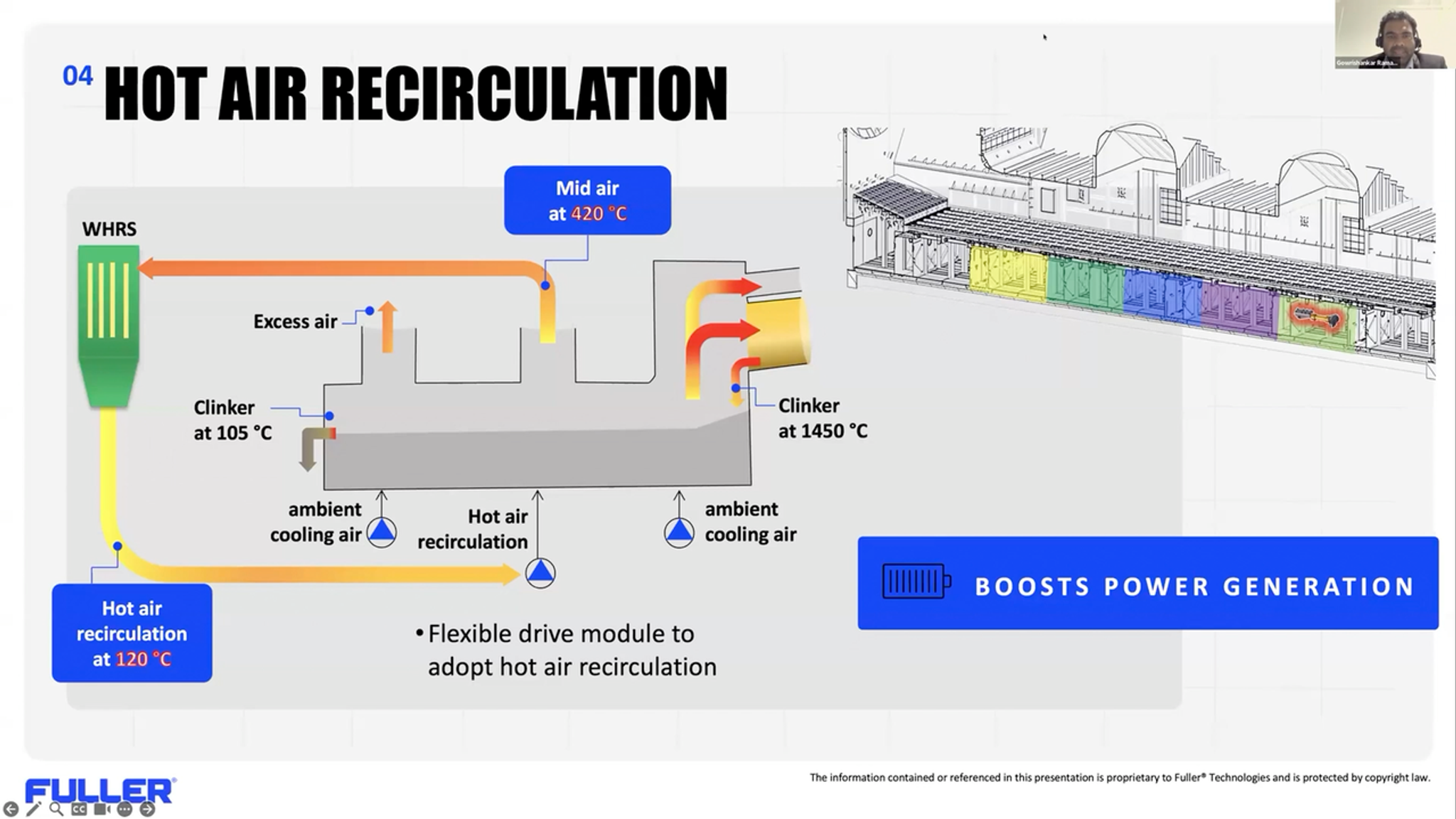
- How hot-air recirculation returns air of around 120 °C to the cooler, raising waste-heat-recovery temperatures by around 50 °C to support power generation.
- Real upgrade results, from eliminating snowman-related downtime to reducing cooler-fan power by nearly 10%.
Watch the webinar now for an introduction to Cross-Bar cooler design, its key features and the cooler upgrade options that raise performance without a full replacement.
- Gowrishankar Ramachandran, Senior Product Specialist, Fuller Technologies
Insights: From Proven Cooler Design to Targeted Performance Gains
Wear and Thermal Efficiency Can Be Decoupled
The grate line stays stationary and sealed. A conventional grate cooler has to live with clinker fall-through and the undergrate conveyor that handles it; here, neither exists. Conveying happens above the grate line rather than through it, so wear on the moving parts does not directly degrade cooling efficiency - a principle that has held since the introduction of the Cross-Bar® cooler.
Inlet Control Shapes Reliability and Recuperation
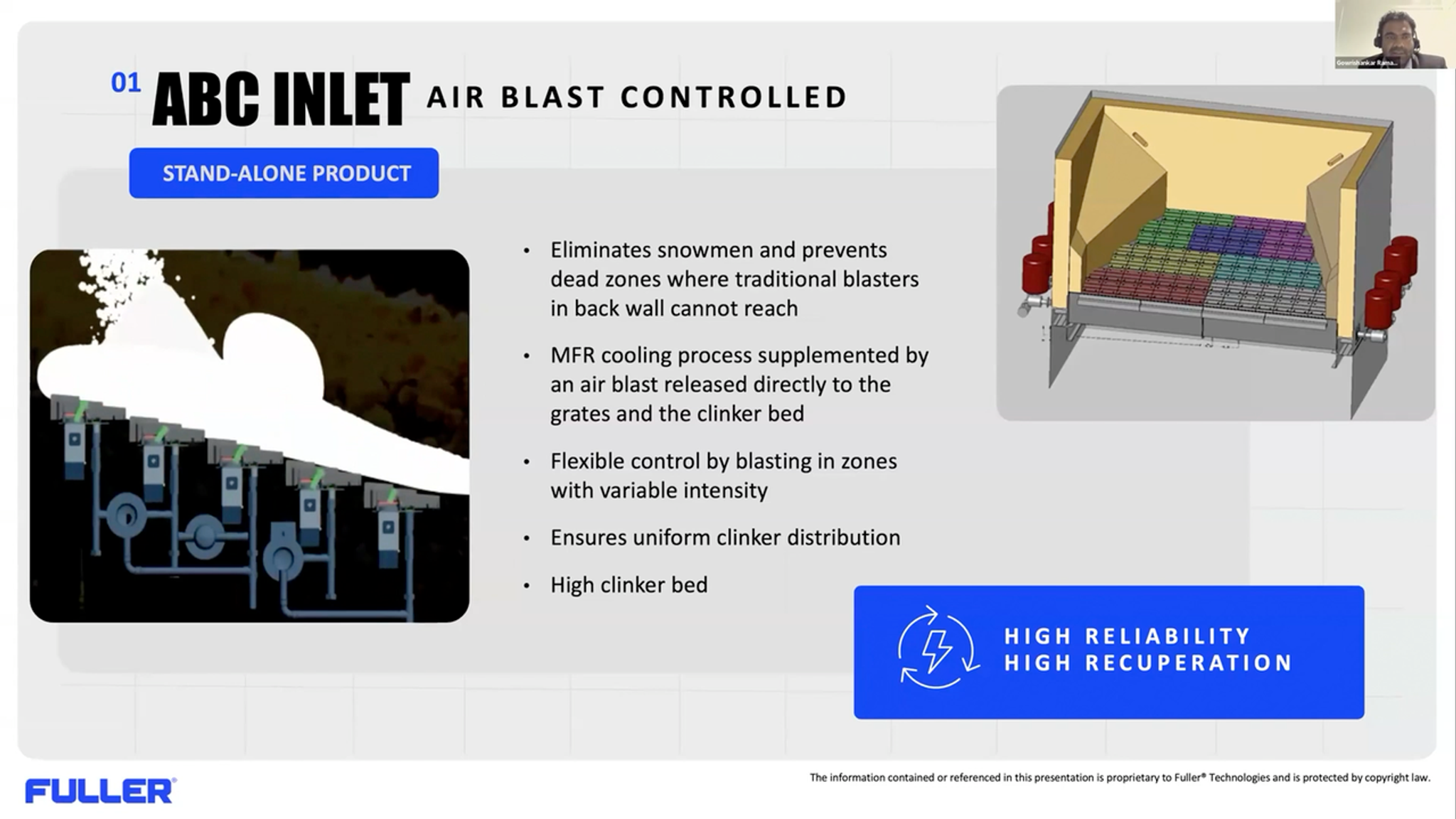
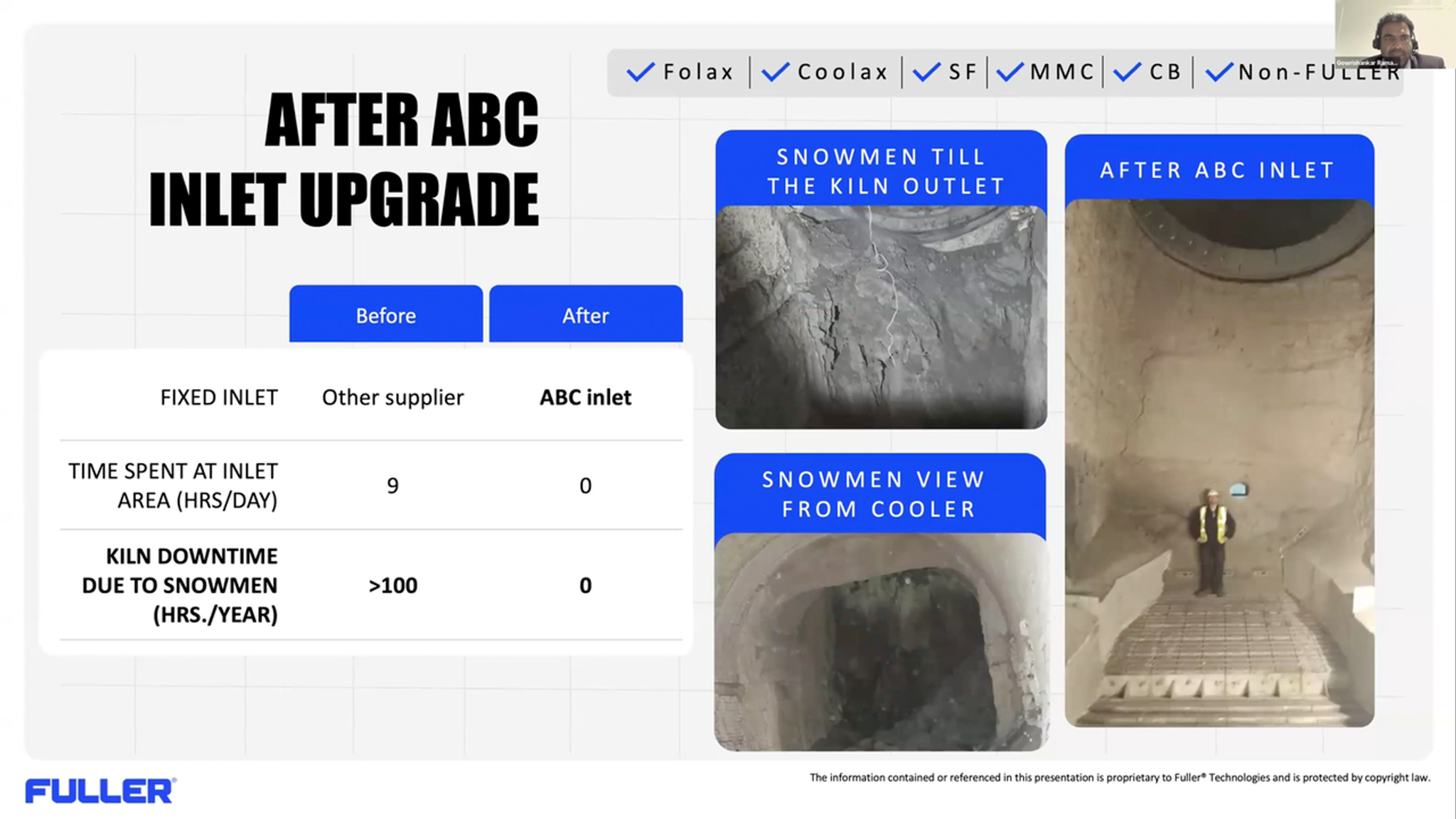
The ABC inlet releases blast air directly through the grate plates, clearing buildup while keeping the high clinker bed that recuperation depends on. A dedicated impact-zone fan extracts maximum heat where the clinker lands hottest. At one plant, snowmen had cost more than 100 hours of kiln downtime a year; after the retrofit, zero.
Different Constraints, Different Upgrades
Fuller's inside-box concept retains the existing casing and installs shop-assembled Cross-Bar modules, with removal and installation designed for less than 30 days. Where the main opportunity sits in the inlet and recuperation zone, a partial retrofit can target only that section. And where oversize clinker is the constraint, the Heavy-Duty Roll Breaker can be retrofitted to any grate cooler - its lowered C1 roll grips boulders instead of letting them ride on top.
The Same Gain Can Serve Different Plant Goals
An SF-CB upgrade removes the stationary cross-bars from an existing SF cooler, raising transport efficiency by 15-20%. That headroom enables lower cooler speed and 30-50% longer wear life - or additional production of 1,000-1,500 tpd. On the air side, Wave Grates do the same: cooling air enters straight and turns 45° instead of 90°, and the lower pressure drop can become lower fan power or more cooling air. Which way the headroom is spent depends on the plant objective - capacity, power cost or wear life.


SEE WHAT EACH UPGRADE DELIVERS
Watch the full session for the numbers and the mechanisms behind each upgrade: a full Cross-Bar® replacement at around 12,000 tpd and 74% cooler efficiency, the before/after tables from the ABC inlet and Wave Grate cases, and the mega-blast sequence clearing severe snowmen.
A More Selective Path to Cooler Performance
A cooler sets the terms for the rest of the pyro line: what it recuperates, the kiln does not have to burn. That is what makes cooler decisions age so visibly - a design that loses efficiency as it wears keeps charging the kiln for years, while a design that separates wear from cooling keeps paying back.
With our upgrades, existing coolers do not need to be treated as all-or-nothing assets. Each of the five upgrade paths clears a different constraint. For plants weighing modernisation options, the opening question shifts from the price of a new cooler to the constraint that costs the existing one most today. Once that constraint is named, the upgrade path, its scope and the shutdown window follow - equipment that still performs stays in service, and investment goes to the point where performance is limited.
- Gowrishankar Ramachandran, Senior Product Specialist, Fuller Technologies
Related Offerings


_and_Multi-Movable_Cross-Bar_coolers.png?w=2048&q=80&auto=format)