10th Jul 2026
Engineering for Higher SCM Substitution
Why high clinker substitution at scale is still rare
It's still one of the most important questions in cement today: how to reduce clinker and make low-carbon cement at scale. The SCMs work - the industry agrees on that. So why is stable, large-scale production at 50% clinker still so rare?
Because at industrial scale, higher SCM substitution is no longer only a chemistry challenge - it's a full-flowsheet engineering problem. With the chemistry basics solved, the real question isn't whether a plant can reduce clinker. It's whether it can do it at scale - with production that stays stable and commercially reliable.
The 50% clinker engineering challenge
The industry has already moved past several traditional barriers. New standards make room for blended, multi-component cements. Market demand is shifting to low-carbon product. Various SCMs are proven, and the digital tools supporting this effort keep getting stronger. On paper, SCMs should be common by now. But they are not. The problem is that producers keep getting stymied by the complexity and variability of the whole system.
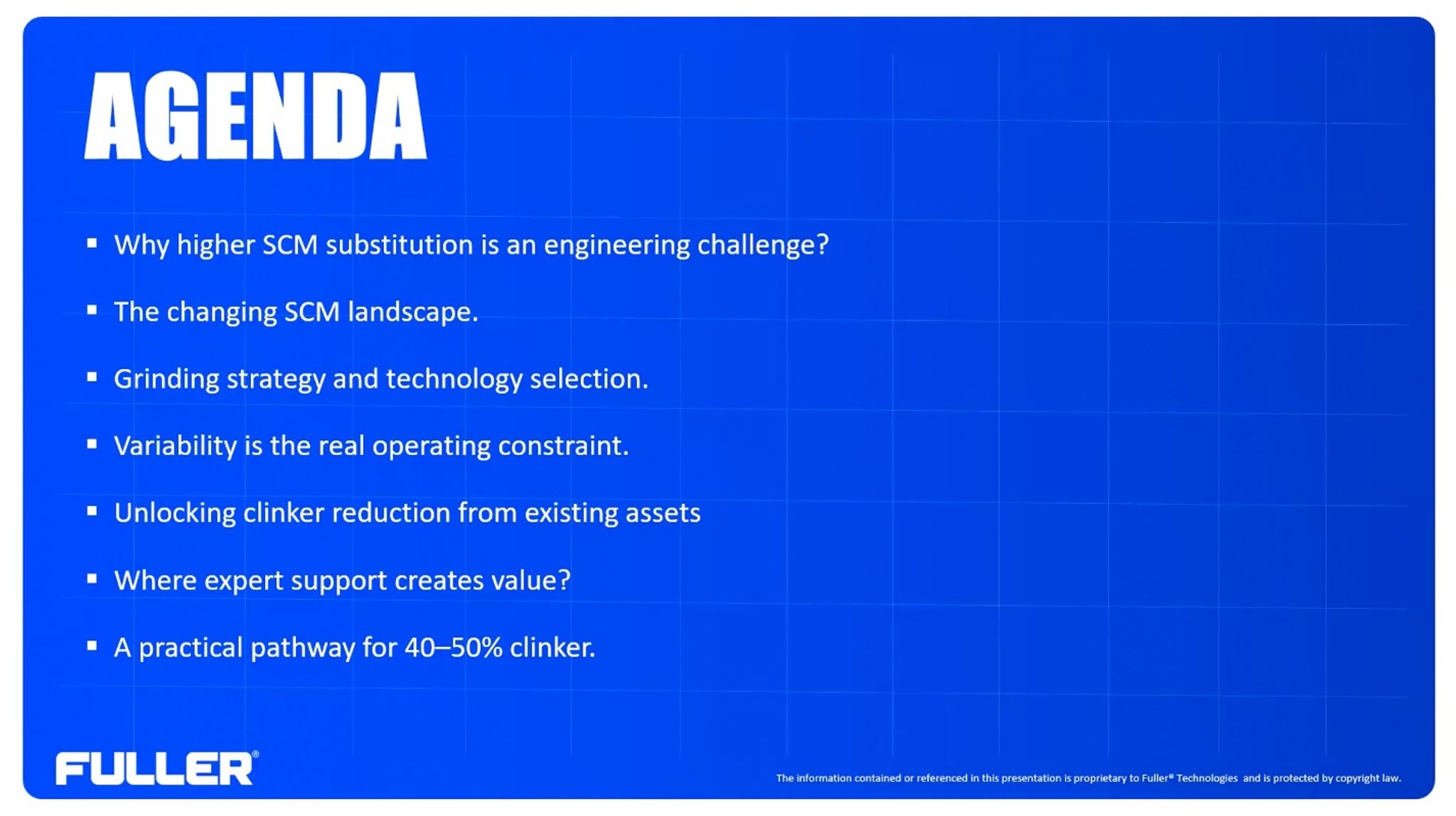
At higher substitution, the real work isn't adding one more material to the recipe - it's holding a narrower operating window steady across the circuit. Ahmed walks through the SCM landscape and compares grinding strategies and system approaches. He shows what industrial-scale stability really depends on - and how to reduce clinker in a controlled, validated and scalable way. The production reality is that there's no single SCM future for the whole industry: each material brings its own set of engineering challenges, and each plant has to evolve around the variability it must actually run.
Featured Expert:
Ahmed Seaf is a process specialist at Fuller Technologies with nearly two decades of experience in the cement and minerals industry. He has spent years at plants around the world troubleshooting grinding systems, and supports the commissioning, optimisation, and aftermarket services that keep them running at target. When he talks about the realities of running a mill at high SCM substitution, it comes from hands-on experience - and the technical depth that consistently delivers high-productivity results.
Key insights include:
- The three major walls most plants hit when they push low-carbon cement to scale.
- What actually breaks first when a plant is pushed to 50% clinker.
- The real operating constraint - and what a practical pathway to solve it looks like.
- Why process-control speed, not new equipment, decides your exposure when an SCM delivery behaves differently mid-shift.
- How to build the capital case, and make the right scaling decisions before committing capex.
Watch the webinar now for a practical engineering view of higher SCM substitution - and the pathway that lowers capex risk and moves a plant from ambition to action.
Ahmed Seaf, Process Specialist - Fuller Technologies
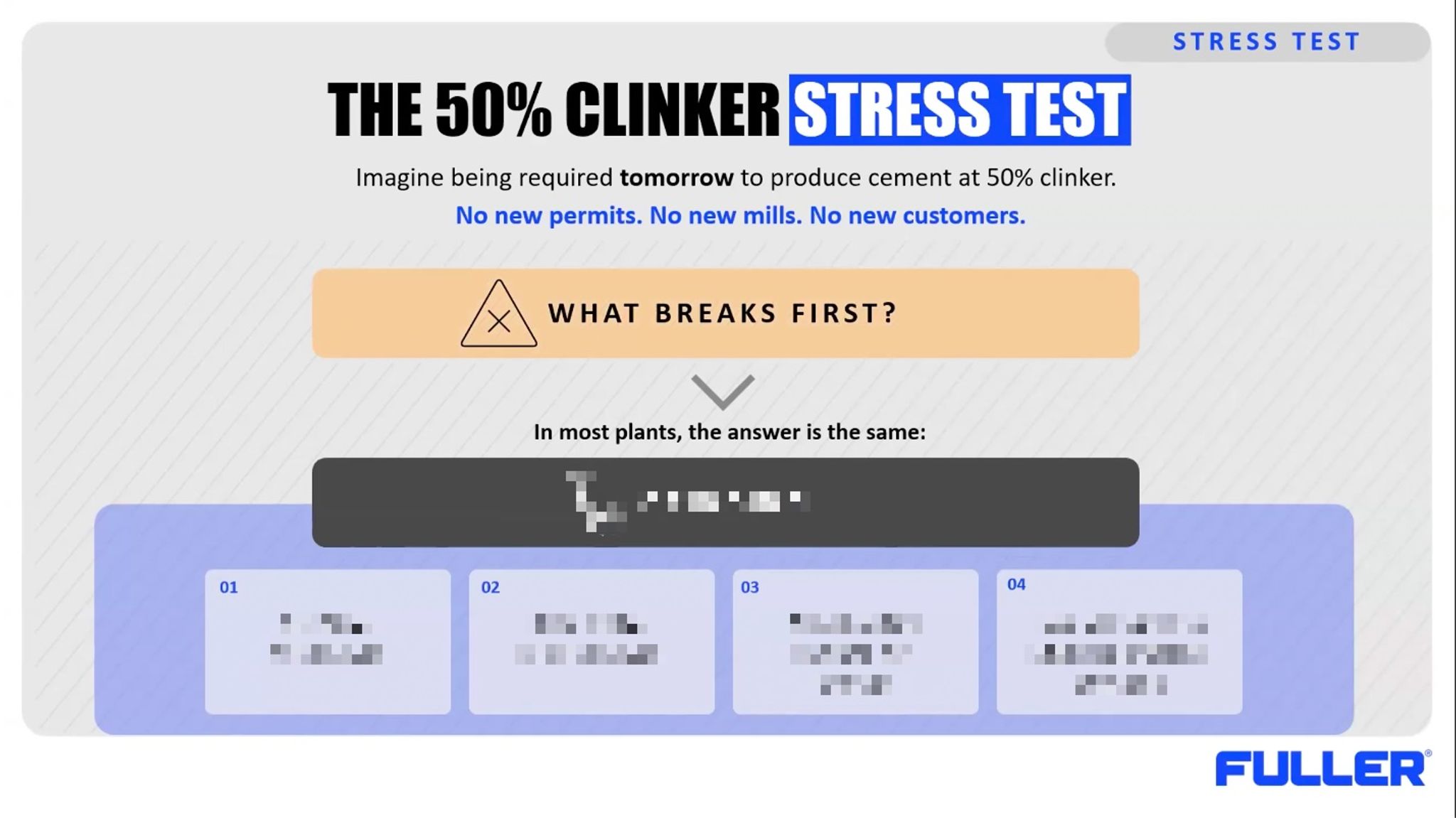
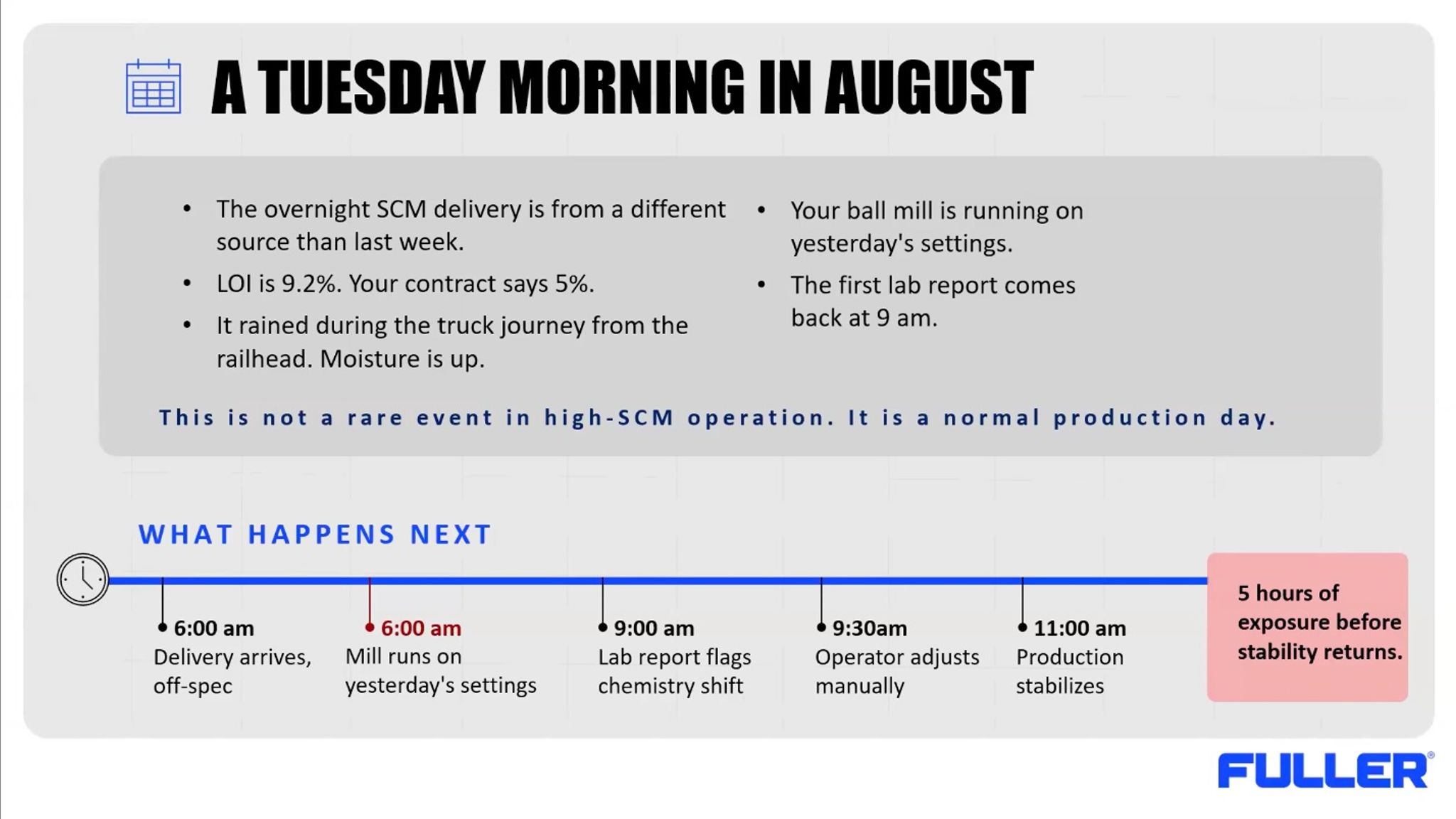
From chemistry to engineering challenge
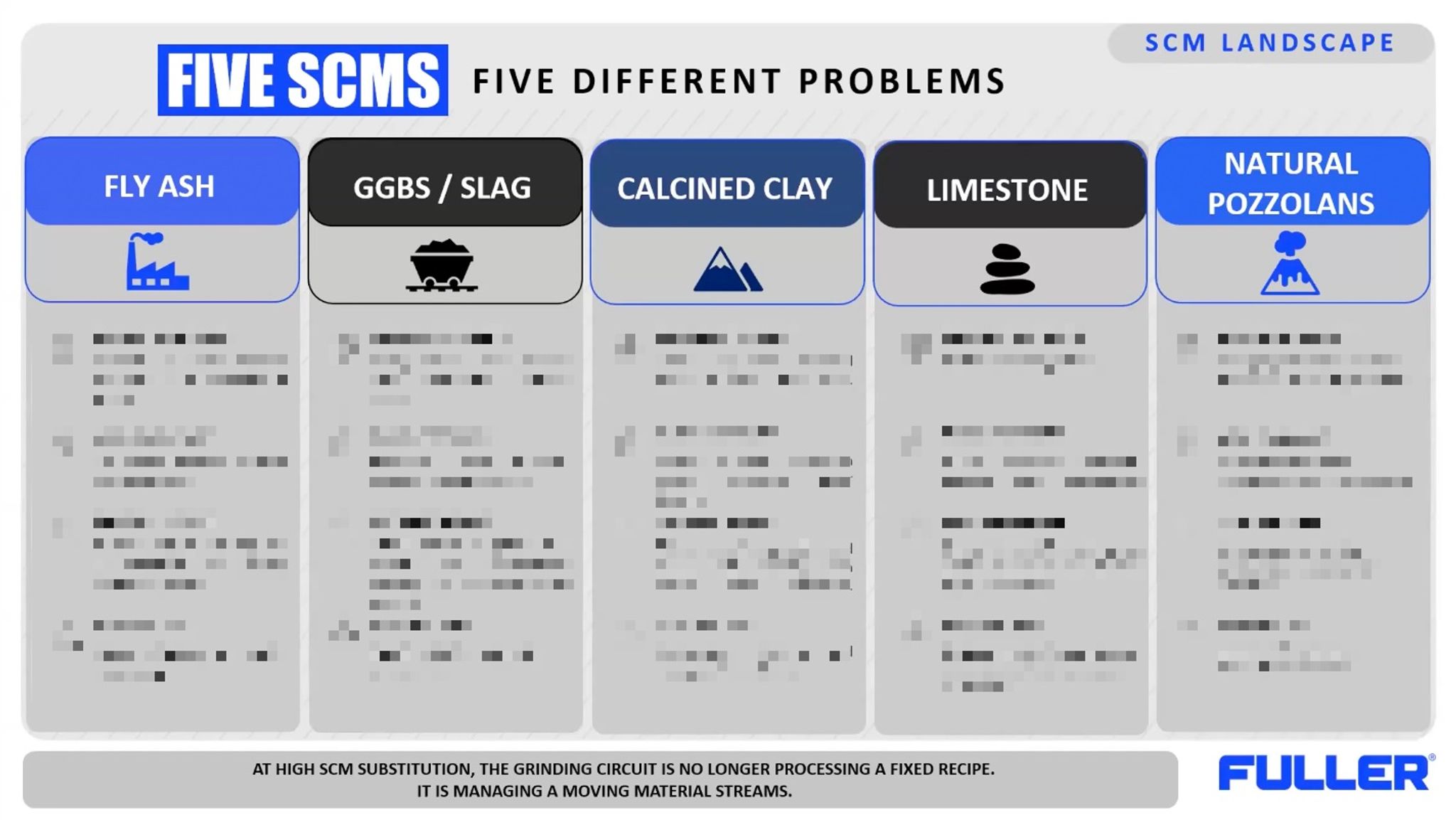
System variability and managing a moving material stream
At high substitution, the mill stops grinding a fixed recipe and starts managing a moving material stream - one that drifts between dispatch and the feeder and behaves differently from one delivery to the next. Holding 50% clinker steady is less about the spec sheet than about whether the whole system can detect, absorb and correct that variability while it runs.
Grinding strategies and technology
Clinker and the SCMs don't want the same particle size, so the grinding question runs deeper than "ball mill or VRM." It's really about how much control a plant needs - co-grinding versus separate grinding, and the right system for the job. What should decide it isn't the power bill - it's the ability of a system to remain stable.
Unlocking potential and the implementation pathway
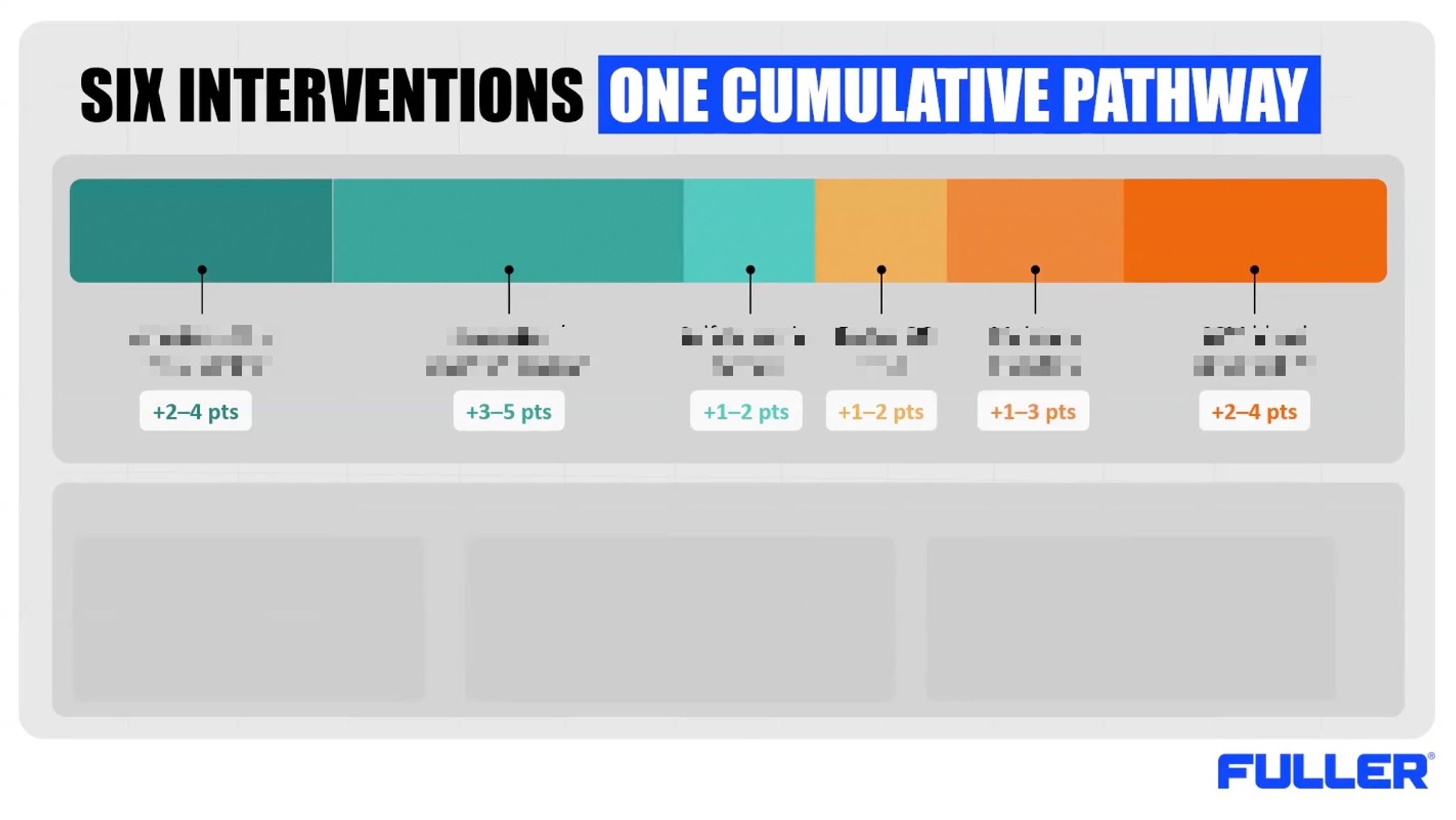
Before assuming the answer is a new mill, look at what the existing circuit can already do - clinker reduction is rarely one big move, it's a cumulative pathway of smaller wins. The session lays out the options and implementation pathways that turn that into clear results - and a proven sequence, so capex decisions can follow evidence, not pure ambition.
A multi-variant SCM future - and the right implementation pathway
As SCMs grow more variable and the system grows more complex, planning ahead matters more than ever. What makes clinker reduction reliable isn't the recipe - it's the engineering and support around the whole system. The plants that reach 40–50% clinker won't be the ones with a cleverer formula; they'll be the ones that can run the plant as a system - matching grinding to what each material needs, keeping control fast enough to catch a shift before it becomes a shipment, and holding it steady while they push the substitution ratio higher.
Clinker reduction is rarely one big move; it's a cumulative pathway, where several smaller improvements work together to clear the real obstacles. That's why the strongest SCM projects start with risk reduction - knowing the plant's real constraints, the interventions available, the reduction potential, and the decisions that follow. With that clarity, capex follows the evidence, and the first move gets obvious: find the binding constraint, and fix that one first.
Ahmed Seaf, Process Specialist - Fuller Technologies
FAQ
Related Offerings

_Raw_and_Cement_Mill.png?w=2048&q=80&auto=format)


.png?w=1080&q=80&auto=format)