What we offer

AI-Soft Sensors Powered by Fuller’s Process knowledge and Imubit Technology

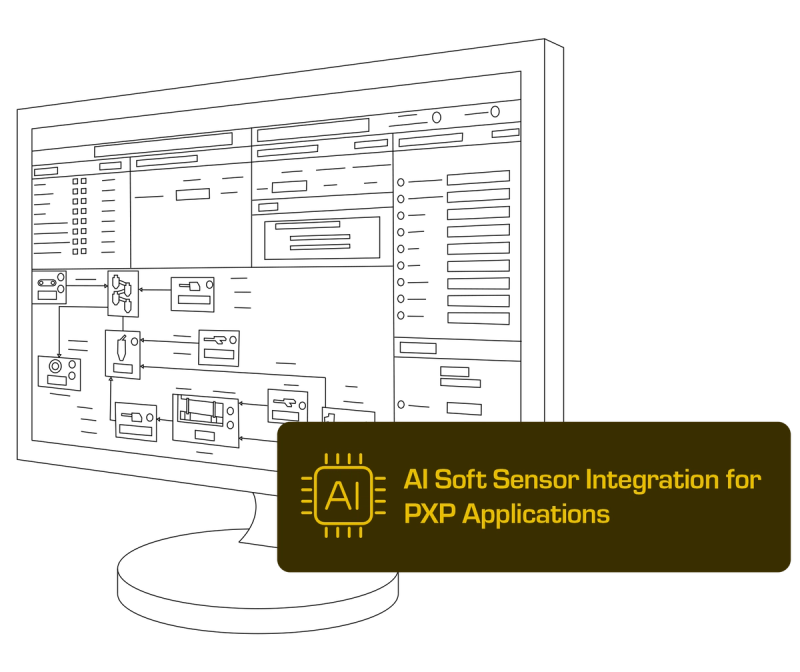
With soft sensor technology powered by Imubit for free lime, Blaine finesses and kiln inlet O2 soft sensors, PXP can operate with unprecedented precision, empowering cement plants to achieve greater quality consistency, improved energy efficiency, and enhanced sustainability outcomes. Fuller takes the responsibility to integrate the soft sensor predictions into later versions of PXP.


Based on proven Technology by Imubit: Imubit is a leader in industrial AI with 100 closed-loop applications deployed across refining, calcining, and cement. Trained on a plant’s own operational and laboratory history, these models generate continuous predictions of critical parameters that may be unavailable due to the lack of real-time data.

Default alt text

Better Data. Better Decisions.

Continuous Adaptation

Closed-Loop AI Optimization

Target Parameters to close the data gap

The initial partnership targets three parameters where the gap between what PXP needs and what physical instrumentation delivers has the greatest operational impact.

ParameterCurrent Input:With AI Soft Sensors:Operational Impact:
Free Lime Lab sample; 2+ hour delay. PXP reacts to stale data; over/under burning compensates.Continuous free lime prediction enables faster target adaptation with better visibility when integrated into PXP control strategyTighter free-lime standard deviation, direct fuel savings (minimum 1% to 2%) with improved product quality
Blaine FinenessPeriodic lab test with lag. Finish mill runs conservatively between samples.Real-time Blaine prediction enables faster target adaptation with better visibility when integrated into PXP control strategyTighter Blaine standard deviation, direct power savings (minimum 1% to 2%) with improved product quality
Kiln Inlet O₂Physical sensor in harsh environment; occasional maintenance outage and calibration drift.Reliable O₂ signal even during analyzer outages.Optimized draft control. Reduced excess air leading to lowering heat consumption. Lower ID fan power draw.

How PXP’s AI Optimization Layer Works

While PXP remains as the central optimization engine with the robust self-adaptive controller, the AI based soft sensors augment with accurate predictions, enabled by Imubit’s proven deep learning capabilities using reinforcement learning trained on your plant’s full operational history. PXP’s control algorithms then use the enriched inputs to calculate and write optimized setpoints.

PXP Today

  • Self-adaptative control actions to changing process conditions
  • Site specific control logic understood by specialists
  • Target frequency varies by strategy with actual lab values
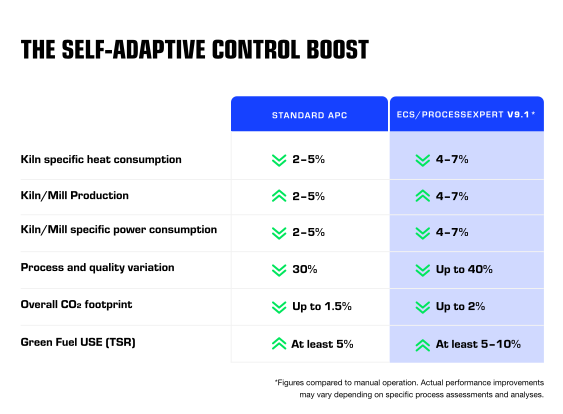
The self-adaptive control boost

AI Soft Sensors

  • Deep neural networks trained on full plant history
  • Continuous predictions in contrast to infrequent lab data
  • Transparent dashboards explain every AI adjustment
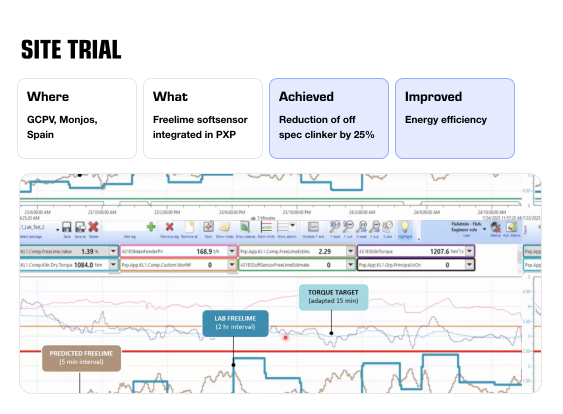
Site trial

PXP complemented by AI Soft Sensors – What This Means for Your Plant

01

Kiln: Fuel Savings

02

Finish Mill: Closed-Loop Blaine Control

AI Soft Sensors - Integation Architecture

On-Premises Computing (AI Soft Sensor Predictions)

The AI soft sensor predictions run on-premises within the plant environment. Standard OPC/OPC-UA connectivity enables integration with process control systems, historians and laboratory systems. The local computing environment performs soft sensor inference and AI optimization, writing real-time predictions directly to ECS/ProcessExpert® (PXP). For cybersecurity and data protection, the system does not allow inbound cloud connections and only enables one-way outbound data flow from the plant. The setup complies with process control cybersecurity requirements, including SPC2 Type II certification and GDPR compliance.

Cloud (Model Management)

The cloud environment supports the lifecycle management of AI models, including model building, evaluation, monitoring and retraining. Operational plant data is transferred via a one-way outbound data flow from the plant to the cloud, ensuring secure model development and continuous performance improvement.

Softsensors are now available for integration in newer PXP installations.

Contact your Fuller representative to discuss AI soft sensor’s and integration.