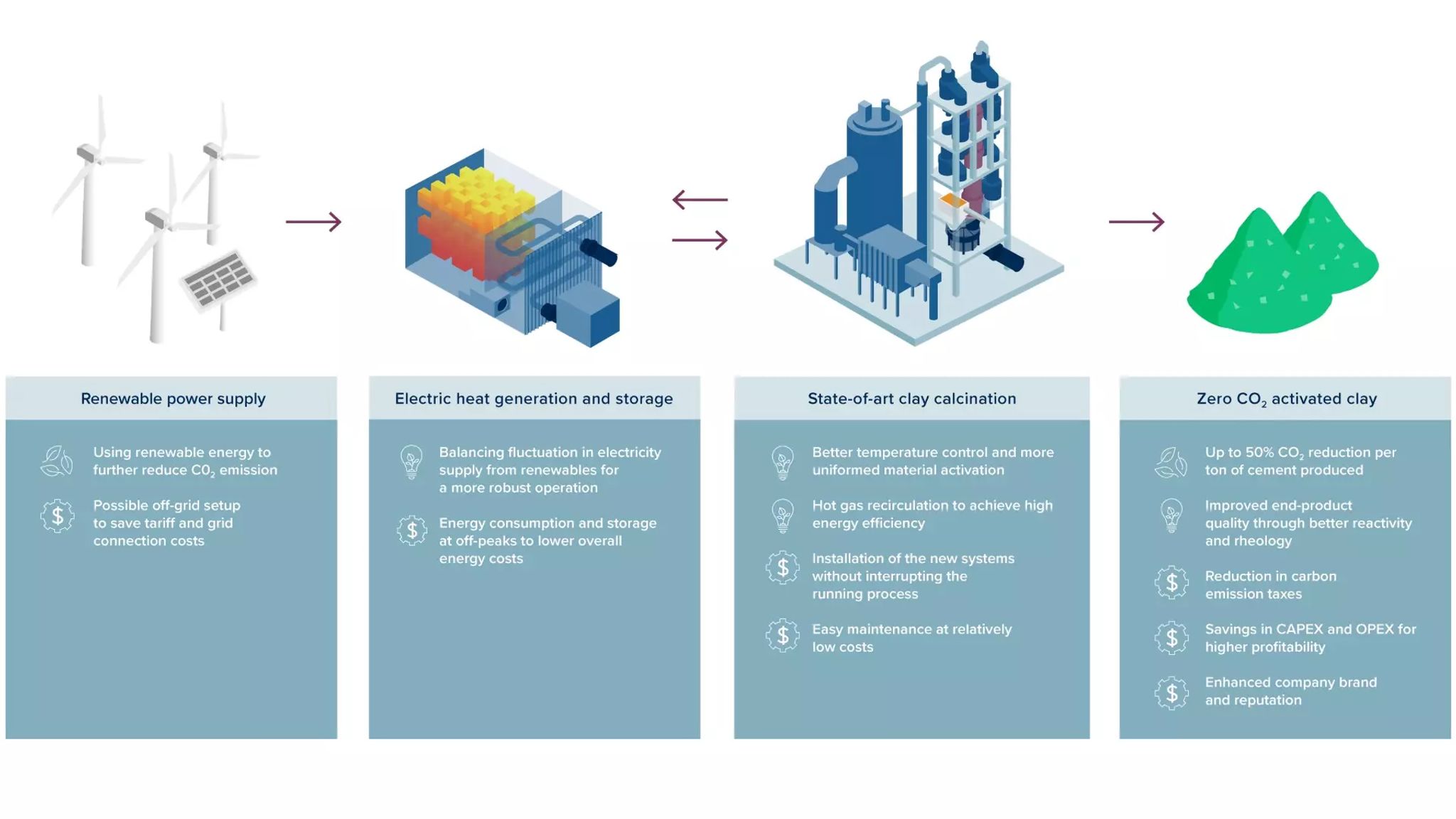
Innovative electrification of the clay calcination process holds promises of a huge unexploited pool of flexible electricity consumption as well as emission reduction. The main objective of the ECoClay™ PhD project is to demonstrate how data-driven modelling, grid integration simulations, and optimal dispatch strategies can enhance demand-side flexibility using an industrial process hybridized with energy storage. The following PhD activities and outcomes are anticipated:
Electricity consumption profiling of ECoClay pilot plant to validate the electric metric of mass and energy balances.
Grid integration-oriented modelling, optimal sizing, and optimal placing of distributed energy resources (e.g. wind and solar power) and key components including heat storage according to the load profile of the electric clay calcination, its geographic location and its key equipment operation characteristics based on the wealth of data that can be collected at all levels (e.g. sensors/SCADA) of ECoClay system.
Simulation of grid integration for the selected use cases for example, geographic locations with high penetration of wind power and solar PV; heat storage hybridization with battery electric storage systems, etc.
Developing smart grid-oriented optimal dispatch and control strategies to support wind/solar power integration and stable & reliable operation of the ECoClay system to maximize its demand-side flexibility considering among others machine-learning based multi-objective optimization with cost-effective, CO2 reduction and value-added grid services.
Exploring and facilitating the replicability and scalability of power-to-heat solutions in the ECoClay system to harvest demand-side flexibility, economic and environmental benefit.