

article

No Single Lever - Why efficiency, innovation, and sustainability must go hand in hand

In this exclusive interview with Indian Cement Review, Manoj Taneja, Head of India at Fuller Technologies, explains why solving cement’s biggest challenges demands an integrated response.

24th Apr 2026

0 minutes
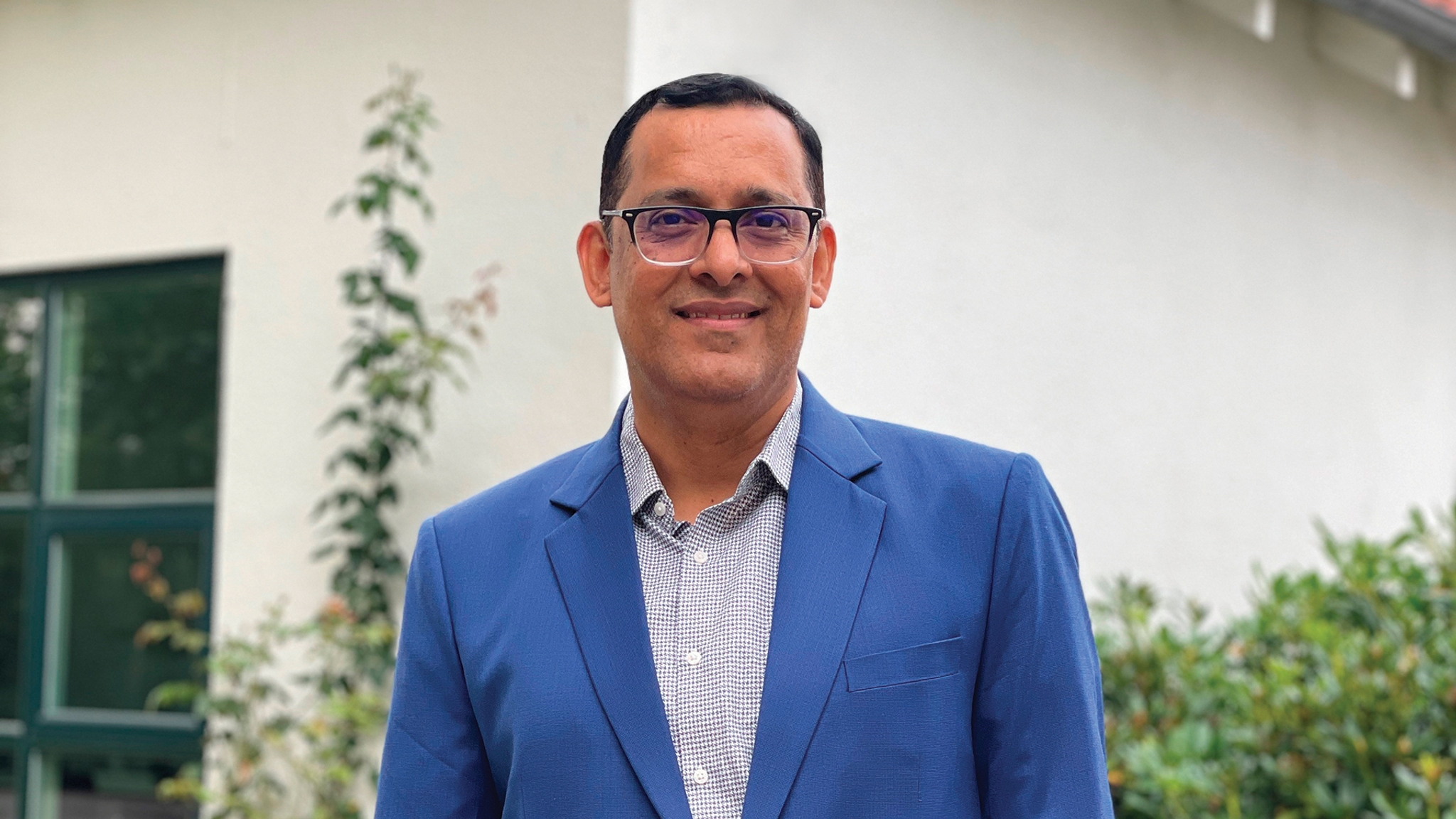
Manoj Taneja, Head of Fuller Technologies, India
DigitalNews

ICR: As a full-line technology provider, how is Fuller Technologies helping cement plants improve efficiency across the entire production value chain?

Manoj Taneja (MT): Efficiency in cement manufacturing is rarely a single-lever problem. Energy losses accumulate at every stage of the process: addressing them effectively requires a view of the entire flowsheet and the expertise to act on what you see, which is where Fuller Technologies can offer a perspective that few others can.

For producers investing in new capacity, the priority is getting the fundamentals right. Our core capital equipment is engineered to deliver energy efficiency and reliability: two things that are inseparable over a plant’s operating life. Meanwhile, at existing plants, targeted upgrades can deliver measurable gains in energy consumption and availability. Here in India, where producers are under pressure to improve efficiency, such upgrades matter enormously, with returns coming quickly.

Looking beyond equipment, our Online Reliability Services combine real-time monitoring with 24/7 access to our engineering expertise, providing early warning of failures and prioritized maintenance recommendations. Automation and digital solutions add a further dimension, enabling producers to extract more value from existing assets through better data and smarter decision-making. Lastly, we deliver training through the Fuller Institute, covering pyroprocess optimization, mechanical maintenance, automation, and safety.

ICR: What are the biggest operational challenges cement manufacturers face today, and how can integrated technology solutions address them?

MT: Rising energy costs remain a dominant financial burden. At the same time, emissions standards for NOx, SO₂, particulates, and CO₂ are likely to tighten further. A further challenge relates to skills. Even as plant processes become increasingly automated, skilled personnel remain essential, while new skills in areas such as data science are in growing demand across the economy.

Integrated technology solutions address these broad challenges at every level. Advanced process control is a prime example: our ECS/ProcessExpert® (PXP) software optimizes key performance indicators across the plant, delivering documented reductions in energy consumption and increases in throughput. Meanwhile, our QCX® automated sampling and analysis systems close the loop between the lab and the process, cutting variability and out-of-spec production. Online condition monitoring and predictive maintenance complete the picture, shifting plants from costly reactive stoppages to planned interventions.

ICR: How are pyroprocessing and grinding innovations improving productivity and energy efficiency?

MT: Persistent sources of unplanned downtime and energy loss in the pyroprocess have driven some of our most important equipment developments. Take the Cross-Bar® Cooler as an example, designed to deliver efficient heat recuperation with high uptime, or the ABC™ Cooler Inlet, which we developed specifically to eliminate snowman formation in clinker coolers, a problem that has caused stoppages for decades.

In grinding, wear management has become an increasingly important consideration, particularly when grinding harder materials such as slag, which is the rationale behind both our OK Pro+ ceramic wear segments and our TRIBOMAX® wear surfaces for hydraulic roller presses. Meanwhile, thinking across grinding and pyroprocessing can unlock further savings: at Cemento PANAM, we designed a system to transfer excess heat 350 meters from the clinker cooler to the finish mills, eliminating the need for a separate hot-gas generator.

ICR: How is digitalization and Industry 4.0 transforming plant performance, and in what ways can automation and advanced control systems help optimize quality, consistency, and throughput?

MT: At its heart, Industry 4.0 is the opportunity to create intelligent, connected systems that turn data into actionable insights, enabling real-time decision-making and continuous improvement that maximises productivity and profitability. This means ensuring the right information reaches the right people at the right time. Operators make better decisions, engineers spend less time gathering data and more time acting on it, and management gains a clear picture of plant performance, accessible via mobile solutions from anywhere.

Advanced process control, such as PXP, takes this further by continuously monitoring process conditions, making fine adjustments, and flagging situations that require human intervention. The performance gains are well documented: we have measured reductions in specific heat consumption of 2–5% and kiln throughput improvements of 3–8%, alongside meaningful reductions in process variability.

ICR: What role do predictive maintenance and condition monitoring systems play in reducing downtime and improving asset life?


MT:
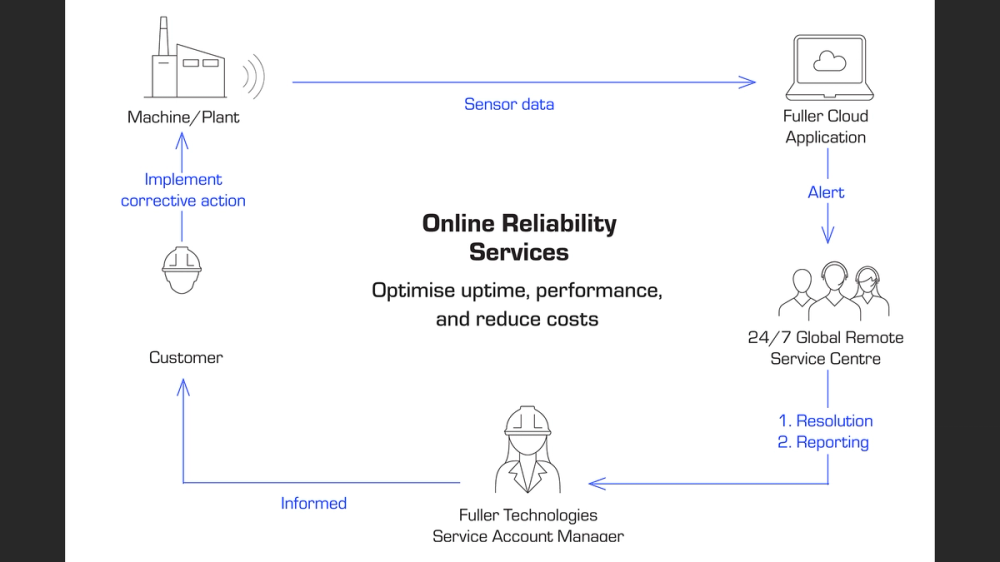
Unplanned failures are costly events. Take the kiln. A typical kiln needs to run continuously for at least a year between maintenance shutdowns, with unplanned stoppages incurring high lost production and restart costs. Our Online Condition Monitoring Services (OCMS) aim to prevent such events. Multiple sensors transmit real-time data to our 24/7 Global Remote Service Centre, where specialists analyze the information using the latest digital tools and decades of experience, monitoring key indicators of equipment health.

The service delivers specific maintenance recommendations grounded in OEM understanding of the equipment, rather than generic alerts. Continuous infrared thermal imaging via our ECS/CemScanner™ kiln shell monitoring system adds another layer, tracking refractory conditions and cooling fan performance in real time. Across all monitored assets, the outcome is maintenance planned on actual conditions rather than fixed intervals, reducing OPEX, extending asset life, and eliminating unplanned stoppages.

Fuller Online Reliability Services

ICR: How is the industry approaching sustainability, and what technologies are enabling lower emissions and alternative fuel adoption?

MT: Our approach starts with optimisation. For example, the fuel and energy savings delivered by advanced process control compared to manual operation translate directly into lower specific CO₂ emissions per ton of clinker, making digitalization as much a sustainability tool as a productivity one.

Alternative fuel substitution then offers an immediately actionable route to reducing fossil fuel dependency. The journey looks different for every producer. Some are taking their first steps with entry-level feeding and dosing solutions from Pfister®. Others are pushing high thermal substitution rates in the calciner using technologies such as our HOTDISC® Reactor and FUELFLEX® Pyrolyzer, or focusing on achieving elevated substitution levels in the kiln. Our portfolio is designed to support producers at every stage, including technologies that address NOx emissions alongside fuel substitution. For supplementary cementitious materials, calcined clay represents one of the most significant near-term opportunities. Fuller now has two full commercial-scale installations in operation – at Vicat in France and at CBI in Ghana – demonstrating that this technology can deliver in real-world conditions.

The common thread is that decarbonization and operational performance are not in conflict. The most energy-efficient plant is also, in most cases, the lowest-emitting one.

ICR: Fuller has made some significant investments in India recently. Can you tell us about your recent activities?

MT: India is not just the home of many important customers but also of many of our team members. In January, we inaugurated our new office at Pacifica Tech Park in Chennai, celebrating the occasion with around 25 customers representing 15 cement groups. Our CEO, Dennis Cassidy, along with Chief Human Resources Officer Pam Turay and Brendan Hart from our new owners, Pacific Avenue Capital Partners, also joined us.

What strikes me is that cement plants want a partner who is present, invested, and building for the long term, which is exactly what we intend to be. This commitment is reflected in the launch of a major training programme between the Fuller Institute and Adani Cement, covering 450 graduate and diploma engineers. The first mechanical maintenance course at ACC Wadi drew positive feedback from leadership and participating engineers.

ICR: What key technological trends will shape the future of cement manufacturing over the next decade?

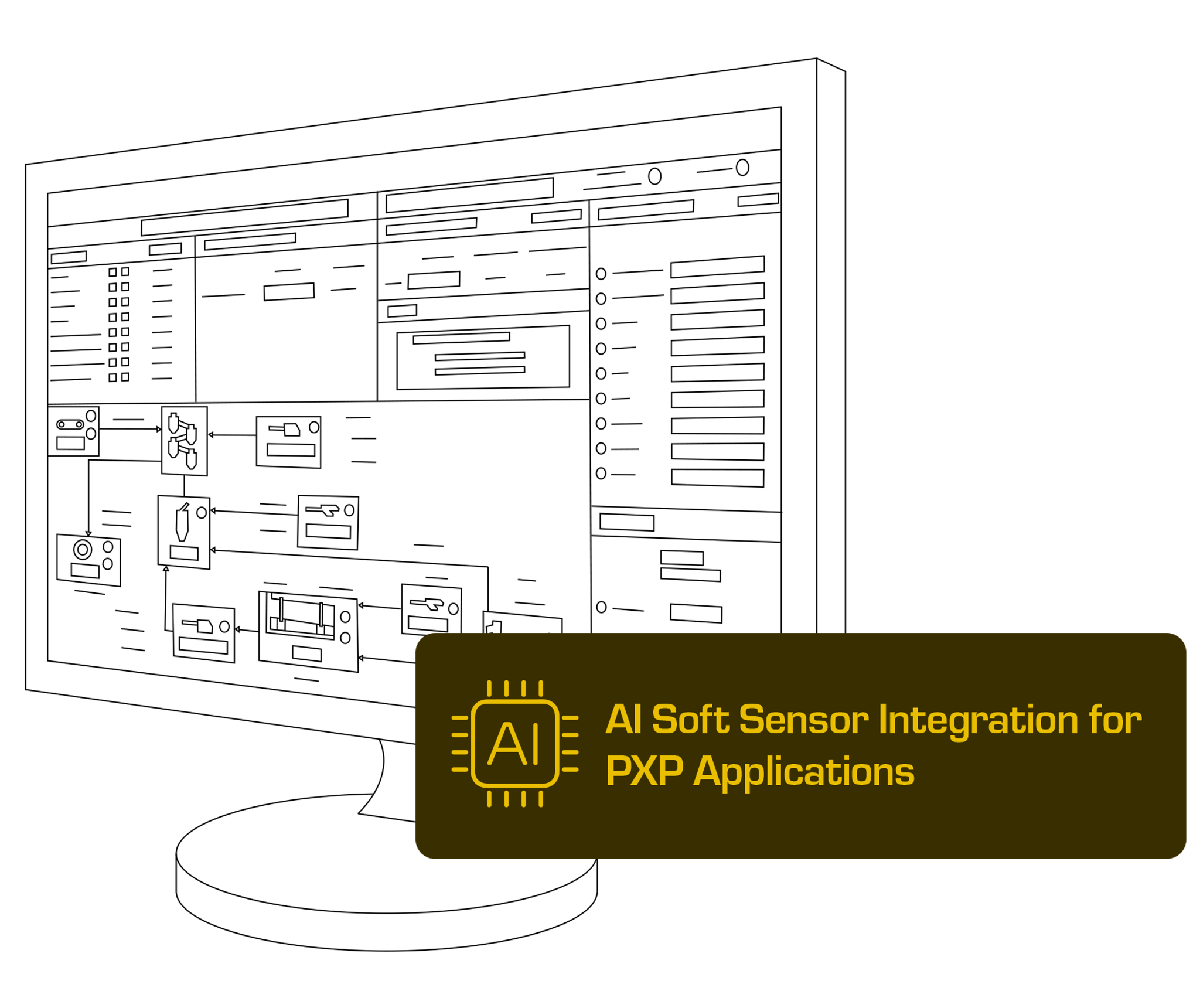
MT: AI and soft-sensor technology will close the data gaps that have historically constrained advanced process control. Our partnership with Imubit is already demonstrating this: AI-based soft sensors generate real-time predictions of hard-to-measure parameters, which feed directly into PXP, enabling precision optimisation that was previously impossible.

The adoption of alternative fuels and supplementary cementitious materials will continue to accelerate, and ultimately, carbon capture, utilization, and storage technologies, tailored to plant conditions and needs, will enter commercial deployment to address the residual emissions that process and fuel improvements alone cannot eliminate.

Through it all, digital integration will be the unifying theme. The plants that thrive will be those that invest not just in point technologies but also in the data foundations and human capabilities needed to use them effectively. For producers here in India, navigating both rapid capacity expansion and increasing pressure to decarbonize, the ability to pursue productivity and sustainability simultaneously will be the defining competitive advantage of the next decade.

Note: This article was originally published in the May 2026 issue of Indian Cement Review.

Downloads

ECS/ProcessExpert® Solution - Advanced Process Control

21.11.2025 |

 5.27 MB |

 English

PDF
Online Reliability Services - Overview

We offer online reliability services for technologies such as kilns, mills, and gears. The service connects your machines to our experts. Sensors 'read‘ the equipment and send data about its health to our cloud-based monitoring system.

25.02.2026 |

 800.57 KB |

 English

PDF

Related Offerings