CAP-FLEX is a new project that began in June 2026 and will run for the next four years. Though the project has only just officially launched, it is something we have been working towards for a while through projects including NEWCEMENT, Tomorrow FUELFLEX and ECEM. Built on our patent-pending "Fluidized bed calciner" concept (WO2025262607A1), it's an exciting step forward for net-zero cement production. Direct CO2 production by oxyfuel or indirect calcination is widely recognised as the most cost- and energy-efficient way to capture carbon in our industry.
What is CAP-FLEX?
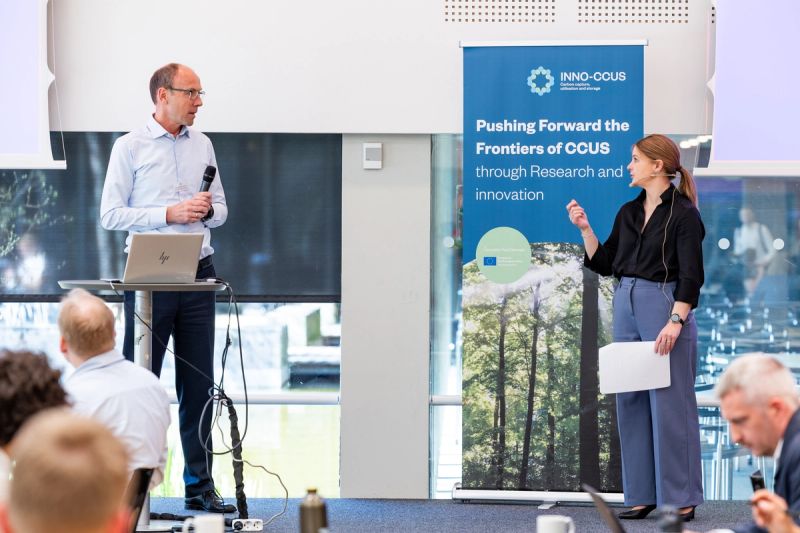
CAP-FLEX aims to advance the FUELFLEX® Pyrolyzer to produce a high purity CO2 stream through flexible integration of oxyfuel combustion and/or electrical heating. We are delighted to be working on this project with Mannok - a pioneering cement company and the very first home of the FUELFLEX® Pyrolyzer - alongside the Technical University of Denmark and the Danish Technological Institute, with co-funding from the INNO-CCUS partnership. By March 2030, we will take the CAP-FUELFLEX concept from TRL 3 to TRL 6, demonstrating real potential at industrial scale.
This project will help define a pathway to energy-efficient, low-complexity carbon capture in a process that has, to date, proven challenging and costly to retrofit. The CAP-FUELFLEX will be retrofittable, energy-flexible and practical to implement, giving cement manufacturers real opportunity to meet their net-zero goals.
The FUELFLEX platform
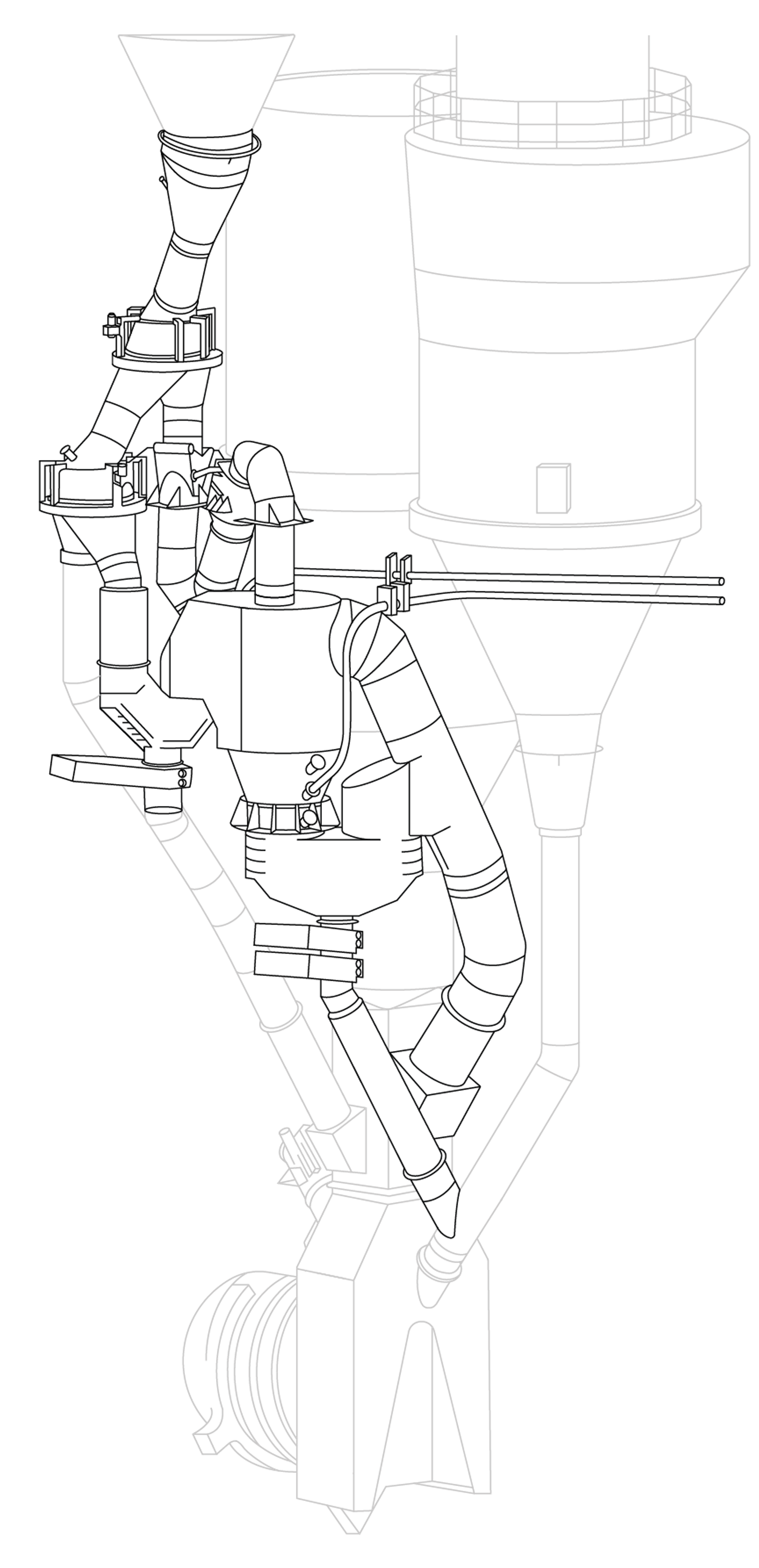
The FUELFLEX Pyrolyzer is a new technology specifically developed for the cement industry to replace all calciner fuel with alternative fuels, ensuring efficient, complete combustion, NOX control and process stability. There are currently two industrial installations - at Mannok in Ireland and Continental Cement/QUIKRETE Davenport in the US.
Though this is new technology, it is moving fast and the Tomorrow FUELFLEX project was established to explore its further potential. Working with Indian Institute of Technology Madras and the Technical University of Denmark, we developed CFD simulation models for pulsed fluidized beds with different mixtures of particles (raw meal, clay and fuel) present in the FUELFLEX Pyrolyzer and GREYMAX. These tools are going to be instrumental in shaping CAP-FLEX.
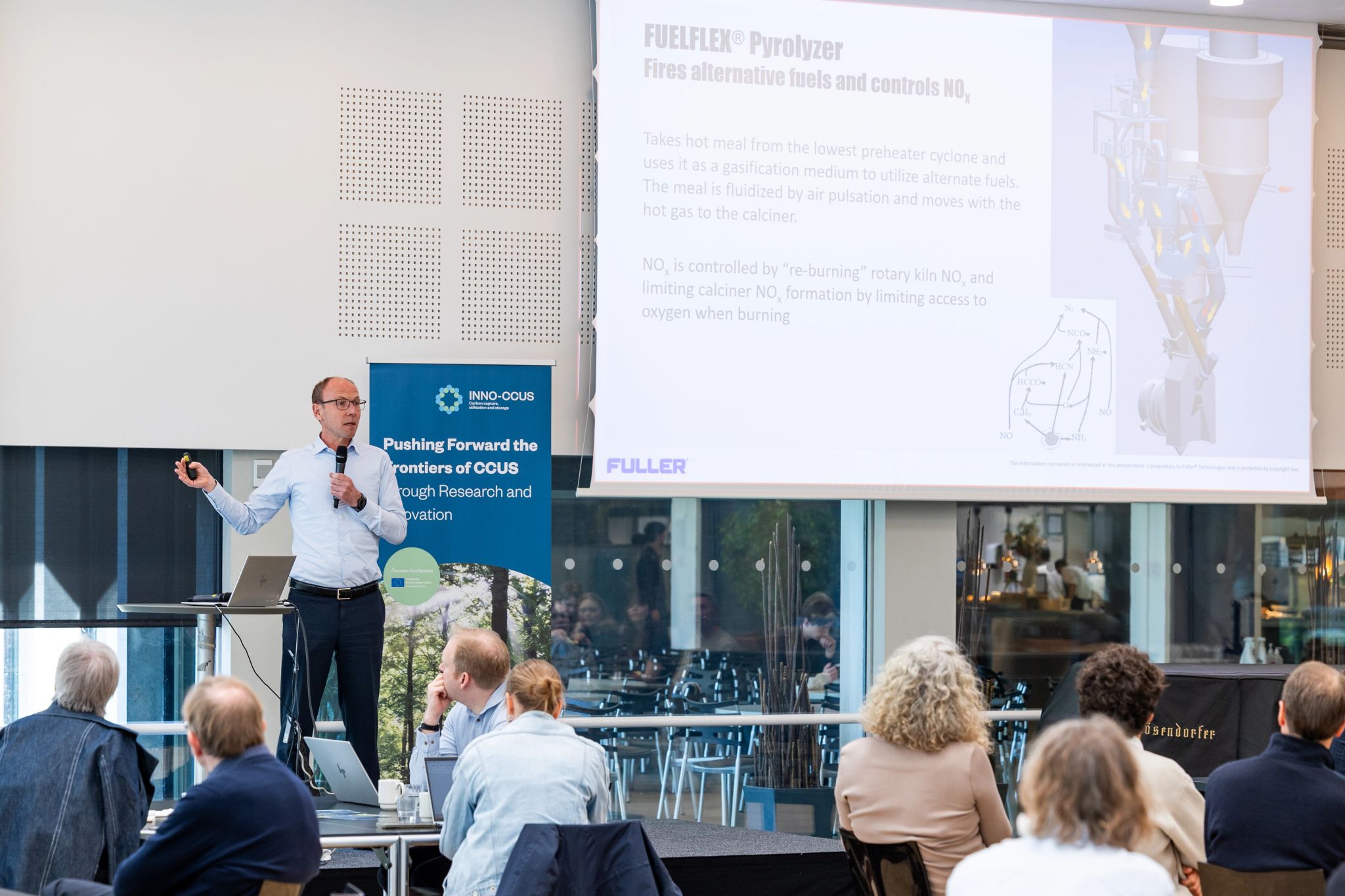
Presentation of the FUELFLEX® Pyrolyzer at the INNO-CCUS launch event.
Better models for pulsed fluidization
The study combines experiments with computational fluid dynamics (CFD) to improve how cohesive particles are modelled in a pulsed fluidized bed. By accounting for particle agglomeration, the model better predicts how cement meal mixes and moves.
Validated against lab-scale experiments, the enhanced model reduced underprediction of the minimum mixing velocity from approximately 96% to 15%. The findings provide guidance for optimizing pulsed fluidization processes. Read more in the Chemical Engineering Science article "An experimental and CFD investigation of pulsed fluidization of cohesive particles".
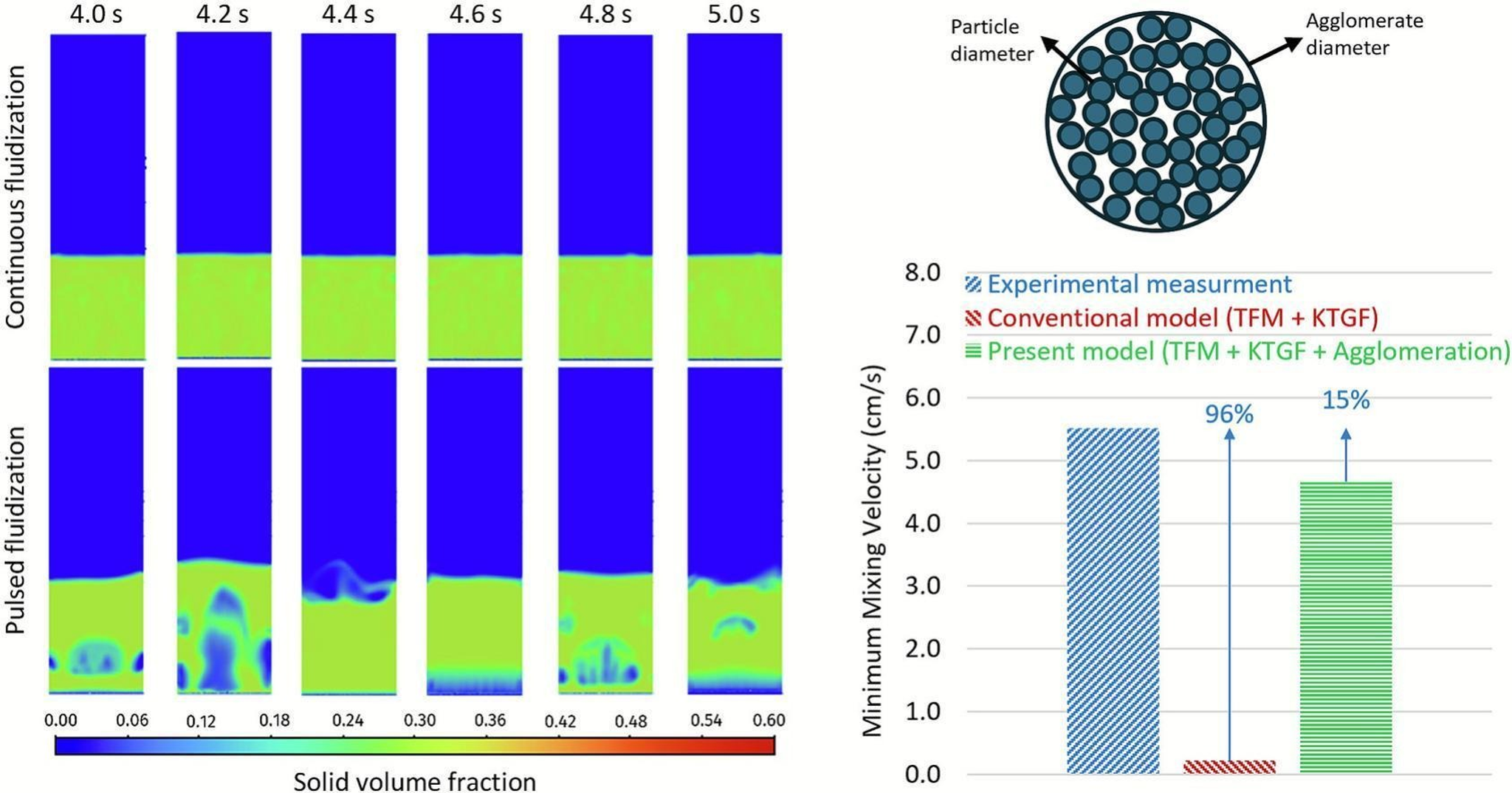
Graphical abstract from An experimental and CFD investigation of pulsed fluidization of cohesive particles, Chemical Engineering Science.
CAP-FUELFLEX - the ultimate goal
Ultimately, the project will result in a new technology based on the FUELFLEX® Pyrolyzer that works as follows:
1
Preheated cement raw meal is introduced into the unit and fluidized by pulsed gas flow.
2
Heat for calcination is supplied by electric heating and/or oxyfuel combustion of pyrolysis gas produced from alternative fuels. This energy flexibility enables plants to use whatever works best for them.
3
Calcination produces a concentrated CO2 and H2O stream, which means the CO2 is easy to separate, cutting the cost and complexity of capture.
4
Char and partially calcined meal are returned to the existing kiln/calciner process, making this a relatively simple retrofit - cement plants can slot it into existing infrastructure rather than carry out a complete rebuild.
The concept combines CO2 capture with flexible use of alternative fuels and electricity, making the most of all the CO2-reducing tools we have in our arsenal. At initial integration, carbon capture potential is put at 5 - 20%, with 60 - 90% capture possible through further development.
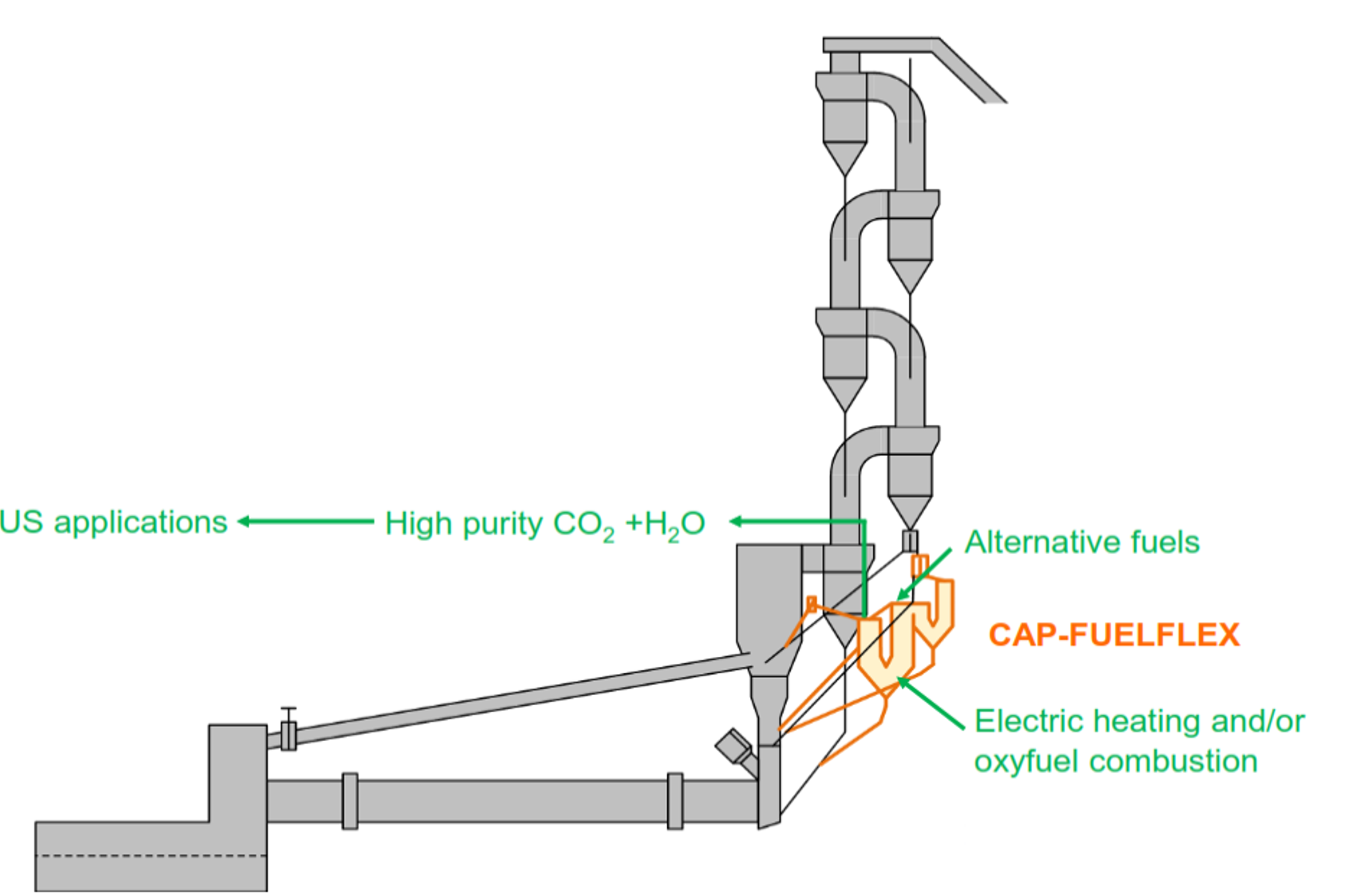
Illustration of initial CAP-FUELFLEX integration for 5-20% CO2 capture by retrofit to an existing kiln. “US applications” means “Utilization and Storage applications”.
In short, the CAP-FUELFLEX will offer:

A genuine decarbonization pathway

Lower-cost carbon capture

Fuel and energy flexibility

Minimal disruption to the existing process
CAP-FLEX Project partners
Fuller Technologies
Technical University of Denmark

Danish Technological Institute (DTI)
Mannok Cement
Project scope and work packages
CAP-FLEX combines industrial data, lab testing, modelling and full-scale demonstration across six interconnected work packages:
Operation data analysis and design evaluation of CAP-FUELFLEX
lead: Fuller
Development of electrical heating
lead: DTI
Lab-scale oxyfuel combustion and combination with electric heating
lead: DTU-KT
Modelling and optimization for process scale-up and system analysis
lead: DTU-KT
Measurement and demonstration in full-scale operational environment at Mannok
lead: Fuller
Project management
lead: Fuller
Project schedule
01.Jun.2026
31.Mar.2030
Feeder projects
CAP-FLEX builds on the work of other projects, including:
Related Offerings