A new control paradigm
The shift towards self-adaptive control marks a fundamental change in how advanced process control systems are designed and applied. Unlike fixed-model approaches, which rely on predefined process models and periodic retuning, self-adaptive control continuously evaluates real-time process data, predicts how key variables are likely to change, and adjusts control actions to stabilise conditions before they escalate. In practice, this allows a single controller to manage the full process circuit across a wide range of operating conditions, reducing the need for scenario-specific tuning that conventional systems require.
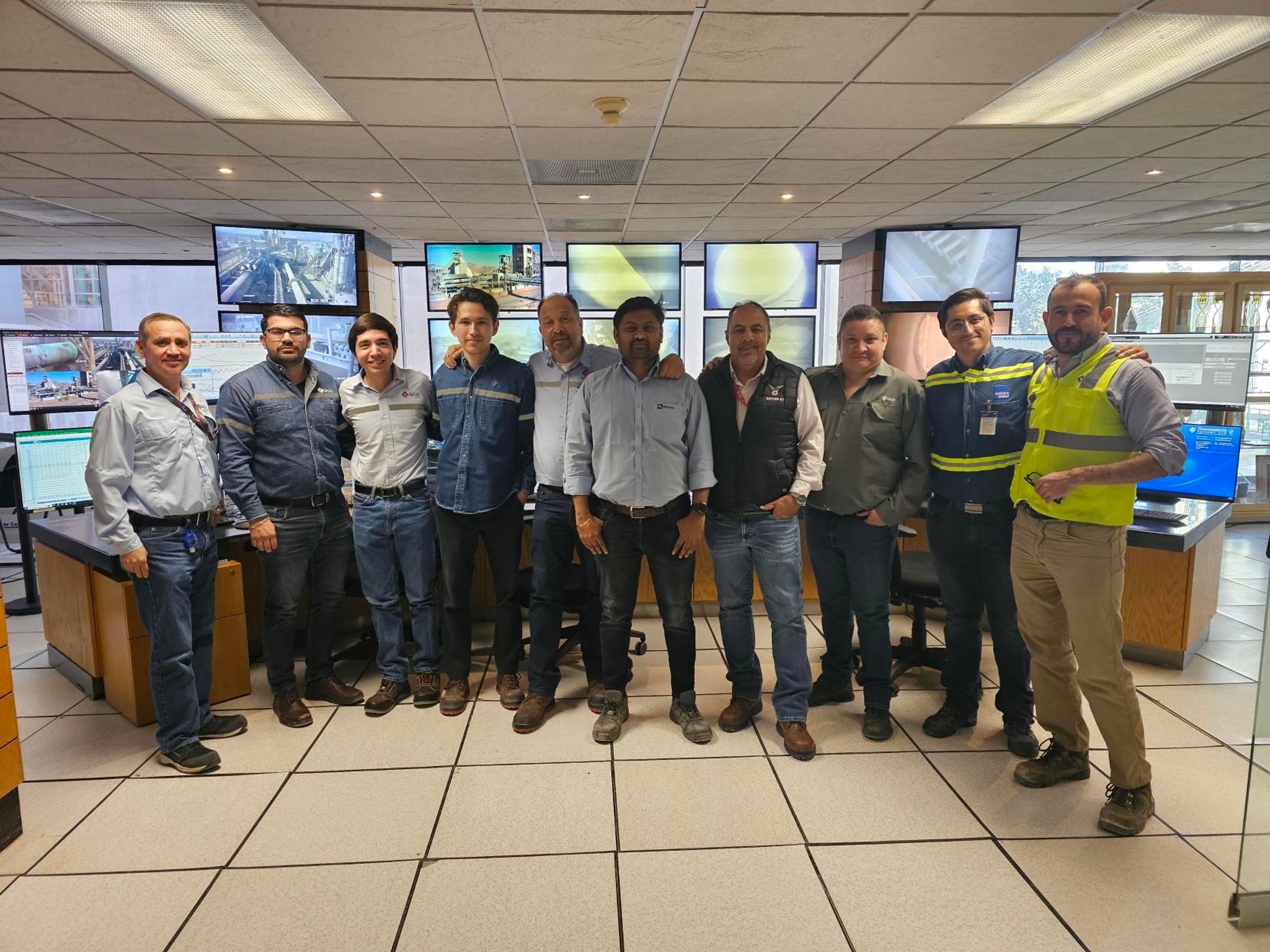
GCC's experience at its Chihuahua plant in Mexico illustrates this shift in approach. The plant initially installed Fuller Technologies’ ECS/ProcessExpert® (PXP) 8.5 in early 2024. Early gains included a 2% increase in productivity. This led to an upgrade to PXP 9.1, which incorporates self-adaptive control, following its release later that year.
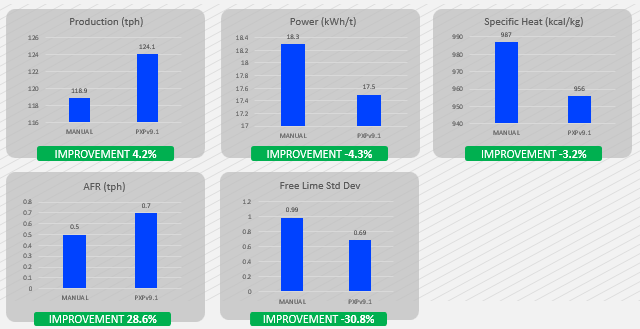
Compared to manual operation, PXP 9.1 delivered a 4.2% increase in kiln production, a 3.2% reduction in specific heat consumption, and a 30.8% improvement in free lime standard deviation (Figure 1). The plant also increased alternative fuel use while controlling CO and sulphur spikes that had previously limited higher thermal substitution rates (TSR). Process upsets became less frequent, and ring and coating formation were reduced. Plant Production Manager Ing. Carlos Guerrero Anaya Regalado described the outcome as a “total success” for this critical project.
Across more than 50 installations globally, similar patterns have emerged. While conventional advanced process control systems typically deliver improvements of 2–5% over manual operation, PXP 9.1 demonstrates gains of 4–7%, alongside improved stability and utilisation. At CEMEX Croatia, for example, self-adaptive control delivered a further 3–4% improvement in mill throughput and power consumption over the existing APC baseline, resulting in cumulative gains of 7–8% over manual operation.
Sustained utilisation is central to these outcomes. Because the controller continuously adapts to changing conditions, it reduces the performance drift that often leads to operator disengagement or system bypass. In doing so, it helps convert theoretical optimisation potential into consistent, long-term plant performance.



.png?w=1080&q=80&auto=format)
.jpg?w=2048&q=100&auto=format)