Navigating the complexity of modern bulk materials
Dry bulk material handling requires careful system design. Engineers can make informed guesses, but without empirical data, pneumatic conveying systems are vulnerable to problems.
That’s why many companies are turning to Fuller Technologies' R&D Lab in Pennsylvania to provide the data dry bulk handling operations need to succeed.
Already know you need testing? Getting started is straightforward. Go to our form and we help you identify which tests will address your specific challenges best.
Decades of material expertise
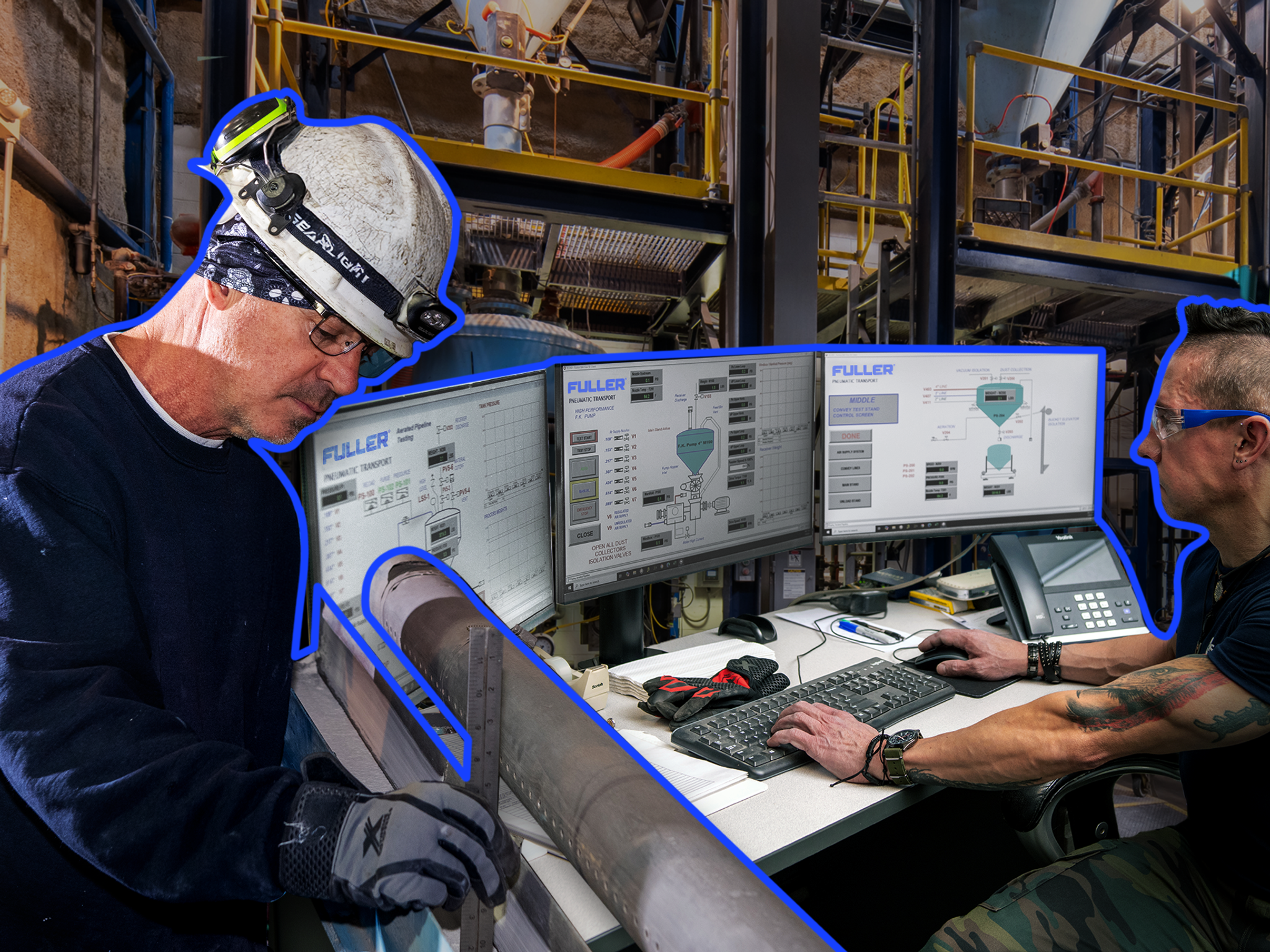
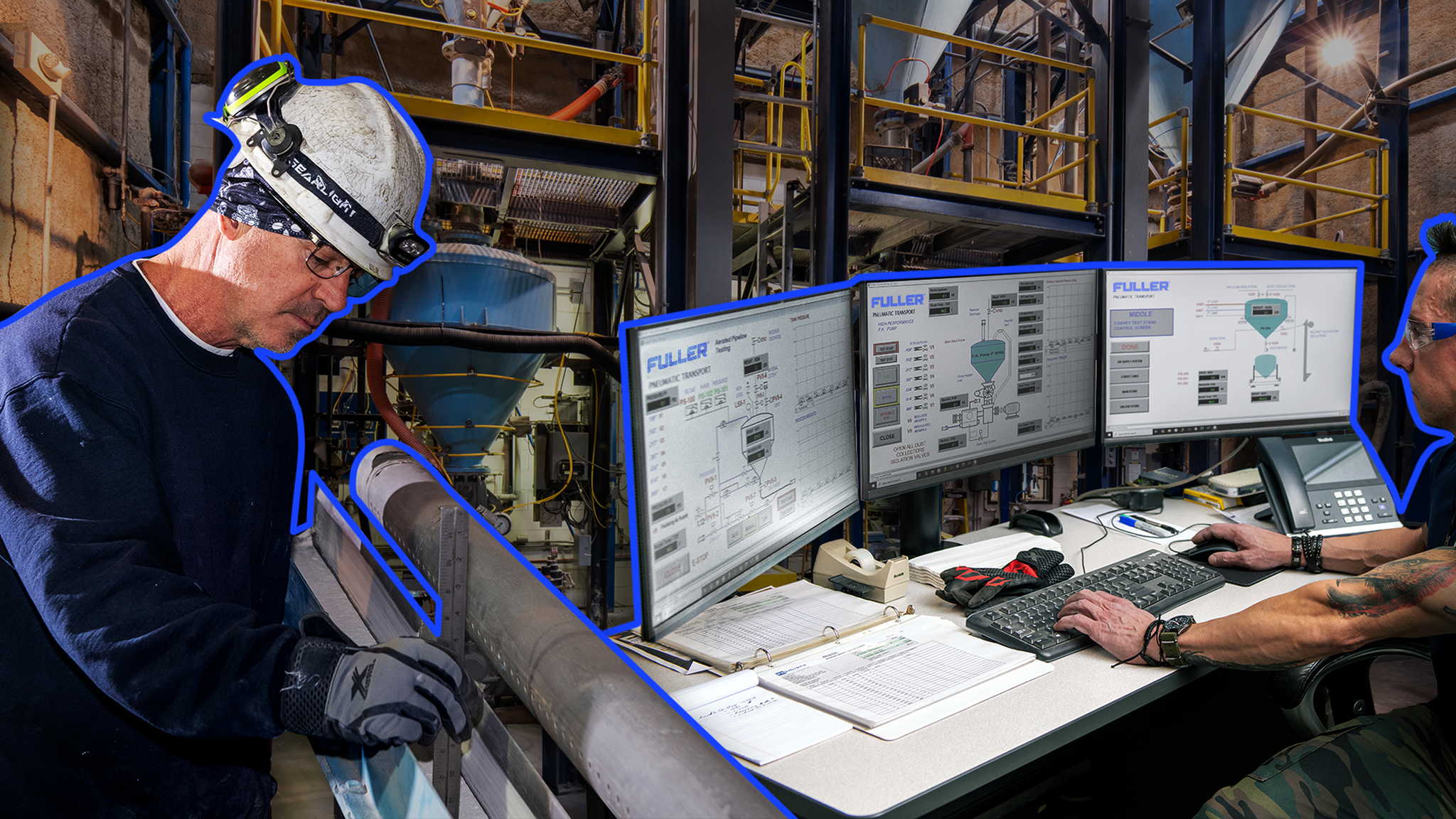
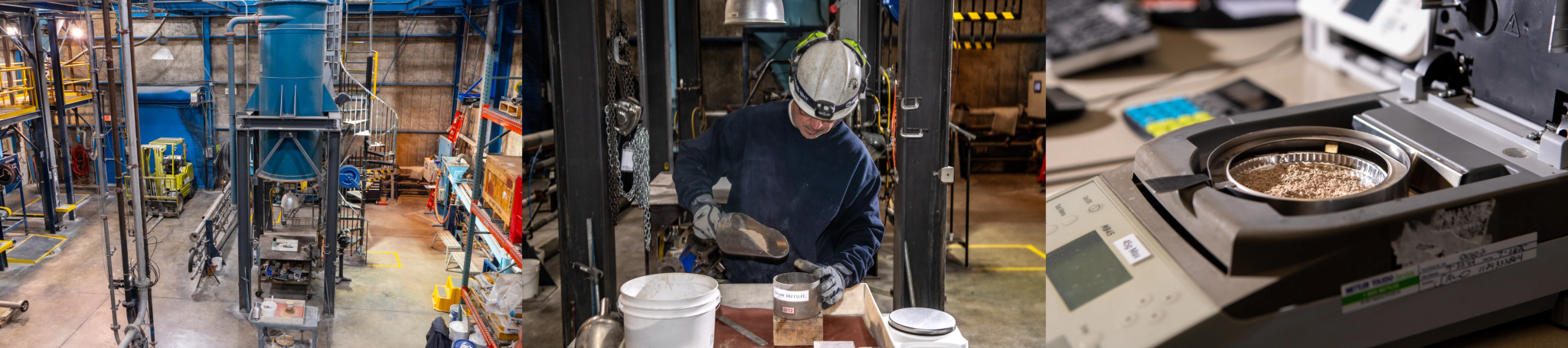
Our R&D Lab was opened in 1982 as a place to test and catalogue the behaviour of hundreds of materials. The lab has been equipped with state-of-the-art test facilities, enabling testing to be tailored to meet customers’ needs – from dense phase to dilute phase and everything in between.
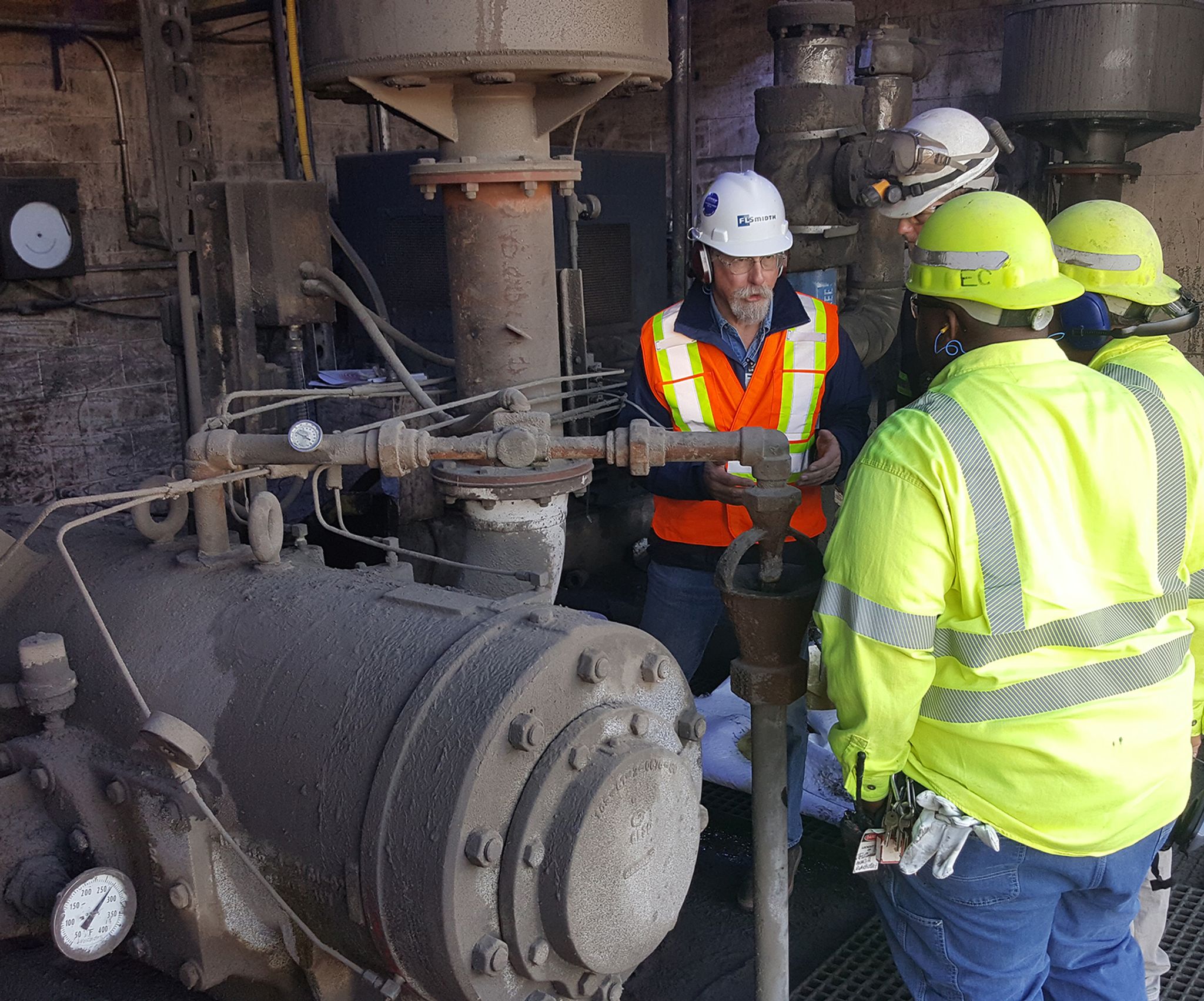
“Our lab has been instrumental in developing solutions for customers' material conveying challenges,” says Christopher Toomey, Global Product Manager, Fuller Technologies. “When customers experience bottlenecks or issues in their systems, we can have material samples physically tested and pneumatically conveyed in the lab to find out what is going on."
The lab's comprehensive testing facilities enable both material characterisation and process-specific evaluations to predict real-world performance. Physical property tests establish baseline characteristics including bulk density, moisture content, particle size distribution, and critical flow parameters like angles of repose and permeability. These measurements inform more specialised assessments such as fluidisation behaviour, pick-up velocity requirements, and minimum conveying velocities – the critical airspeeds needed to maintain material suspension in conveying lines. Armed with this knowledge, pneumatic conveying systems can be designed and/or optimised for maximum efficiency and durability.
Material Surprises: Uniformity and Unforeseen Conveying Challenges
Even materials that appear straightforward can surprise operators. For example, uniformity can make a material seem attractive, but it can actually create unexpected challenges. Unlike varied particle sizes in traditional materials that create turbulent airflow and natural pickup points, highly uniform materials can pack so consistently that conveying air simply channels through the voids rather than suspending the particles. What first appeared to be ideal material consistency becomes a conveying liability.
"You might think you know how a material will behave, but until it's in the pipe or on the Airslide fabric, you can't be sure,” explains Christopher. “They can be sticky, cohesive, abrasive, or prone to segregation. They might have very high density or very low density. We analyse it all in the Lab.”
Processed, fluffy materials can also be tricky. Their low weight doesn't make them easier to convey, but harder. The low bulk density and irregular particle shapes require higher air velocities and more power than denser, more uniform materials. What looks like it should 'blow away easily' often requires more energy to convey reliably. Other types of powders present different challenges – static electricity buildup, moisture sensitivity, and contamination concerns.
Testing helps prove whether it’s feasible to convey pneumatically and guides the equipment sizing, selection and layout. For facilities experiencing problems with their operations, testing supports troubleshooting by categorising material behaviour, recommending optimal operating conditions and identifying areas where additional wear protection is needed.
Building confidence through testing
"Our combination of equipment, simulation software, experience, and decades of data means the lab can support customers at any stage in their process,” says Christopher. "We welcome customers from all industries to seek us out and make use of our decades of data and testing capabilities. Improved understanding of particle behaviour ensures your system functions as intended."
Whether you're specifying equipment for a new project or troubleshooting a system that isn't performing, testing removes the guesswork - for traditional materials like cement and coal, or emerging inputs like calcined clay and alternative fuels. The data speaks for itself.
Gain the confidence you need with Fuller PT Test Lab
Our unique facilities and capabilities give you the information you need to be confident in your investments or resolve any pneumatic conveying issues you’re experiencing.
0 +
Building a knowledge base that informs every system we design.
0 +
Refining our methods and equipment since 1982.
0 ft²
Equipped for dense phase, dilute phase, and everything in between.
Downloads
Bulk Material Testing for Pneumatic Conveying
The Fuller Pneumatic Transport Test Laboratory (PT Test Lab) in Pennsylvania, USA, serves the global dry bulk handling market with unique facilities and capabilities that empower you with the information you need to succeed with your materials handling projects.
06.01.2026 |
537.51 KB |
English
Related Offerings