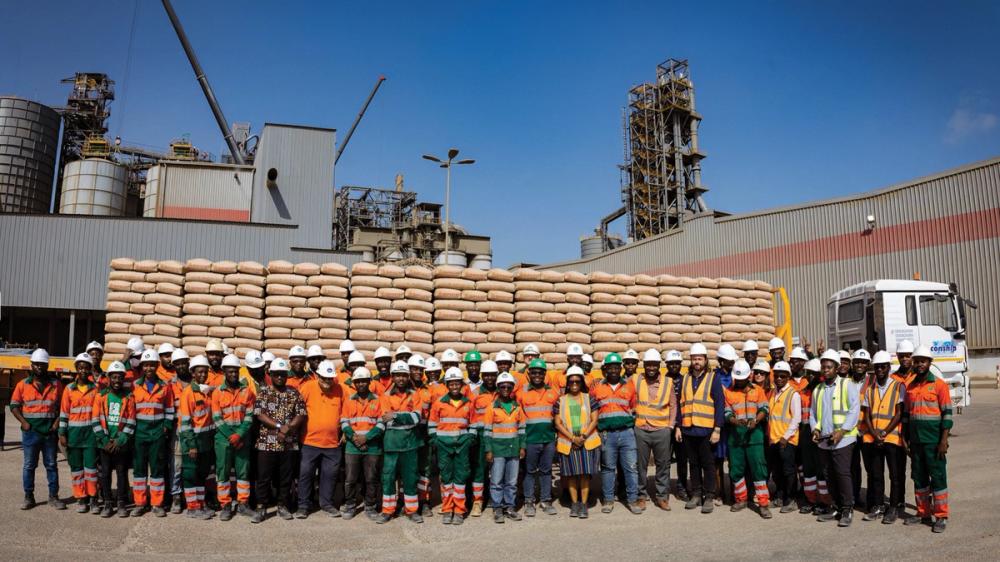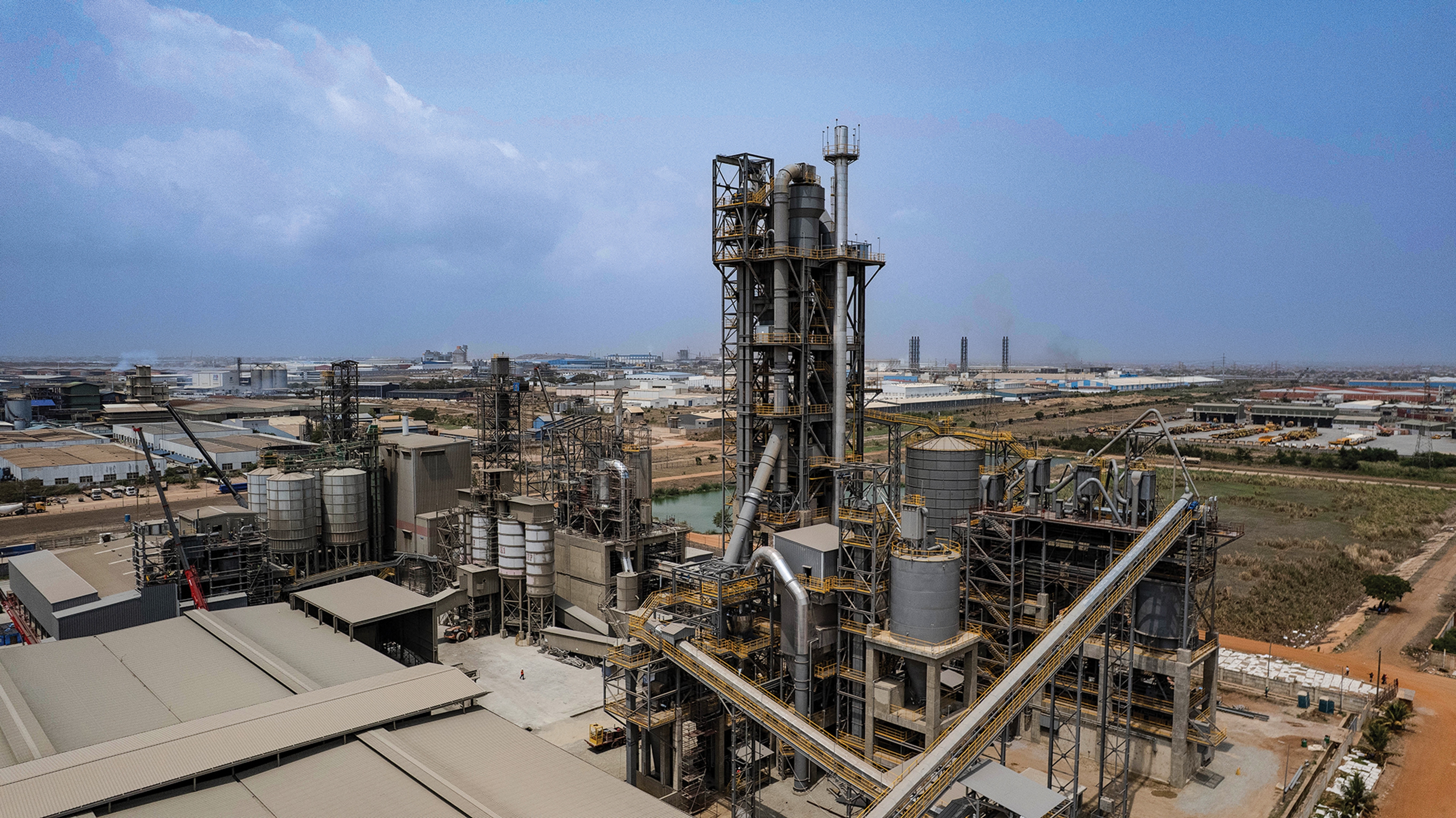
Ghana is experiencing rising cement demand; however, meeting this demand is proving a challenge. The country is dependent on clinker imports and, thus, vulnerable to supply disruptions and market fluctuations. Aiming to help fill this gap, CBI Ghana, alongside its major shareholder Heidelberg Materials, has recently commissioned a calcined clay plant supplied by Fuller Technologies, formerly FLSmidth Cement. This marks the start of LC3 cement production in the country, bolstering local cement production and significantly reducing carbon emissions per ton of cement compared to ordinary Portland cement (OPC).
The company’s Supacem LC3-35, LC3-45 and LC3-60 cement products are crafted with 40-65% of abundant local materials and represent a significant leap forward in eco-friendly cement innovation while lowering dependency on clinker imports. With process emissions of only ~80 kgCO2/t of calcined clay, the final LC3-35 cement product emits down to 310 kgCO2/t, less than 60% of the average global OPC reference baseline of 780 kgCO2/t, and at an average reduction of 40%.
FINANCING THE GREEN TRANSITION
The CBI Ghana project was made possible by a coalition of development finance institutions committed to accelerating the green transition in Africa. IFU (the Danish Investment Fund for Developing Countries), through its SDG Investment Fund, joined Norfund (the Norwegian Investment Fund for Developing Countries) and Fuller Technologies as equity investors, contributing a combined US$22.5 million. In addition, the Export and Investment Fund of Denmark (EIFO) supported the project further by guaranteeing a long-term loan of US$43 million, arranged by Société Générale. The project qualified for this financing package on the strength of its environmental credentials; in particular, its alignment with the EU Taxonomy for sustainable cement production. The result was a financing structure that opened the door for commercial bank participation and demonstrated that green cement projects in developing markets can attract serious institutional capital.
UNVEILING CBI’S CALCINED CLAY PLANT AT TEMA
Fuller supplied the groundbreaking calcined clay plant, with a capacity of 1,200 tons per day—or over 400,000 tons per year—making it the world’s largest clay flash calciner. The project is based on the company’s flash calcination technology and includes full color control and product heat recuperation, reducing energy costs to 50% of those for clinker production lines. The resulting process emits just 10% of the CO2 emissions of clinker production.
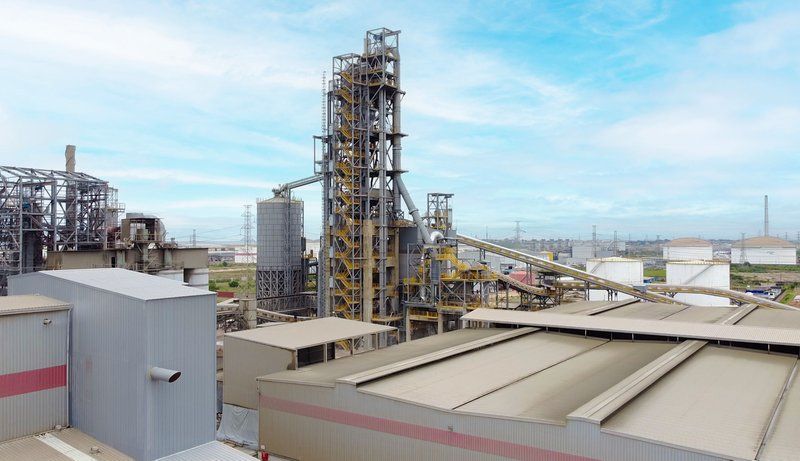
Aside from its record-breaking size, several other features set the Fuller system apart from other calcined clay solutions
Greymax™ color control
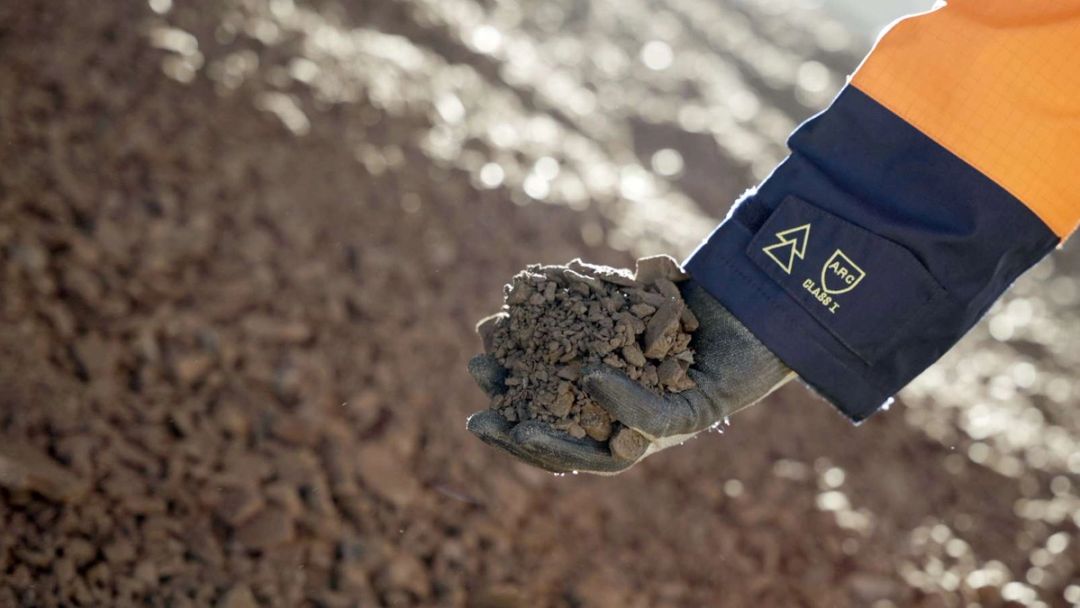
Calcined clay typically has a natural reddish hue due to the oxidation of iron in the clay to hematite. Transforming red hematite into grey magnetite ensures the calcined clay matches the color of traditional OPC, a key requirement for cement producers like CBI Ghana and their customers. The patented Greymax process and oxidizing flash cooling address this, delivering permanent color control for a homogeneous product coloration, regardless of variations in the clay raw material.
Heat recuperation
Fuller’s patented atmospheric air-quench cooling process is designed to maximize heat recovery by preheating the air-cooling media for combustion in the calciner. This substantially minimizes fuel consumption and process emissions, without compromising color or requiring inert cooling or energy loss from water quench.Meanwhile, hot waste gases from the preheater are utilized to dry the raw clay in the dryer-crusher. This further enhances efficiency while enabling the system to process clays with up to 25% moisture content as standard and up to 40% with additional engineering.
Precise product mixing with PFISTER® feeders
The relevant product mix of calcined clay, limestone, and clinker is precisely dosed into the ball mills using the industry-leading PFISTER FRW rotor weigh feeder and Pfister SLF belt weigh feeders, where they are mixed and ground to produce the final LC3 product.
Expert process control with ECS/ControlCenter™ software
The Fuller ECS process control platform helps operators manage calcination and deliver a consistent, high-quality end product while minimizing operating costs. With a granular view of system parameters, open programming adjustable to specific site needs, on-screen sensor outputs and setpoints, feedback loops, and detailed trending, operators are empowered to make data-driven interventions that mitigate issues before they become problems.
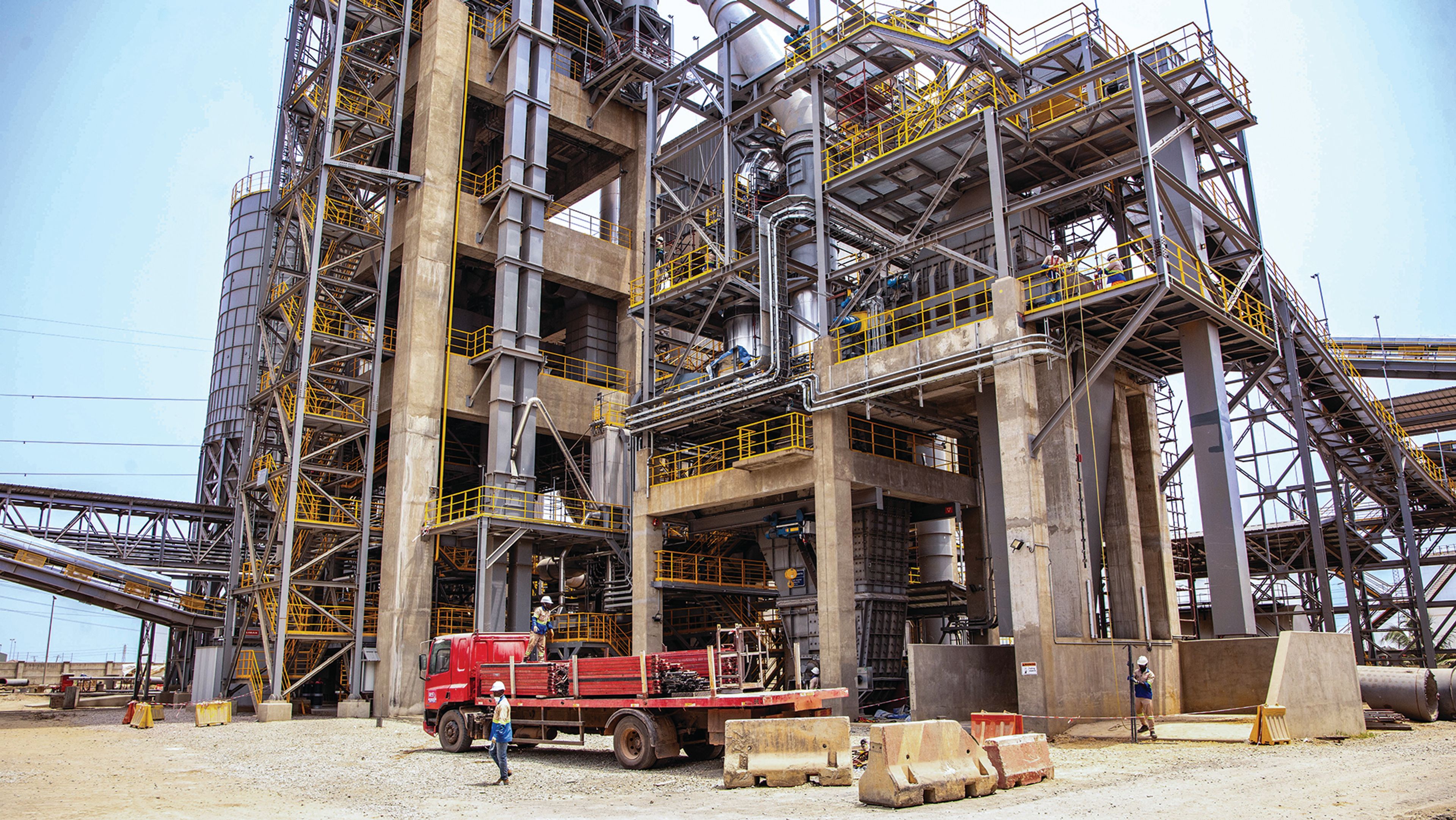
Precise product mixing with PFISTER® feeders
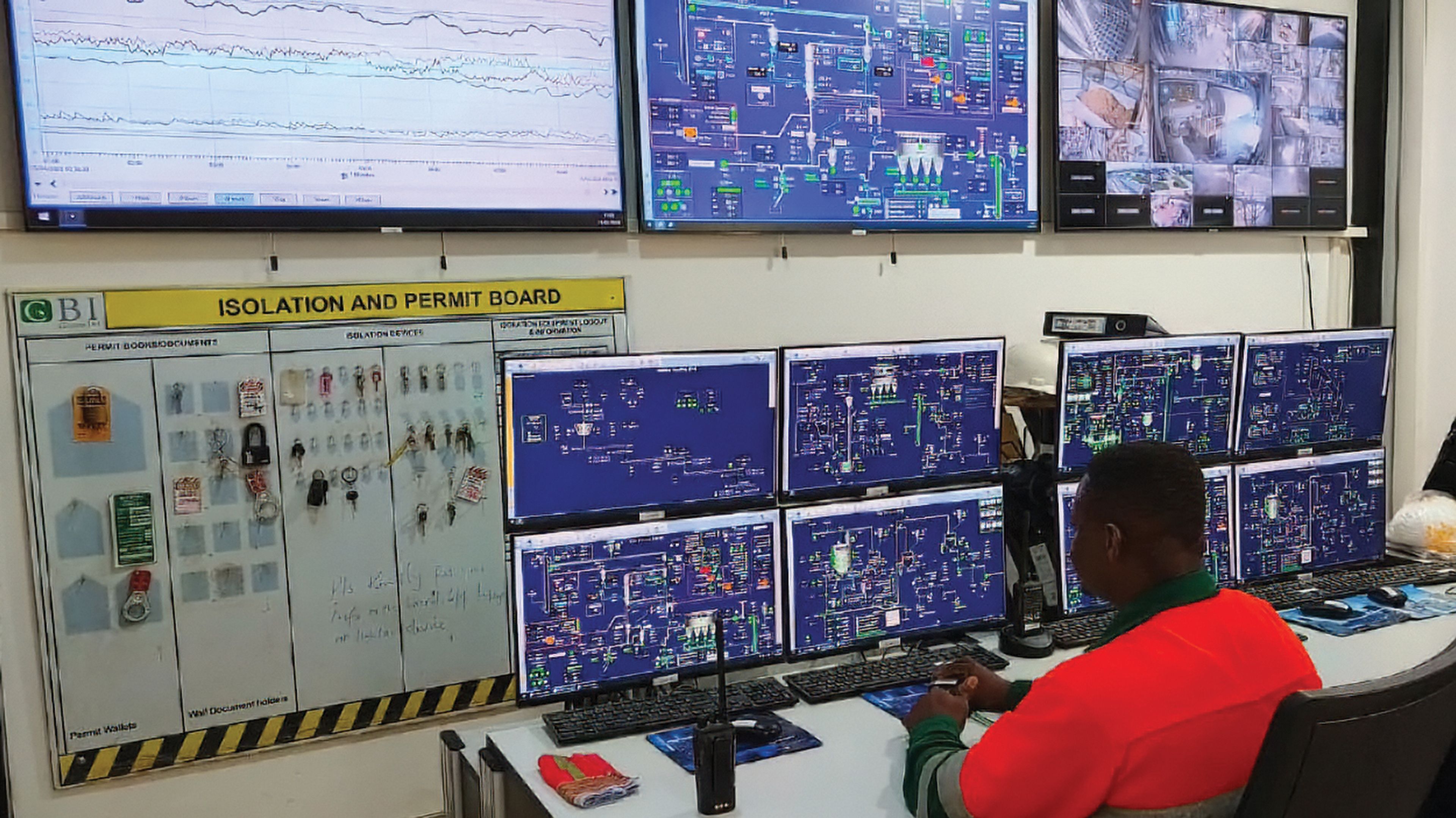
Control room
A HIGH-QUALITY PRODUCT
With its high-quality calcined clay, CBI Ghana’s LC3 cements can deliver substantially higher compressive strength from 7 days onwards than OPC cement, along with enhanced durability. This allows a significant fraction of the clinker in cement to be replaced without impacting performance.
However, not all clays are equally viable for calcination. This highlights the importance of testing locally available clays before investing in a clay calcination plant. At Fuller’s Dania laboratory and R&D center in Denmark, the company has extensive facilities to assess a clay’s suitability for thermal activation, including bench- and pilot-scale calcination, color control, emissions analysis, grindability testing, and reactivity and strength testing of blended cement containing a calcined clay sample.
Niels Christian Dodensig Lundgaard, Head of Lab and Green Cement Testing at Fuller Technologies
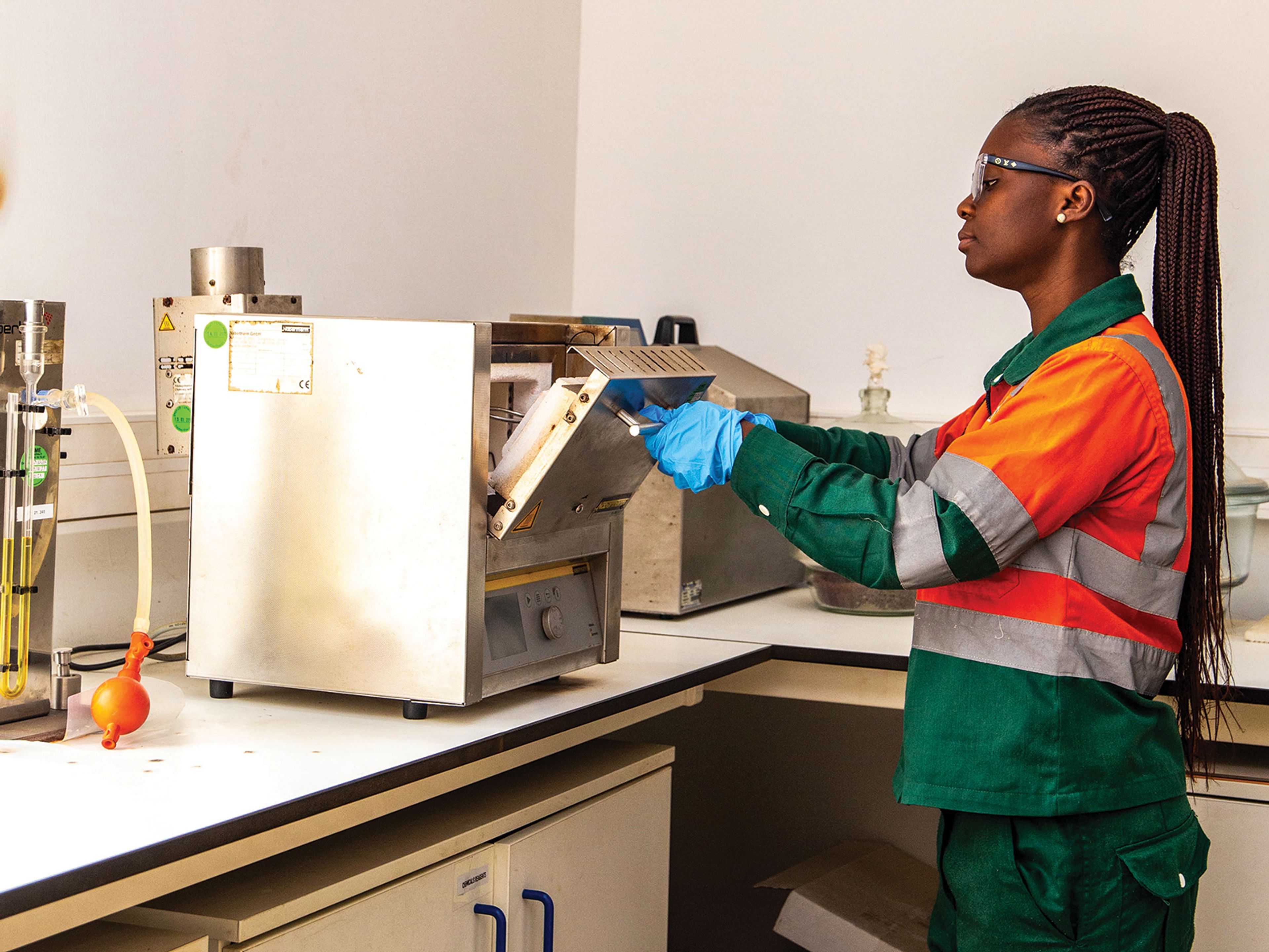
Lab at CBI Ghana
CERTIFYING THE NEW CEMENT
Central to bringing Supacem LC3 to market was the establishment of a national certification framework for LC3 cement, led by the Ghana Standards Authority (GSA) as the key institution responsible for developing and approving the new standard.
"This landmark achievement followed two years of collaboration between Ghanaian institutions — including KNUST, the University of Ghana, and the Building and Road Research Institute — alongside international universities and laboratories, including EPFL, with technical support from Professor Karen Scrivener”, explained CBI Ghana’s Kobby Adams.
The resulting standard, GS PAS 5:2024, adopted in May 2024, makes Ghana the first country in the world to establish a national LC3 standard, permitting cement products with as little as 35% clinker.
“The standard – and work done to achieve it – paves the way for the widespread use of this more sustainable, locally-sourced cement,” Adams continued.
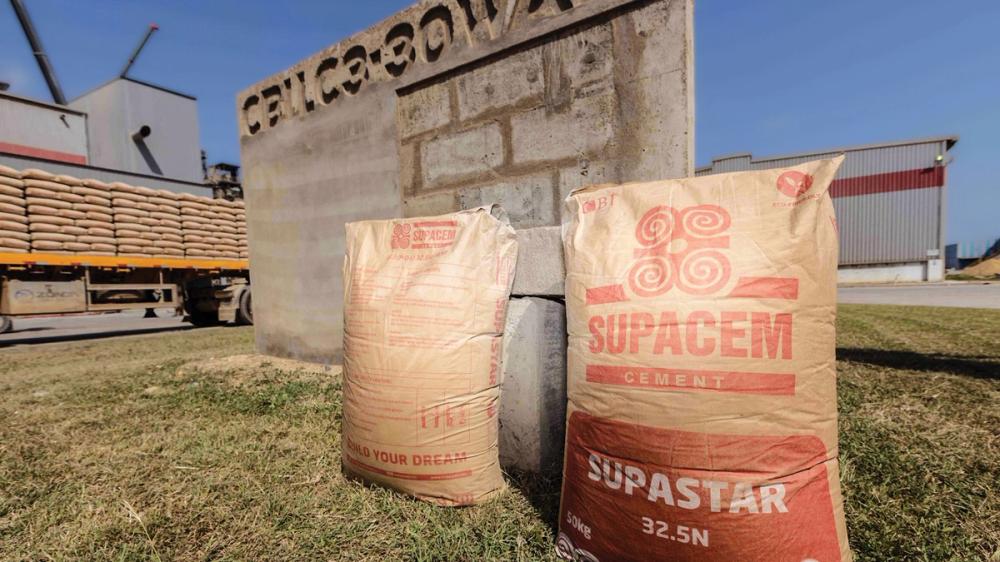
GRINDING THE FINAL PRODUCT
Fuller also provided a UMS 4.6 x 14.0 ball mill for final cement grinding. Operating in closed circuit with an O-Sepa™ N 2500 third-generation separator, the mill is designed to produce 120 tonnes per hour of finished cement at a Blaine fineness of 380 m²/kg. The two-compartment mill uses step lining in the first compartment for coarse grinding and corrugated lining in the second for fine grinding, with material flow between the two controlled by the adjustable diaphragm.
A closed-circuit configuration ensures tight control over product quality and energy efficiency. The O-Sepa separator's variable-speed rotor allows operators to adjust product fineness as required. Automatic control loops governing feed rate and proportions, separator airflow, and mill diaphragm temperature, alongside manual control of the separator rotor speeds and damper positions, enable consistent operation from the central control room.
DISPATCHING TO MARKET
Completing Fuller’s scope of supply to CBI Ghana, the company also implemented a VENTOMATIC® high-capacity packing and dispatching line. The line is fed from the plant’s storage silos via a bucket elevator and can load trucks at a nominal capacity of 3300 50-kg bags per hour for distribution to customers. The complete scope of supply includes:
A 12-spout GIROMAT™ EVO rotary packer: this fully automated valve bag packing machine is designed for high weighing accuracy, high output, and low dust emissions. It features a very compact, modular design that offers excellent flexibility and expandability, thanks to seamless integration between mechanical components and electronic controls.
An INFILROT™ Z40 shooting bag applicator: designed to handle high production capacities, it delivers highly efficient and precise automatic bag placement suitable for various bag materials and sizes. The bag applicator places each empty bag directly onto the packer spout with precise timing and accuracy, ensuring a smooth, continuous bag application cycle.
A VENTOSORT™ full bag treating system executed with a VENTOCHECK belt check weigher. For plants with automatic truck loaders, this bag treatment system eliminates broken bags from the conveying line, preventing them from reaching the truck and allowing the plant to operate at maximum throughput.
A CARICATECH™ automatic truck loader for open-top trucks with or without fixed sides. The most significant advantage and innovation is the possibility to change pattern configuration, loading mode, and bag size truck by truck without any manual adjustment.
The process is fully automated, with the operator only needing to feed the empty bag storage. In addition, the truck loading system uses AI algorithms to identify trucks via scanners. It then automatically configures the load according to the truck to optimize load distribution and bag stability during transport.
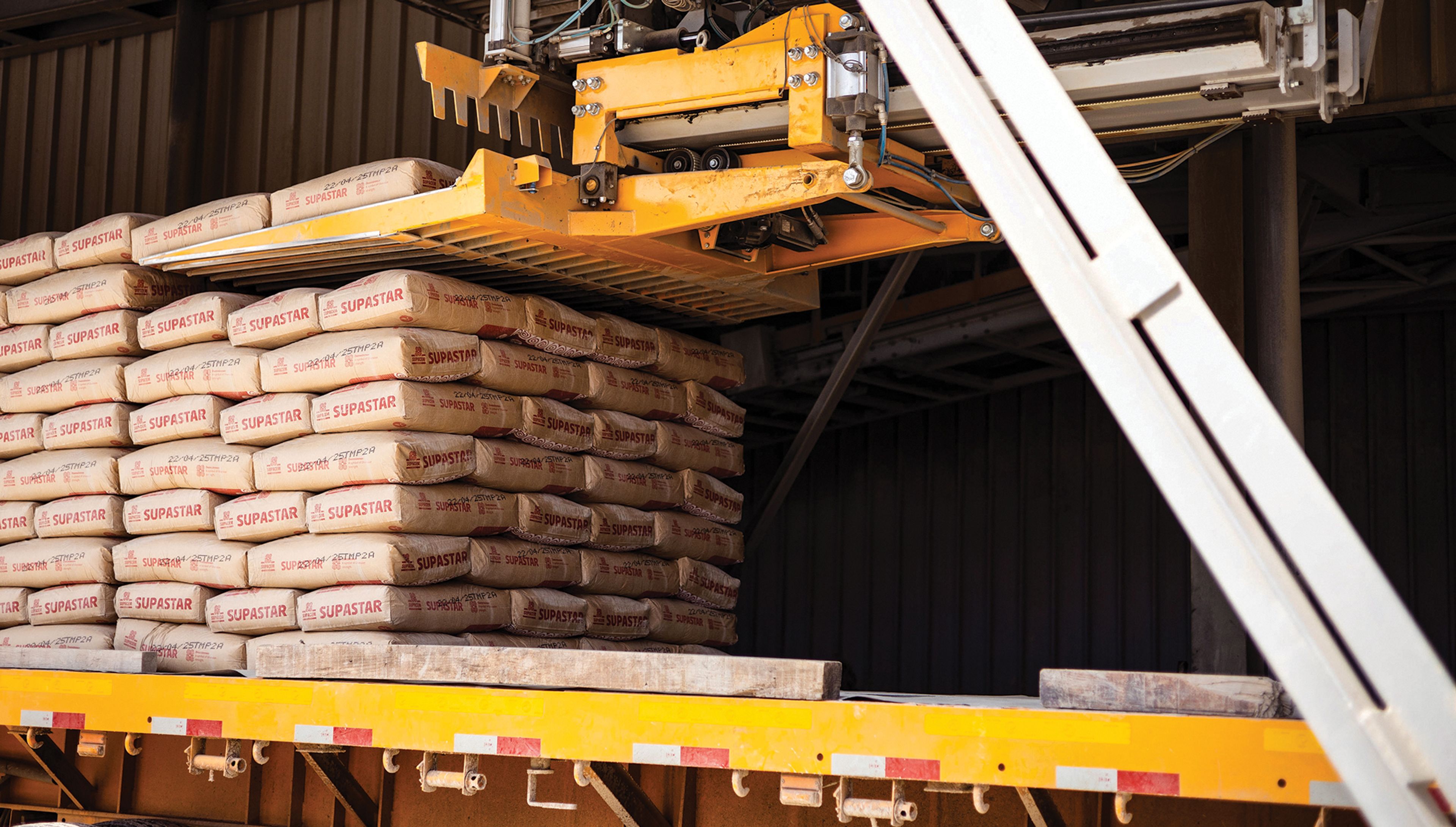
Packaging and logistics
A SUCCESSFUL PROJECT
All process and product quality performance guarantees have been met, ensuring the pathway to a greener future is both successful and commercially viable. “Our Supacem LC3 cement is already being delivered to customers nationwide, offering lower CO2 emissions, excellent strength development, and enhanced durability,” said Kobby Adams of CBI Ghana. “This addresses a real and urgent need in the Ghanaian market. By producing a significant portion of our own cementitious material locally, we reduce the impact of clinker shortages and deliver a more reliable cement supply for retailers and builders across the country.”
The success at CBI Ghana points to calcined clay's transformative potential not only to reduce cement-related carbon emissions but also to enable cement production in regions where limited local limestone reserves make traditional clinker production economically or geographically challenging. With clay deposits widely available across cement-producing regions worldwide, the potential for deployment is substantial. Together with Fuller’s installation of Europe’s first industrial-scale calcined clay facility at Vicat’s Xeuilley plant in France, the Tema project for CBI Ghana is now proving that this potential can be turned into a commercial reality.