18th Mar 2026
webinar
Advanced Condition Monitoring of Rotary Cement Kilns
The Monitoring Gap
A typical cement kiln needs to run continuously for at least one year between maintenance shutdowns. Traditionally, kilns were stopped for inspections at frequent intervals, but that approach is now considered too costly. Avoiding just one shutdown can save upwards of €100,000 per day on a typical 5,000 ton-per-day kiln, based on 24 hours of lost production during cooling and heating alone. Planned and unplanned shutdowns also add thermal stress, increase emissions, and raise the risk of further maintenance issues. As more plants adopt alternative fuels, wear and thermal patterns become harder to predict with traditional maintenance and on-site inspections - making continuous condition monitoring essential.
In this live session, three specialists from Fuller and Brüel & Kjær Vibro walk through the failure modes that matter most, the monitoring techniques designed to catch them, and real diagnostic results from kilns already running the system.
OEM Knowledge Meets Precision Measurement
Off-the-shelf monitoring solutions could not handle the kiln's extremely low rotational speed, complex mechanical interactions, and harsh thermal environment. This solution required close cooperation between two complementary domains. Fuller contributed decades of knowledge on kiln design, operation, and failure modes. Brüel & Kjær Vibro brought data acquisition and signal processing techniques optimised for early fault detection at very low frequencies - down to 0.06 Hz for the kiln speed frequency.
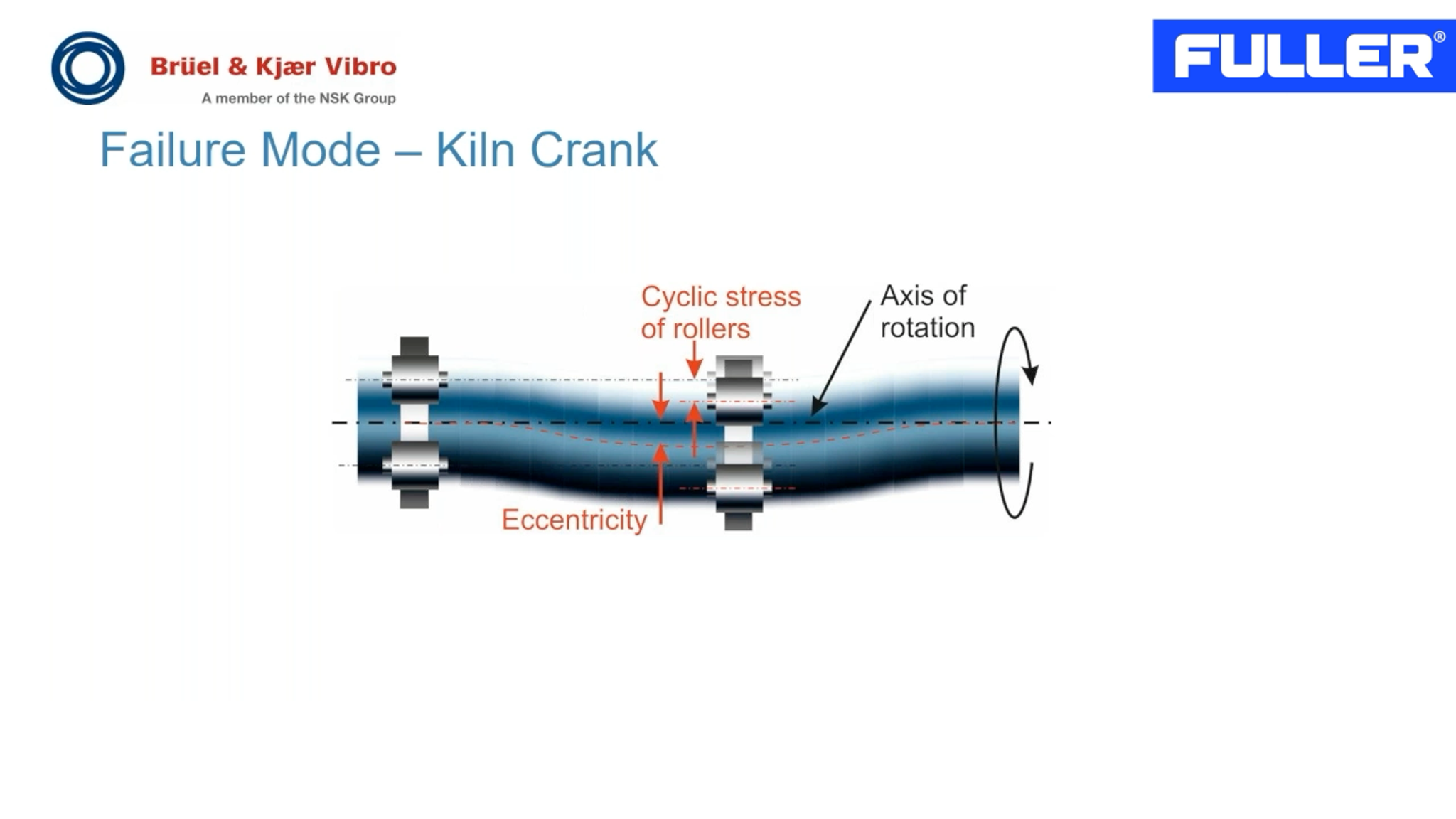
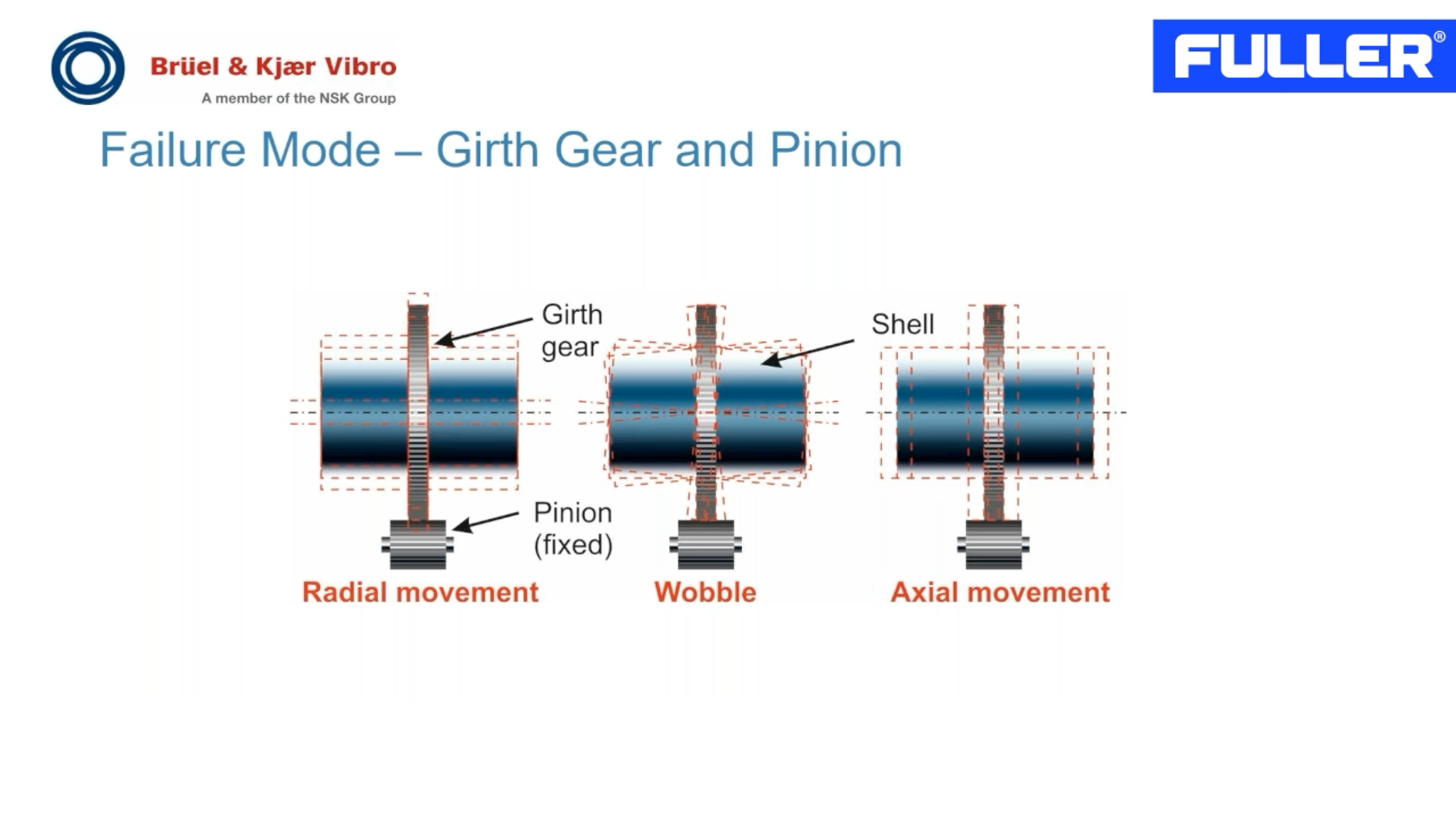
That combination created a monitoring approach shaped by both domains. The system continuously tracks shell ovality, kiln crank, girth gear displacement and pinion vibration, and axial balance - conditions that previously could only be assessed during scheduled on-site inspections. From Fuller's 24/7 Global Remote Service Centre, kiln specialists correlate measurements across failure modes and deliver specific maintenance recommendations based on OEM-level understanding of the equipment.
Featured Experts:
Palle Huus Bentzen, Head of Global Site Services at Fuller, has played a key role in Fuller's kiln condition monitoring development. In this webinar, he explains how the monitoring data is evaluated and how it supports maintenance recommendations. He is joined by Mike Hastings and Sascha Gutt from Brüel & Kjær Vibro, covering the signal processing and system architecture behind the monitoring solution.
Key insights include:
- Why off-the-shelf monitoring systems cannot handle rotary kiln applications - and what the cooperation between Fuller and Brüel & Kjær Vibro produced instead
- How shell ovality, kiln crank, gear drive health, and axial balance are now monitored continuously - capabilities previously limited to periodic on-site inspection
- Real diagnostic results from monitored kilns, including a kiln crank case resolved within three days through targeted process adjustments
- How the monitoring service delivers specific maintenance recommendations - including when to schedule hot kiln alignments and preventive NDT testing
Watch the webinar now to see real diagnostic data from monitored kilns - and how continuous monitoring is replacing periodic inspections with predictive kiln healthcare.

Palle Huus Bentzen, Head of Global Site Services, Fuller
From Periodic Inspection to Continuous Kiln Healthcare
Monitoring Failure Modes That Were Previously Invisible
A rotary cement kiln fails in well-understood ways - shell ovality, kiln crank, gear drive health, and axial balance. Each develops continuously, driven by thermal effects, coating changes, and equipment wear. Until now, these conditions could only be assessed during on-site inspections. The monitoring solution tracks all four continuously, using sensor arrays optimised for the kiln's extremely low rotational speed - detecting changes that standard monitoring systems cannot.
From Trend Data to Maintenance Action
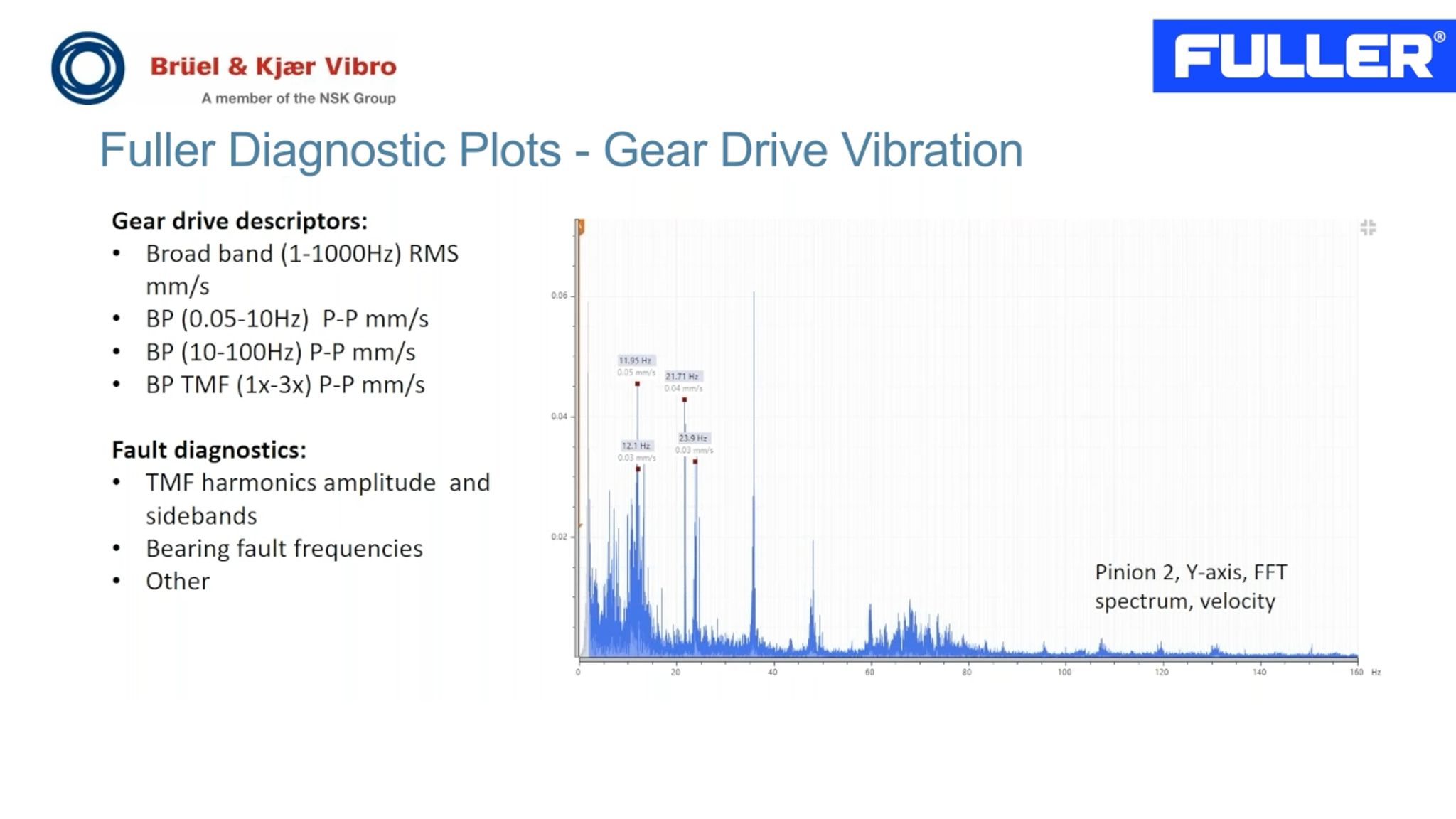
On kilns already running the system, tyre migration trends reveal when clearances are moving toward constriction or excessive ovality limits - prompting adjustments before conditions become critical. For the gear drive, vibration analysis and frequency diagnostics identify faults that trend data alone cannot detect, enabling fault severity assessment and remaining useful life prediction. The monitoring team delivers specific recommendations, not just data.
From the Sensor to the Expert - In Minutes
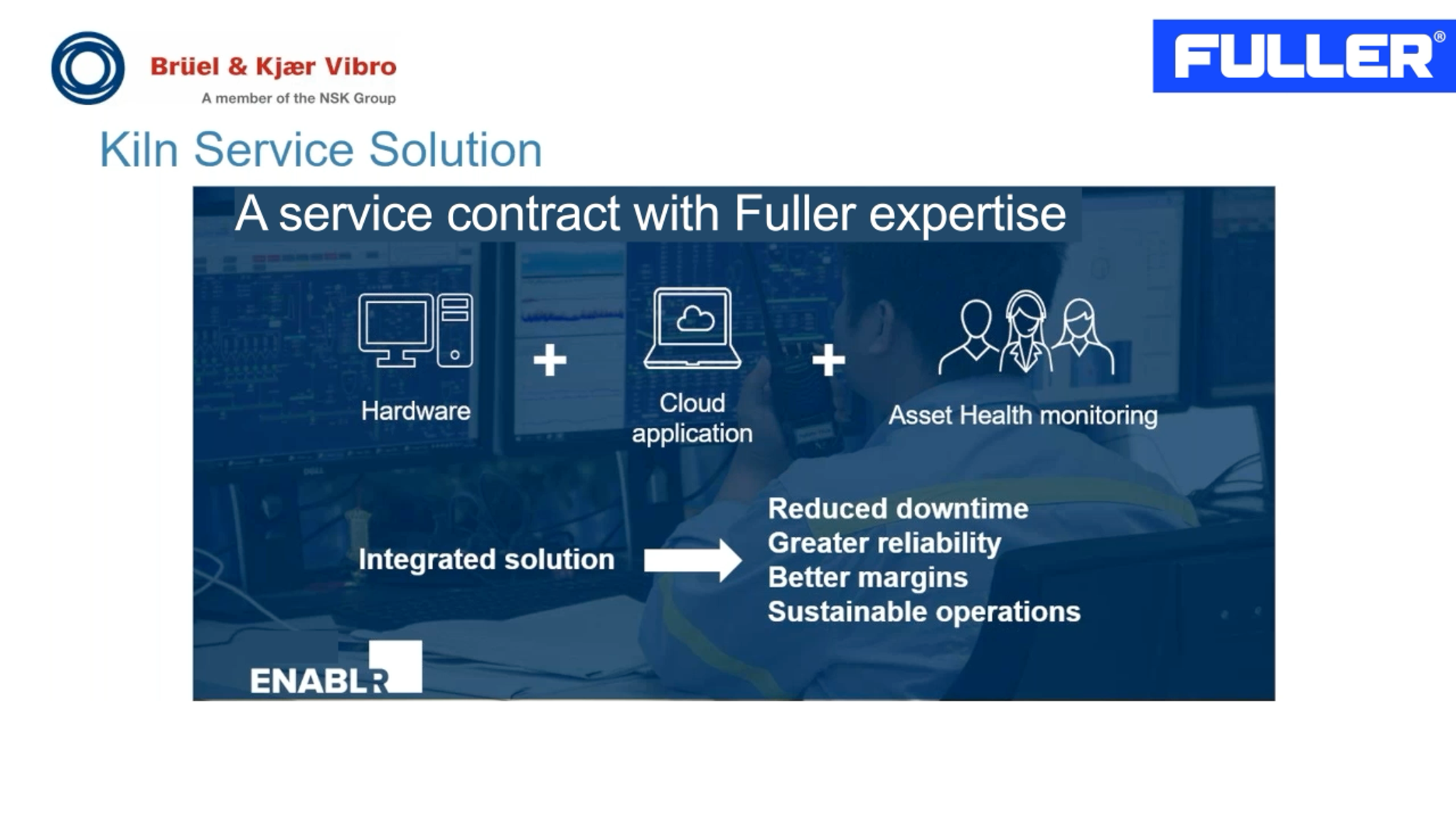
Processed measurement values upload to the cloud every 5 to 10 minutes; raw data follows daily. A Fuller-built field agent handles data compression and maintains integrity even through connectivity interruptions lasting several days. From the 24/7 Global Remote Service Centre, kiln specialists review trends across all failure modes and deliver OEM-informed maintenance guidance - direct expert interpretation of the measurement data.
Kiln Crank Resolved in Three Days
On one monitored kiln, the team identified a rising kiln crank trend and worked with the plant on the burning process and fuel mix. Within three days, the crank had stabilised within the acceptable range. When crank cannot be fully eliminated - something that can happen in alternative fuel operations - the system tracks accumulated damage and recommends preventive measures such as NDT testing before fatigue failure occurs. The focus stays on root cause.
See continuous kiln monitoring in action
Watch the full webinar to see real diagnostic data from monitored kilns - including tyre migration trends, a kiln crank case resolved in three days, and gear drive vibration analysis. Three specialists from Fuller and Brüel & Kjær Vibro walk through the main failure modes, the monitoring techniques behind them, and what the data actually reveals.
Predictive Kiln Healthcare
Until now, kiln condition assessment meant periodic snapshots of an asset that changes every day. Shell ovality shifted with thermal cycles, crank developed between inspections, gear wear progressed unseen, and axial balance drifted with every change in coating or fuel mix. The information arrived too late to act on causes - only early enough to react to consequences.
Continuous monitoring changes that equation. Maintenance teams now have the visibility to track developing conditions against known limits, schedule hot kiln alignments based on actual data rather than fixed intervals, and intervene before trends reach critical thresholds. The service delivers specific recommendations grounded in OEM understanding of the equipment - not generic alerts that leave interpretation to the plant.
As more kilns come online and monitoring data accumulates across applications, the precision of these diagnostics will continue to sharpen. The kilns already running the system are proving the concept. Predictive kiln healthcare is no longer aspirational. It's operational.
Mike Hastings, Senior Application Engineer, Brüel & Kjær Vibro
Q&A from Webinar
Related Offerings